

-
 Japan hits 6G key milestone with high-frequency speeds topping 100 Gbps
Researchers have built a miniaturized microcomb-driven terahertz wireless communication system that's 90 times smaller than conventional chips to deliver record-breaking data-transfer speeds at ultrahigh frequencies.
communications -
 How can we prevent AI models from cannibalizing themselves when human-generated data runs out? Scientists say they've found the answer.
Researchers have found that introducing human-made data into AI training can help to prevent AI model collapse.
6 Commentsartificial-intelligence -
 Scientists build specialist 'AGI processor' that they believe will power the next wave of AI agents
Arm's new chip could be a powerful but efficient conductor for real-world use of agentic AIs.
artificial-intelligence -
 AI for breakup texts? How 'sycophantic' chatbots are messing with our ability to handle difficult social situations.
Overly agreeable AI responses to interpersonal issues could mess with human moral perspectives.
2 Commentsartificial-intelligence -
 An experimental AI agent broke out of its testing environment and mined crypto without permission
Researchers discovered that an AI agent roamed beyond its parameters, creating backdoors in IT infrastructure.
47 Commentsartificial-intelligence -
 Microsoft says its newest AI chip Maia 200 is 3 times more powerful than Google's TPU and Amazon's Trainium processor
The Maia 200 AI chip is described as an inference powerhouse — meaning it could lead AI models to apply their knowledge to real-world situations much faster and more efficiently.
artificial-intelligence -
 'It won’t be so much a ghost town as a zombie apocalypse': How AI might forever change how we use the internet
AI slop, chatbots and agentic AI are changing the internet, and could transform it beyond recognition, experts say.
4 Commentsartificial-intelligence -
 New hydrogen battery can operate four times colder than before — meaning denser and longer-lasting EV batteries
Being able to store hydrogen at 194 °F could dramatically change its use as an energy source.
3 Commentselectric-vehicles -
 Scientific breakthrough leads to 'fluorescent biological qubit' — it could mean turning your cells into quantum sensors
Fluorescent proteins can be turned into qubits within cells and could give us a deeper understanding of biology at the nanoscale level.
technology -
 The more advanced AI models get, the better they are at deceiving us — they even know when they're being tested
More advanced AI systems show a better capacity to scheme and lie to us, and they know when they're being watched — so they change their behavior to hide their deceptions.
20 Commentsartificial-intelligence -
 AI hallucinates more frequently the more advanced it gets. Is there any way of stopping it?
OpenAI's most advanced reasoning model is smarter than ever — but it hallucinates more than previous models, too.
13 Commentsartificial-intelligence -
 AI benchmarking platform is helping top companies rig their model performances, study claims
LMArena, a popular benchmark for large language models, has been accused of giving preferential treatment to AIs made by big tech firms, potentially enabling them to game their results.
artificial-intelligence -
 What is the Turing test?
Is the Turing test still relevant in today's AI landscape? The advent of large language models has challenged its importance.
2 Commentsartificial-intelligence -
 Robots: Facts about machines that can walk, talk or do tasks that humans can't (or won't)
Discover interesting facts about what defines robots, what they can do, and if they'll replace humans.
robotics -
 AI can handle tasks twice as complex every few months
AIs can outperform humans easily on short tasks, but longer ones are the true hurdle to overcome before we can deem them to be truly intelligent systems.
artificial-intelligence -
 AI has now officially passed the original Turing test, scientists say
GPT-4.5 has successfully convinced people it’s human 73% of the time in an authentic configuration of the original Turing test.
artificial-intelligence -
 Watch people manipulate 3D holograms thanks to breakthrough technology
Futuristic holograms you can manipulate have become a reality sooner than we thought, thanks to breakthrough display.
13 Commentsmixed-reality -
 Key to faster 6G speeds lies in letting new AI architecture take control, scientists say
Scientists are developing AI models that analyze wireless traffic as a whole, making high-speed networks such as 6G more rapid and reliable for users of cell phones and other mobile devices.
communications -
 'Next generation of laptops': Intel unveils blueprints for a fully repairable and modular computer
Intel’s reference laptop design aims to cut e-waste and make computers you can easily repair.
2 Commentscomputing -
 Honda promises solid-state batteries that could double EV range to 620 miles by 2030
Honda's new facility could drive breakthroughs in solid-state batteries for electric cars, ultimately leading to batteries with more than double the range of existing EVs.
electric-vehicles -
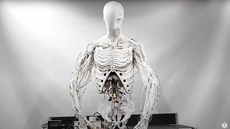 8 of the weirdest robots in the world right now
From humanoid AI-powered machines to tiny spider-like bots, 2024's robots are weird.
robotics -
 Future wearable devices could draw power through your body using background 6G cellphone signals
Excess energy from wireless 6G networks could be harvested by a copper coil and the human body.
communications -
 Meet 'Chameleon' – an AI model that can protect you from facial recognition thanks to a sophisticated digital mask
A new AI model can mask a personal image without destroying its quality, which will help to protect your privacy.
artificial-intelligence -
 Large language models not fit for real-world use, scientists warn — even slight changes cause their world models to collapse
Large language model AIs might seem smart on a surface level but they struggle to actually understand the real world and model it accurately, a new study finds.
artificial-intelligence


