













Great White Shark 'Autopsy' to be Webcast Live

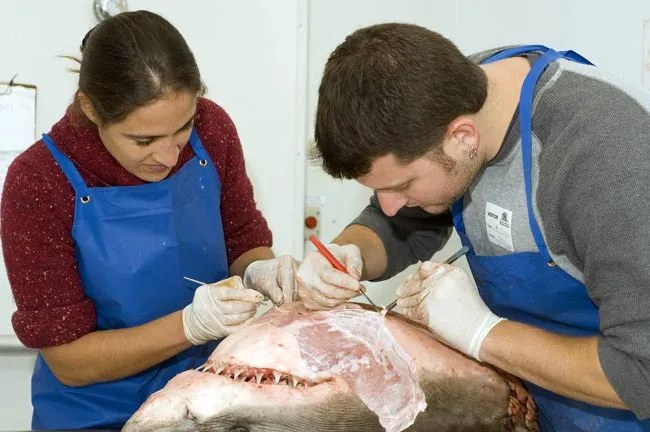
The shark is dead, but the webcast of its necropsy, or animal autopsy, will be live.
New Zealand researchers plan this week to cut open a 10-foot (3 meter) great white shark to see what's inside.
The female shark was retrieved in the Kaipara Harbour last week, entangled and dead in a gill net. The fisherman notified the Department of Conservation Auckland Area staff, who recovered the shark, a step that's legal in the country.
"This is a rare opportunity for people to get a close look at a great white, and to see how scientists find out more about the complexities of the natural world through their research," said Tom Trnski, Marine Curator of the Auckland Museum. "Little is known about the life history of these apex predators of the ocean, and we hope to learn more about the shark's recent past before it came into the harbour."
Despite great white's fearsome reputation, far more people are killed each year by dogs than have been killed by great white sharks in the last 100 years, according to a statement from the museum. A study in 2007 found that their bite is not as strong as suspected.
The operation will examine the shark's stomach contents, take measurements of internal organs, look at the gills and remove the jaws.
The event is reminiscent of a scene in "Jaws," when Richard Dreyfuss cuts open the stomach of a shark to reveal a crushed tin can and a licence plate.
Get the world’s most fascinating discoveries delivered straight to your inbox.
Great whites are at the top of the food chain, humans notwithstanding. Scientists consider them a vulnerable species, and the beasts are still targeted for trade in their teeth, jaws and fins.
The webcast will be available at aucklandmuseum.com. It is slated for 11 a.m. local time on Jan. 8, which is 5 p.m. ET on Jan. 7.
- Gallery: Great White Sharks
- Great White Lies About Great White Sharks
- Sharks: News, Features and Images
