













'Doomsday Vault' Gets New, Large Shipment of Rice
In hopes of bolstering our defenses in the event of a major food crisis, researchers sent tens of thousands of seeds from different types of rice last week to a "doomsday vault" in the archipelago Svalbard.
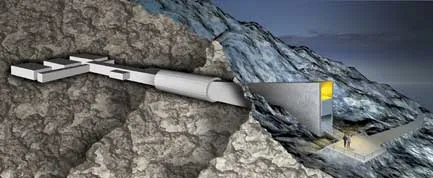
Contained in black boxes, the 42,627 samples of rice seeds traveled to the mountains of the Norwegian archipelago, about 746 miles (1,200 kilometers) from the North Pole. The Svalbard Global Seed Vault is buried deep inside the icy mountains, where it protects all of the world's important crop seeds in case of a man-made or natural disaster.
The rice collection was sent from the International Rice Research Institute (IRRI), whose first deposit to the doomsday vault included 70,180 rice-seed samples sent in 2008. If ideal temperature and storage conditions remain inside the vault, seeds can be stored for hundreds of years, scientists say.
Polar bear protection
The giant icebox of sorts, which was officially opened on Feb. 26, 2008, is designed to protect the world's crop diversity from natural or man-made disasters.
The vault, which officially opened on Feb. 26, 2008, is dug into the Platåberget mountain ("plateau mountain") located near the village of Longyearbyen, Svalbard – a group of islands north of mainland Norway. The arctic permafrost offers natural freezing for the seeds, while additional cooling brings the temperatures down to minus 0.4 degrees Fahrenheit (minus 18 degrees Celsius).
And if the mountain of snow enshrouding the storage rooms wasn't enough protection, what better bodyguard than one of nature's biggest beasts.
Get the world’s most fascinating discoveries delivered straight to your inbox.
"The region on Svalbard surrounding the seed vault is remote, severe, and inhabited by polar bears," according to the Global Crop Diversity Trust, which helps to support the vault's operations.
The preciousness of such seeds is reflected in the inaccessible nature of the vault. "Anyone seeking access to the seeds themselves will have to pass through four locked doors: the heavy steel entrance doors, a second door approximately 115 meters down the tunnel and finally the two keyed air-locked doors," the Trust writes. "Keys are coded to allow access to different levels of the facility. Not all keys unlock all doors."
Fail-safe backup
Like all seeds coming to the vault, the new ones are duplicates of those from other collections – in this case, duplicates are from those kept by IRRI's International Rice Genebank in Los Baños, in the Philippines.
So if seeds are lost due to natural disasters, war, or lack of resources, the seed collections can be reestablished from Svalbard.
The vault can hold 4.5 million seed samples — and since each sample contains about 500 seeds, a maximum of 2.25 billion seeds will fit into the vault. That means all the unique seed samples conserved today by the 1,400 or so genebanks located across the globe could have duplicates in the seed vault.
Jeanna Bryner is managing editor of Scientific American. Previously she was editor in chief of Live Science and, prior to that, an editor at Scholastic's Science World magazine. Bryner has an English degree from Salisbury University, a master's degree in biogeochemistry and environmental sciences from the University of Maryland and a graduate science journalism degree from New York University. She has worked as a biologist in Florida, where she monitored wetlands and did field surveys for endangered species, including the gorgeous Florida Scrub Jay. She also received an ocean sciences journalism fellowship from the Woods Hole Oceanographic Institution. She is a firm believer that science is for everyone and that just about everything can be viewed through the lens of science.