













Age of the Sierra Nevada Revealed

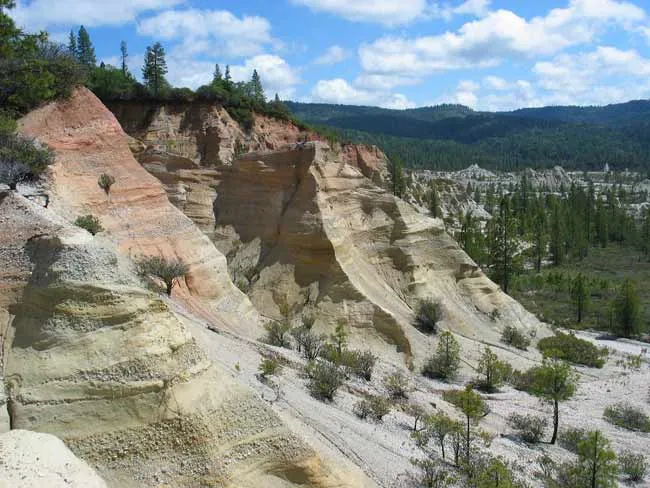
California's Sierra Nevada, an impressive mountain range that includes the popular Yosemite National Park, has done a great job of keeping its age a secret. But now a new study provides evidence that it's at least 40 million years old.
Scientists conducted a chemical analysis of ancient raindrops found in the Sierra during the California Gold Rush in the mid 1800's.
They figured out at what elevation a drop fell by looking at its molecules. In nature, hydrogen and other atoms can come in variations with slightly different masses.
For example, deuterium is a heavier form of hydrogen. Drops of rainwater that contain deuterium isotopes often fall at lower elevations.
"If you have a cloud coming in and dropping out water, as it climbs the mountain its preference is to first drop the heavy water that's rich in deuterium," explained C. Page Chamberlain, professor of geological and environmental sciences at Stanford University. "As you go up in elevation, the raindrops become lighter and lighter. Therefore, the rainwater becomes gradually depleted of deuterium the higher up the mountain range it falls."
These drops of water get trapped into molecules of minerals such as clay, which then provide a geological record that can be compared with modern samples of the same elevation.
If both ancient and modern samples are identical or contain similar isotopes, then their elevation must have been comparable.
Get the world’s most fascinating discoveries delivered straight to your inbox.
As it turned out, the old raindrop samples contained the same molecular ratios as the contemporary drops found at the same altitude, demonstrating that the water fell in the same spot 40 million years ago and that the mountain was as tall then as it is today.
"Determining the height of a now-eroded mountain range has remained frustrating and elusive," said co-author Stephan A. Graham of Stanford University. "Relating the isotopic composition of ancient rainfall to minerals formed in ancient soils provides a powerful way to infer those paleoelevations and is creating a burgeoning set of data from the Himalayas and Tibet, the Andes and now the Sierra Nevada."
The study is detailed in the July 7 issue of journal Science.
- Gallery: Magical Mountains
- Mt. Everest Shorter Than Thought
- Blobs Inside Earth Might Explain Rapid Mountain Building
- Surprise: High Ozone Levels in Mountains of Tibet
- Gallery: Earth As Art
