















The Strange Science of Summer

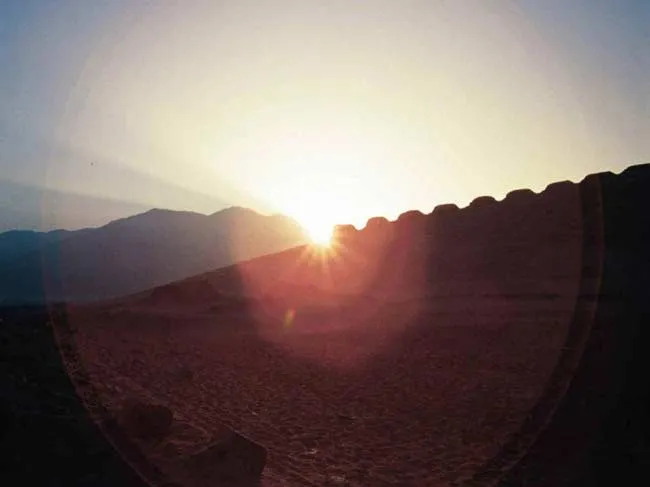
With 8 inches of hail falling in parts of Nebraska this week and Arizona reaching triple digit temperatures last week, it may seem rather arbitrary to call June 20 the first day of the summer this year, aka the summer solstice. But scientists really do have a reason.
It's all about Earth's cockeyed leanings and some celestial configurations that even the ancients understood.
Our planet is tilted 23.5 degrees on its spin axis. On June 20 this year (some years it's June 21), the North Pole is pointing toward the sun as much as is possible.
Imagine Earth as an apple sitting on one side of a table, with the stem being the North Pole. Tilt the apple 23.5 degrees so the stem points toward a candle (the sun) at the center of the table. That's summer for the top half of the apple. Now keep the stem pointing in the same direction but move the apple to the other side of the table: Now the stem points away from the candle, and it's winter on the top half of the fruit.
The setup at June solstice puts the sun as high in our sky as it can go, yielding the longest day of the year in the Northern Hemisphere.
Scientists put the exact moment of the solstice at 8:00 p.m. ET (keep in mind that the sun is always up somewhere, and the gods don't favor the Eastern time zone).
As long ago as the fourth century B.C., ancient peoples in the Americas understood enough of this that they could create giant calendars driven by sunlight. They built observatories of stone to mark the solstices and other times important for planting or harvesting crops. Shrines and even tombs were also designed with the sun in mind.
Get the world’s most fascinating discoveries delivered straight to your inbox.
The sun comes up each day (except at the poles) because our planet rotates once on its axis every 24 hours or so. It is Earth's tilt, and our 365-day orbit around the sun, that explain much about how our world changes during the year.
Seasons: As Earth orbits the sun, the orientation of the planet's axis, in relation to the sun, changes constantly. A quarter of the way around in the orbit, fall sets in. By winter, we'll be on the other side of the sun, with the North Pole pointing away from the sun. That winter solstice, around Dec. 21 each year, will be the Northern Hemisphere's shortest day, and researchers in Antarctica will be basking in 24-hour sunlight.
Shifting stars: As we orbit the sun, the part of the night sky that's in our view changes. A given star sets about 4 minutes earlier each night. Over a month, this amounts to two hours. In winter, this all means that we're looking at stars that during the summer were in our daytime sky, overwhelmed of course by the glare of the sun. Since we complete a circle every year, the stars of summer, such as the Big Dipper, are always the stars of summer.
Endless summer: At the North Pole, the sun rises once a year, around March 19. It rises until the summer solstice, then sinks but does not truly set until around Sept. 24.
During summer on the top half of Earth, our planet is actually farther from the sun than during winter, a fact owing to our non-circular orbit around the sun. The difference is about 3 million miles (5 million kilometers), and it makes a difference in radiant heat received by the entire Earth of nearly 7 percent. But the difference is more than made up for by the longer days in the Northern Hemisphere summer with the sun higher in the sky.
Which brings up a common question: If the June solstice is the longest day of the year, why are the dog days of August typically hotter? It takes a while for the oceans to warm up, and a lot of weather on land is driven by the heat of the oceans.

Robert is an independent health and science journalist and writer based in Phoenix, Arizona. He is a former editor-in-chief of Live Science with over 20 years of experience as a reporter and editor. He has worked on websites such as Space.com and Tom's Guide, and is a contributor on Medium, covering how we age and how to optimize the mind and body through time. He has a journalism degree from Humboldt State University in California.