
 Live Science Plus


Artist Creates Living Replica of Van Gogh's Ear

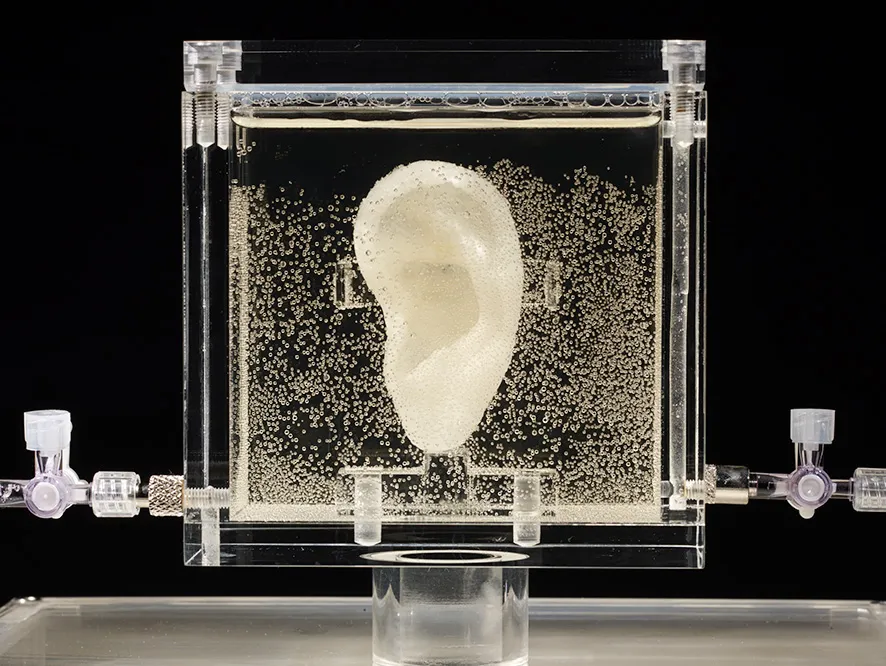
A descendent of Vincent van Gogh redefined "lending an ear" when he donated his DNA to help an artist create a living replica of the Dutch painter's famously severed feature.
The 3D-printed ear, identical in shape to Vincent van Gogh's, is on display at ZKM Karlsruhe Museum in Germany, where visitors are encouraged to talk into the ear through a microphone.
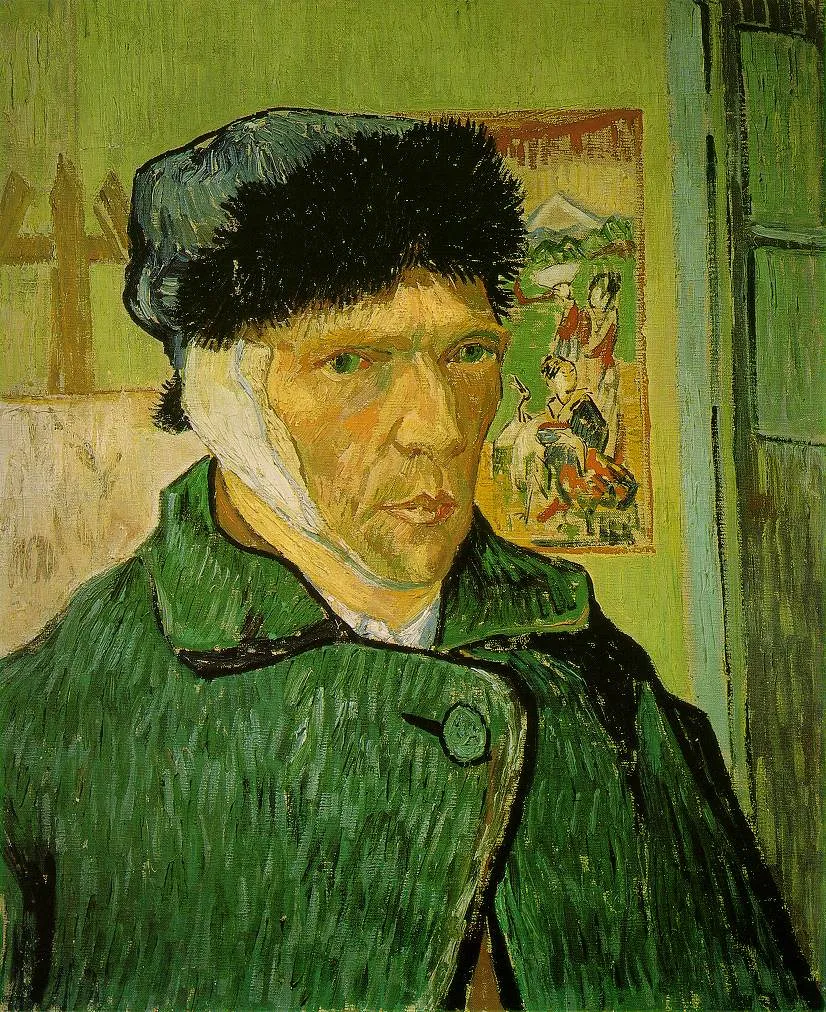
Diemut Strebe, an artist who often incorporates biological material into her work, wanted to reconstruct the ear that van Gogh sliced off in 1888 during a psychotic episode. To make it as genetically close to the real thing as possible, Strebe reached out to Lieuwe van Gogh, the great-great-grandson of van Gogh's brother Theo, and asked him to provide DNA from his ear cartilage cells, AFP reported. [The 10 Weirdest Things Created By 3D Printing]

Strebe and a team of scientists combined preserved DNA from an envelope historians believe Vincent van Gogh used in 1883 with the cartilage cells donated by Lieuwe van Gogh. They attached the living cells to synthetic DNA and squirted it into a synthetic, ear-shaped mold. The scientists then used computer modeling to ensure the mold was as close to the size and shape of Vincent van Gogh's ear as possible.
When visitors talk to the ear using the microphone, sound travels through the nutrient solution the ear is preserved in, where a computer simulates nerve impulses. The sound is then broadcast through a speaker.
Scientists have been 3D printing human body parts, tissues and organs for several years. The new technology is revolutionizing organ transplants and is making it possible to replace failing organs or missing body parts. But Strebe's goals were a little more esoteric.
The title of the living art piece, "Sugababe," is a reference to a philosophical problem, which the Greek historian Plutarch wrote about nearly 2,000 years ago in "The Life of Theseus": If a ship is restored by replacing all its parts, does it remain the same ship? (This type of question is sometimes referred to as the Sugababe paradox, after a British pop band with an ever-changing line-up.) Similarly, the van Gogh ear replica explores the idea of how much an individual's genetic code is a part of who he or she is.
Strebe's past work has included genetically engineered plants, photographs of scientists with litmus paper in their mouths and an art piece that was launched into space. The van Gogh ear replica is on display until July. Strebe will move her art collection, including the ear, to New York early next year.
Follow Kelly Dickerson on Twitter. Follow us @livescience, Facebook & Google+. Original article on Live Science.
