
 Live Science Plus


Teensy Sponge Soaks Up Venom in Blood

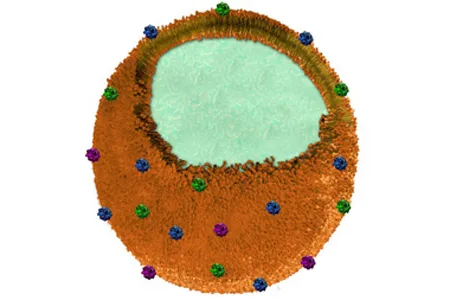
A tiny sponge camouflaged as a red blood cell could soak up toxins ranging from anthrax to snake venom, new research suggests.
The new "nanosponge," described April 14 in the journal Nature Nanotechnology, takes advantage of the fact that many threats, from superbugs to E. coli, use the same strategies to damage cells.

Follow-up studies need to be done in humans. But if those are positive, the tiny red-blood cell mimics could become a "universal platform that can be used to treat a lot of different toxins, said study co-author Che-Ming Hu, a bioengineer at the University of California, San Diego.
Tiny robots
One of the mainstay strategies of bacteria and poison is to poke holes in cells, disrupting their internal chemical balance and causing them to burst, Hu told LiveScience.
But so far, researchers haven't had much success creating all-purpose treatments to exploit this vulnerability.
So the researchers created a tiny spherical core of a lactic acid byproduct, which forms naturally during metabolism in the human body. They then wrapped the cores in the outer surface of red blood cells. (To get the outer skin of red blood cells, they used a difference in particle concentration inside and outside the cells to cause them to burst, and then collected their outer membranes)
The entire ensemble became a tiny nanosponge, which was about 85 nanometers in diameter, or 100 times smaller than a human hair, Hu said.
In cell cultures, the camouflaged sponges act as decoys, luring the toxins from MRSA, Streptococcus (the bacteria that causes strep throat) and bee venom to their surface, then binding to the structure the "poisons" normally use to poke through cells. [In Photos: Top 10 Deadliest Animals]
"When they stick onto the nanosponge, that particular damaging structure gets preoccupied, and then the body can digest the entire particle," Hu told LiveScience, referring to the toxin and the nanosponge together.
Next, the team injected 18 mice with a lethal dose of a MRSA toxin. Half the mice then got a dose of the nanosponges.
Whereas all the mice in the control group died, all but one that received the treatment survived.
Widespread treatment
Because so many bacteria use the same pore-forming strategy, the nanosponges could be used as a universal treatment option when doctors don't know exactly what is causing an illness.
The sponges' tiny size means a small amount of blood, for camouflage, can be used to make an effective dose. Their small size also allows them to circulate freely through blood vessels, lure enough of the toxins to have an impact and still be degraded safely, Hu said.
As a follow-up, the researchers want to see whether the method works in human blood, and against other toxic chemicals, such as scorpion venom and anthrax, which use similar attack strategies.
Follow Tia Ghose on Twitter @tiaghose. Follow LiveScience @livescience, Facebook & Google+. Original article on LiveScience.com.
