What do you do when you run across hundreds of nameless species of beetle in the wilderness of New Guinea?
No, the correct answer is not "run away screaming" — at least if you're a scientist dedicated to discovering the massive diversity of insect life. Instead, researchers from the German Natural History Museum Karlsruhe and the Zoological State Collection in Munich turned to the phone book to label all the new species.
After discovering hundreds of distinct species of weevils (a superfamily of beetles) in the genus Trigonopterus, scientists Alexander Riedel and Michael Balke realized they could spend a lifetime describing and naming them all. So they created a scientific shortcut: sequencing a portion of each weevil's DNA to sort out the different species and taking photographs for the online database Species ID, a Wikipedia-like website for cataloguing biodiversity.
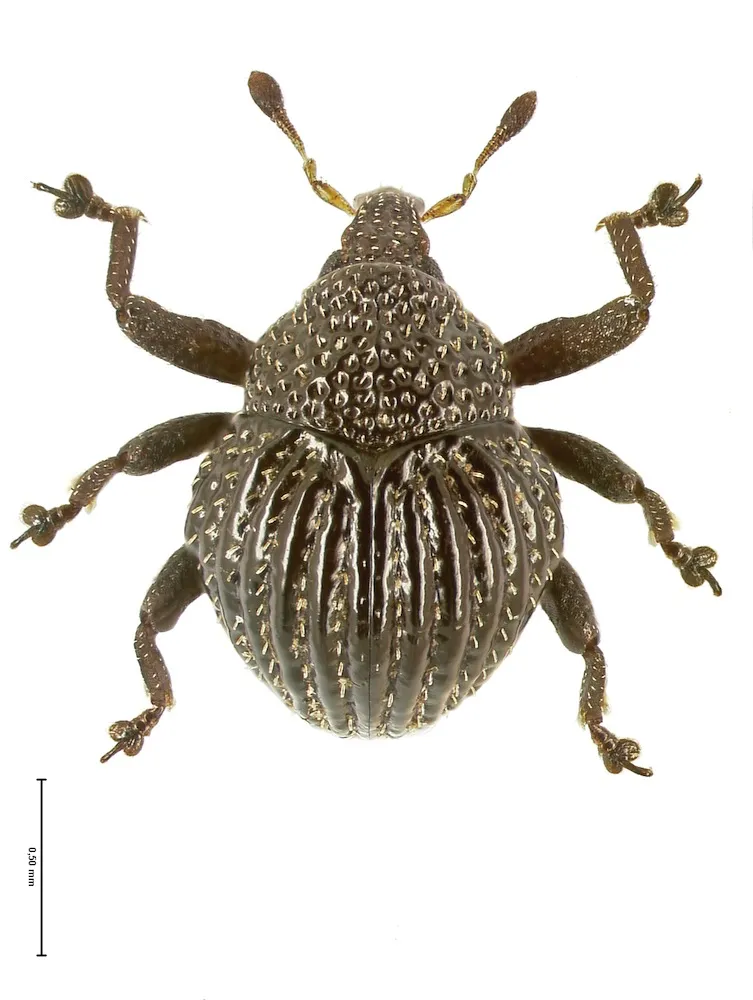
This is a picture of Trigonopterus moreaorum, which is named after the popular Papuan family surname "Morea."
(Image credit: Alexander Riedel)
"More than 100 species were brought to the light of science and public attention this way right now — about five times faster than possible with traditional techniques," Riedel said in a statement.
To quickly label the species, the researchers used common family names from the Papua New Guinea phone book. One weevil got the moniker Trigonopterus moreaorum after the common name "Morea."
Naming species after people is not new, with several insects and other organisms being donned with celebrity names; such starstruck species include the horse fly Scaptia (Plinthina) beyonceae, named after pop diva Beyoncé; two newfound lichens and a trapdoor spider species named after President Obama; a Caribbean crustacean donned with Bob Marley's name; and more recently a parasitic wasp with a lethal lifestyle taking its name from assassin Beatrix Kiddo, the heroine played by Uma Thurman in Quentin Tarantino's "Kill Bill" films.
Riedel and colleagues report the discovery of the 101 new weevil species today (March 27) in the journal Zookeys. They discuss their fast track to taxonomy in the journal Frontiers in Zoology.
Sign up for the Live Science daily newsletter now
Get the world’s most fascinating discoveries delivered straight to your inbox.
Stephanie Pappas is a contributing writer for Live Science, covering topics ranging from geoscience to archaeology to the human brain and behavior. She was previously a senior writer for Live Science but is now a freelancer based in Denver, Colorado, and regularly contributes to Scientific American and The Monitor, the monthly magazine of the American Psychological Association. Stephanie received a bachelor's degree in psychology from the University of South Carolina and a graduate certificate in science communication from the University of California, Santa Cruz.