














Popcorn-Shaped Nanoparticles Sniff Out Bad Food
This Research in Action article was provided to LiveScience in partnership with the National Science Foundation.
Nanoparticles in the lab can detect contamination in food, new researcher suggest. Using the new test, a simple color change indicates whether or not specific bacteria are present.
The nanoparticles are affixed with molecules which can detect bacterial proteins. These molecules are similar to proteins in our bodies called antibodies, which help our immune systems recognize and fight infection.
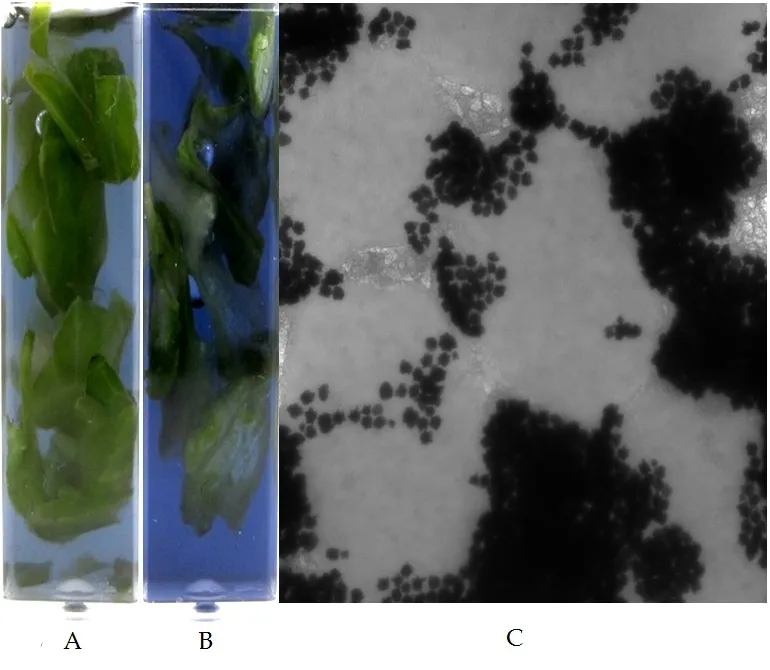
In image A above, nanoparticles in the liquid have changed color to indicate the presence of Salmonella bacteria, which can cause illness in humans, on samples of lettuce. The sample in image B is not contaminated. Image C shows the popcorn-shaped gold nanoparticles (black specks in the image) surrounding bacterial invaders (light-colored objects in the upper part of the image) seen through a high-magnification microscope.
The nanoparticles can be used to indicate in about five minutes whether or not a sample is contaminated, while traditional tests take hours or even days. A faster way to detect Salmonella, especially strains that cause disease in both food and drinking water, could help prevent many cases of food poisoning. Paresh C. Ray, a researcher at Jackson State University, presented the research at the March 2012 meeting of the American Chemical Society.
Support for this work was provided by a Partnership for Research and Education in Materials award from the National Science Foundation. The objective of the award is to broaden participation and enhance diversity in materials research and education by stimulating the development of long-term collaborative research and education partnerships.
Editor's Note: Any opinions, findings, and conclusions or recommendations expressed in this material are those of the author and do not necessarily reflect the views of the National Science Foundation. See the Research in Action archive.
Get the world’s most fascinating discoveries delivered straight to your inbox.