













Collapse of Mayan Civilization Traced to Dry Spells

The collapse of the ancient Mayan civilization may have been linked to relatively modest dry spells, researchers now say.
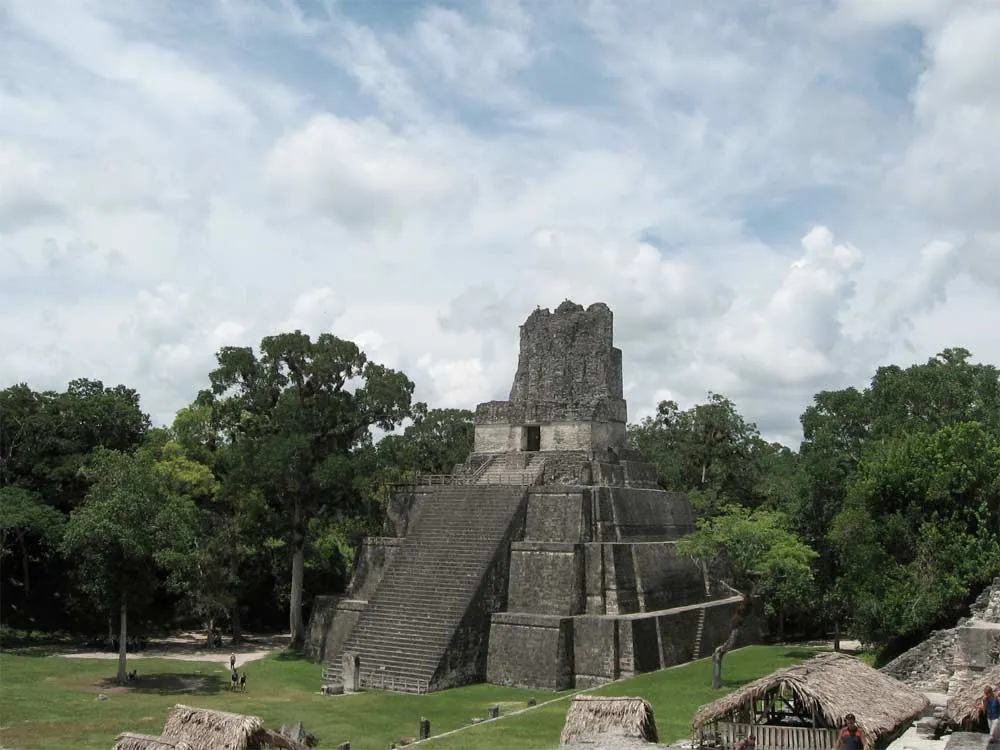
The ancient Mayan empire once stretched across an area about the size of Texas, with cities and fields occupying what is now southern Mexico and northern Central America, including the countries of Guatemala, with the iconic city of Tikal, as well as Belize, El Salvador and Honduras. The height of the Mayan empire, known as the Classic period, reached from approximately A.D. 250 to at least A.D. 900.
The ancient Maya had what was arguably the most advanced civilization in the Americas. For instance, they made dramatic breakthroughs in astronomy that helped them very accurately predict where the moon and other planets would be in the sky centuries in the future. They also left behind many books and stone inscriptions regarding the stories of their gods and the history of their divine kings and queens.
For unknown reasons, the ancient Mayan civilization then disintegrated more than a millennium ago. The number of people declined catastrophically to a fraction of the empire's former size, and the ruins of its great cities are now largely overgrown by jungle. [Photos: First Glimpse into a Mayan Tomb]
Scientists have long drawn connections between the slow decline of the ancient Maya, which took about two centuries, "to climate change, and especially to drought," said researcher Martín Medina-Elizalde at the Yucatan Center for Scientific Research in Mexico. "No sound estimates had been made about the severity of this drought, but some have suggested extreme scenarios."

To see how much rainfall the ancient Maya saw before the demise of their civilization, the researchers combined the four most detailed records of past climate changes known regarding the civilization's collapse — three from nearby lakes and one from a stalagmite, a mineral formation that grows upward from a cave floor. This helped develop a model of "the region's balance between evaporation and rainfall," Medina-Elizalde said.
The scientists found that rainfall in the region decreased episodically for periods as long as a decade at a time.
Get the world’s most fascinating discoveries delivered straight to your inbox.
"Our results show rather modest rainfall reductions between times when the Classic Maya civilization flourished and its collapse between 800 to 950," said researcher Eelco Rohling, a paleoclimatologist at the University of Southampton in England. "These reductions amount to only 25 to 40 percent in annual rainfall, but they were large enough for evaporation to become dominant over rainfall, and open water availability was rapidly reduced. The data suggest that the main cause was a decrease in summer storm activity."
The timing of these dry spells might help explain why modest reductions in rainfall still may have helped cause the demise of a well-established civilization.
"Summer was the main season for cultivation and replenishment of Maya freshwater storage systems and there are no rivers in the Yucatan lowlands," Rohling said.
It appeared to Rohling that the ancient Maya had become reliant on continuous rainfall supplies, and had stretched the capacity of their farmlands to a fine limit based on normal levels of rain. "Then, even a rather subtle climatic change was enough to create serious problems," he told LiveScience. "Societal disruptions and abandonment of cities are likely consequences of critical water shortages, especially because there seems to have been a rapid repetition of multiyear droughts."
Rohling emphasized they are not saying that climate ended the ancient Mayan civilization. "We are documenting that there was a reduction in rainfall, and that reservoirs of water were evaporating," he said. This may in turn have led to societal unrest or diseases or both, "which are more likely to explain the actual collapse of society."
The scientists noted that the droughts they saw during the demise of the ancient Mayan civilization were similar in severity to those projected by the Intergovernmental Panel on Climate Change (IPCC) for the near future in the same region. [10 Surprising Results of Global Warming]
"There are differences too, but the warning is clear — what seems like a minor reduction in water availability may lead to important, long-lasting problems," Medina-Elizalde said. "This problem is not unique to the Yucatan Peninsula, but applies to all regions in similar settings where evaporation is high. Today, we have the benefit of awareness, and we should act accordingly."
The scientists detailed their findings in the Feb. 24 issue of the journal Science.
Follow LiveScience for the latest in science news and discoveries on Twitter @livescience and on Facebook.
