
 Live Science Plus


Parkinson's Disease, Melanoma Linked
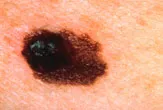
Men with Parkinson's disease are twice as likely as those without it to be diagnosed with melanoma, the most dangerous form of skin cancer, a new report suggests. And women with Parkinson's were one-and-a-half times as likely to be diagnosed with the cancer as women without it.
The link between the two conditions may indicate an underlying trigger for both diseases, said the study author.
Further, the researchers found the link was "bidirectional," meaning melanoma was more common in patients both before and after the onset of Parkinson's.
"It is unlikely that one disease has caused the other, but there is shared risk factors for both," said study researcher Dr. Honglei Chen, of the National Institute of Environmental Health Sciences in Research Triangle Park, N.C. These factors could be environmental or genetic, he said.
The research will be published tomorrow (June 7) in the journal Neurology.
A movement disorder
Parkinson's disease, which affects 1 million to 1.5 million people in the United States, is a brain disorder that causes tremors and difficulty with movement. Currently, there is no cure, but medicines are available to treat its symptoms.
The researchers analyzed 12 studies of the link between Parkinson’s and melanoma conducted between 1965 and 2010. A connection had been investigated for decades, but the previous studies were inconclusive because the numbers of patients were so small — most had fewer than 10 patients with both conditions.
By pooling the data from those studies, the researchers were able to investigate the timing of the connection between the diseases.
Chen said more research is needed to discover what factors might be at work in both diseases. "Our understanding of this link is very preliminary," he said.
The study "implies that there is possible widespread cellular dysfunction in Parkinson's disease affecting more than just neurons," said Dr. Anna DePold Hohler, assistant professor of neurology at Boston University School of Medicine. Hohler has had several patients with both conditions, but was not involved in this research.
In those with Parkinson's disease, numerous changes are found in the brain, including lower levels of the chemical messenger dopamine and damaged nerve endings, according to the Mayo Clinic. The role of these changes in the development of the disease, however, isn't clear.
About 68,000 people in the U.S. are diagnosed with melanoma each year. The exact causes of melanoma aren't clear, but exposure to ultraviolet radiation from sunlight or tanning beds increases the risk. Genetic factors likely also play a role, according to the Mayo Clinic.
Skin cancer screening
"The reasons for us to understand the risk factors, particularly the avoidable risks, is to prevent these diseases," Chen said. Melanoma in its early stages is very treatable, he said. And Parkinson's disease also has treatments available to slow the development of the disease.
Hohler recommended yearly screenings by a dermatologist for patients with Parkinson's.
Chen, however, cautioned patients with either condition should not be too alarmed because both conditions are still fairly rare.
The implications for this link extend beyond the treatment of these conditions, Chen said, and are part of a larger scientific investigation of factors underlying neurological diseases. Other researchers are investigating possible connections between specific cancers and Alzheimer's disease and amyotrophic lateral sclerosis, or ALS, a rare neurological disease.
Pass it on: Parkinson's patients are at a higher risk for melanoma, a dangerous form of skin cancer.
This story was provided by MyHealthNewsDaily, sister site to LiveScience. Follow MyHealthNewsDaily on Twitter @MyHealth_MHND.
Get the world’s most fascinating discoveries delivered straight to your inbox.