













'Doomsday glacier' won't collapse the way we thought, new study suggests

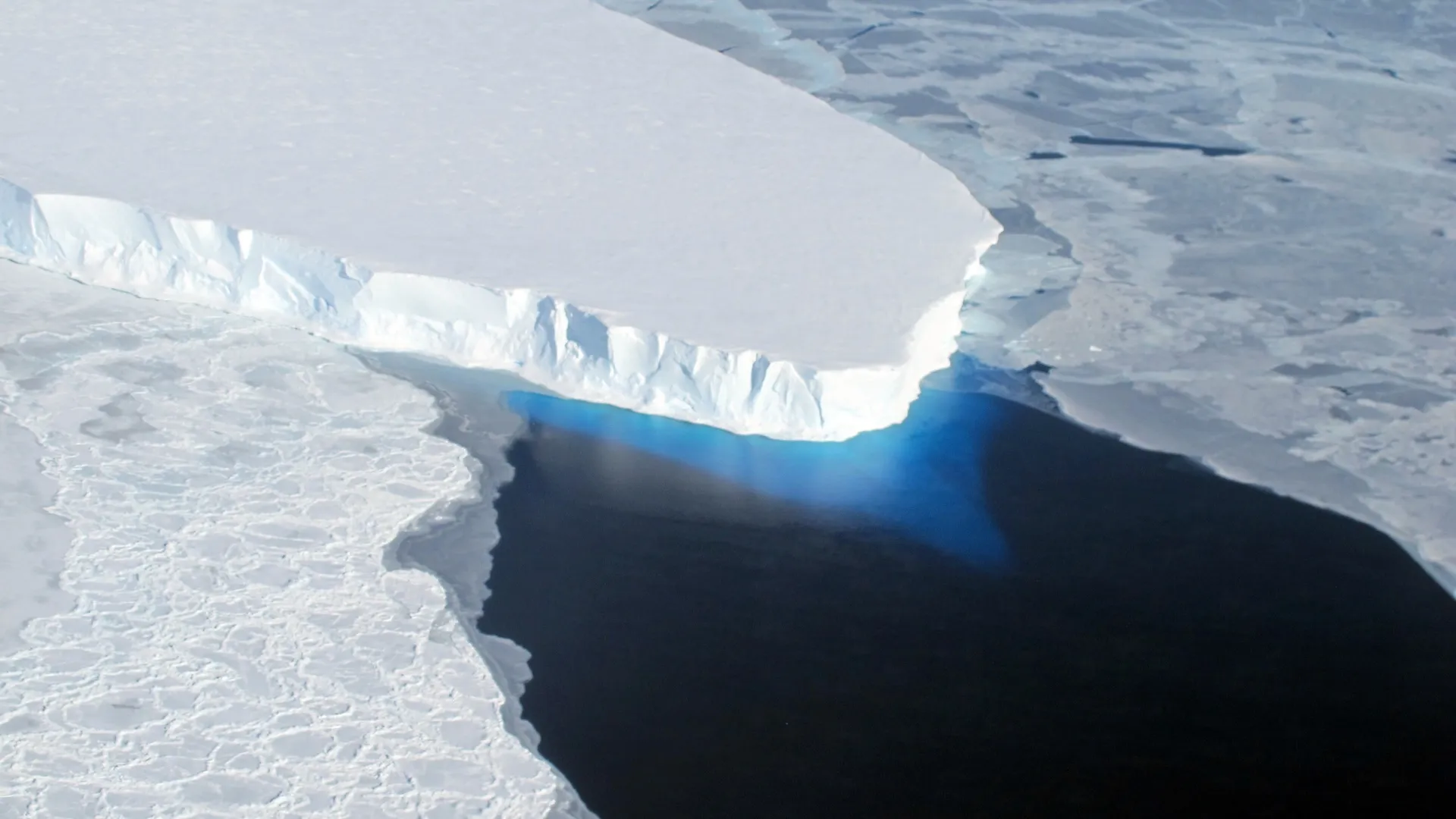
Antarctica's Thwaites Glacier got its nickname the "Doomsday Glacier" for its potential to flood coastlines around the world if it collapsed. It is already contributing about 4% of annual sea-level rise as it loses ice, and one theory suggests the glacier could soon begin to collapse into the ocean like a row of dominoes.
But is that kind of rapid collapse really as likely as feared? A new study of Thwaites Glacier's susceptibility to what's known as marine ice cliff instability offers some hope. But the findings don't mean Thwaites is stable.
Polar scientist Mathieu Morlighem, who led the study, explains the results.
Why is the Thwaites Glacier so important?
Thwaites Glacier drains a huge area of Antarctica's ice sheet — about 74,000 square miles (192,000 square kilometers), an expanse bigger than Florida. If a snowflake falls within that drainage system, it will eventually end up as part of an iceberg in the ocean off Thwaites.
What we are seeing with Thwaites Glacier right now is a disaster in slow motion.
The bedrock under Thwaites Glacier sits below sea level and slopes downward going inland, so the glacier gets deeper toward the interior of the ice sheet. Once the glacier begins losing more ice than it gains from new snowfall and starts to retreat, it's very hard to slow it down because of this slope. And Thwaites is already retreating at an accelerating rate as the climate warms.
Related: 'We were in disbelief': Antarctica is behaving in a way we've never seen before. Can it recover?
Get the world’s most fascinating discoveries delivered straight to your inbox.

A cross-section showing an ice shelf and inward-sloping bedrock.
Thwaites Glacier holds enough ice to raise global sea level by more than 2 feet (0.65 meters). Once Thwaites starts to destabilize, it also will destabilize neighboring glaciers. So, what happens to Thwaites affects all of the West Antarctic Ice Sheet, and that affects sea-level rise along coastlines everywhere.
What is marine ice cliff instability?
Marine ice cliff instability is a relatively new concept proposed by scientists in the past decade.
Many of the glaciers around Antarctica have huge floating extensions called ice shelves that buttress the glacier and slow its ice flow into the ocean. With the climate warming, we have seen some of these floating extensions collapse, sometimes very rapidly, in the span of a few weeks or months.

The front of Thwaites' floating ice shelf is over 200 feet (60 meters) tall in places. It becomes higher closer to land.
If Thwaites' ice shelf were to collapse, it would expose a very tall ice cliff facing the ocean along its 75-mile (120-kilometer) front. There is only so much force that ice can sustain, so if the cliff is too tall, it will collapse into the ocean.
Once that happens, a new ice cliff farther back would be exposed, and the new cliff would be even taller because it is farther inland. The theory of marine ice cliff instability suggests that if the cliffs collapse quickly enough, that could have a domino effect of ever-higher ice cliffs collapsing one after the other.
However, no one has observed marine ice cliff instability in action. We don't know if it will happen, because a lot depends on how quickly the ice collapses.
What did you discover about the risk to Thwaites?
When the theory of marine ice cliff instability was first introduced, it used a rough approximation of how ice cliffs might collapse once the ice shelf was gone.
Studies since then have determined that ice cliffs won't fail systematically until the ice is about 442 feet (135 meters) high. Even at that point, they would fail more slowly than projected until they became much taller.
We used three high-resolution models to explore what this new physical understanding of ice cliff instability would mean for Thwaites Glacier this century.
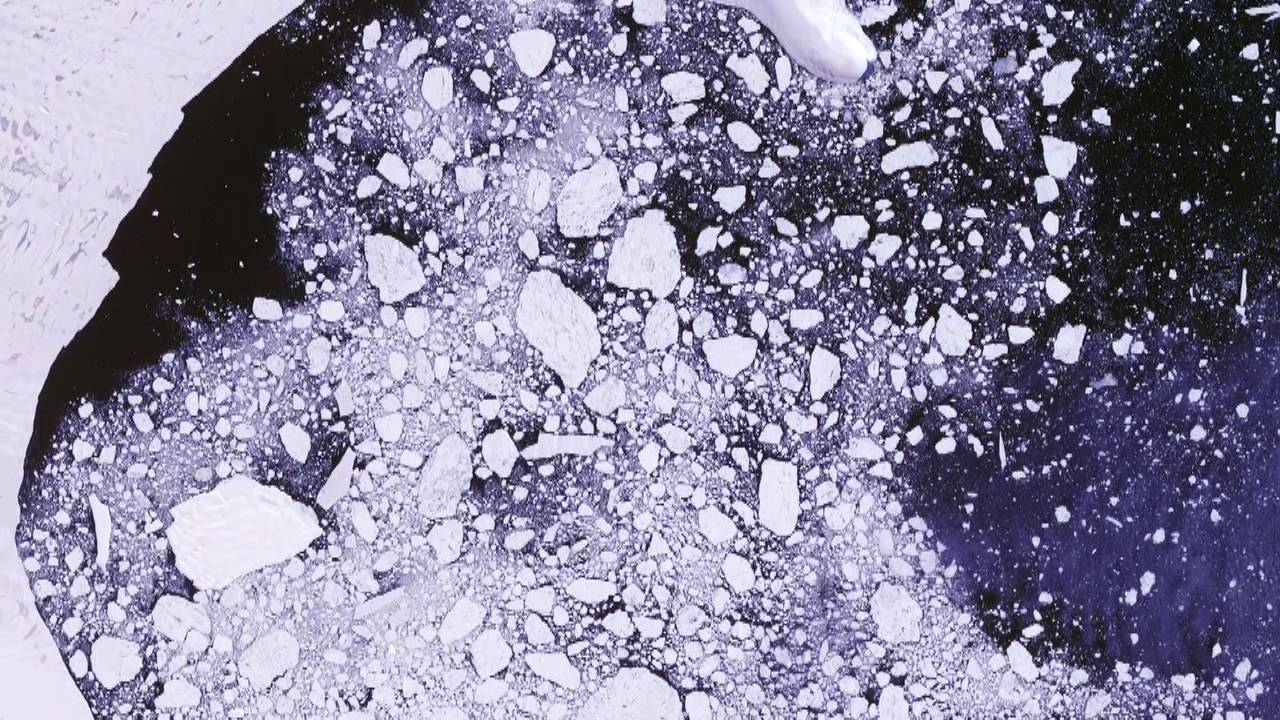
Our results show that if Thwaites' entire ice shelf collapsed today, its ice front would not rapidly retreat inland due to marine ice cliff instability alone. Without the ice shelf, the glacier's ice would flow much faster toward the ocean, thinning the front of the glacier. As a result, the ice cliffs wouldn't be as high.
We found that Thwaites would remain fairly stable at least through 2100. We also simulated an ice shelf collapse in 50 years, when the glacier's grounding line — where its grounded ice meets the ocean — would have retreated deeper inland. Even then, we found that marine ice cliff instability alone would not cause a rapid retreat.
The results call into question some recent estimates of just how fast Thwaites might collapse. That includes a worst-case scenario that the Intergovernmental Panel on Climate Change mentioned in its latest assessment report but labeled as "low likelihood."
Thwaites is the glacier everyone is worried about. If you model the entire ice sheet, this is where marine ice cliff instability starts and where it propagates far inland. So, if Thwaites isn't as vulnerable to ice cliff failure as we thought, that's a good sign for the entire ice sheet.
But marine ice cliff instability is only one mechanism of ice loss. This finding doesn't mean Thwaites is stable.
What else is causing glaciers to retreat at an accelerating rate?
There are many processes that make the Antarctic ice sheet unstable, some of them very well understood.
RELATED STORIES
Ice-ocean interactions explain most of the recent ice mass loss so far. Antarctica is a very cold place, so atmospheric warming isn't having a large effect yet. But warm ocean currents are getting under the ice shelves, and they are thinning the ice from below, which weakens the ice shelves. When that happens, the ice streams flow faster because there is less resistance.
Over the past few decades, the Amundsen Sea sector, where Thwaites and Pine Island glaciers are located, has seen an intrusion of warm water from the Antarctic Circumpolar Current, which has been melting the ice from below.
What does climate change have to do with it?
Antarctica can seem like a faraway place, but human activities that warm the planet — such as burning fossil fuels — are having dramatic effects at the poles. Ice loss contributes to sea-level rise, affecting coastal regions around the world.
People's choices today will determine how quickly the water rises.
This edited article is republished from The Conversation under a Creative Commons license. Read the original article.

Mathieu Morlighem is the Evans Family Distinguished Professor of Earth Sciences at Dartmouth College. His research group focuses on the physics of glacier ice and the role of the ice sheets in the climate system. Ice sheets play a central role in the climate system: They store significant amounts of fresh water and are the conveyor belts for transporting snow that accumulates inland back into the oceans. The interactions of the ice sheets with the atmosphere and the ocean have an internal variability but also affect the coupled ice sheet–climate response to external forcings on time scales of months to millions of years. If the current warming of the climate continues, the ice sheets will respond at a yet unknown rate, with unknown consequences for the rest of the climate system. A better understanding of the processes driving these changes is critical to improve projections of sea level rise. Morlighem combines numerical modeling techniques and remote sensing to improve our understanding of ice dynamics and how they affect the climate system. He uses and develops the Ice-sheet and Sea-level System Model (ISSM) to address these questions.