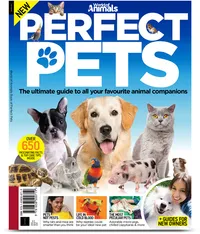
Cats and dogs may eventually need their own COVID-19 vaccines to prevent the coronavirus from evolving further and "spilling" back to humans, according to one group of researchers.
SARS-CoV-2, the virus that causes COVID-19, is known to infect a number of animals besides humans, including cats, dogs, minks, tigers and gorillas. However, at this time, scientists don't think animals play a significant role in spreading the virus to people, and reports of COVID-19 in pets are rare, according to the Centers for Disease Control and Prevention (CDC).
Still, the authors of a new editorial, published Jan. 25 in the journal Virulence, say that these animal "reservoirs" may pose a risk to humans down the road, because there is the potential for the virus to evolve in those species and spread back to people.
"The risk is that, as long as there are these reservoirs, that it starts to pass ... from animal to animal, and then starts to evolve animal-specific strains," Kevin Tyler, editor-in-chief of Virulence and co-author of the editorial, told the wire service PA Media. Then, the strains could "spill back into the human population and you end up essentially with a new virus which is related, which causes the whole thing all over again."
As such, "it is not unthinkable that vaccination of some domesticated animal species might also be necessary to curb the spread of the infection," the authors wrote in the editorial.
However, the authors are not calling for vaccinating dogs and cats against COVID-19 right now, but instead proposing the idea to be considered in the future.
"It is important to stress that we are not seeing onward transmission in cats (or dogs) at the moment and there is no need for owners to consider vaccinating [their pets] right now, but we should be prepared for that as a possibility at some stage," Tyler told Live Science in an email.
Indeed, the U.S. Department of Agriculture (USDA) is not currently granting approvals for licenses for COVID-19 pet vaccines, because at this time, "data do not indicate such a vaccine would have value," according to Science magazine. "Companies are still free to do research and development on these vaccines … but without a license, they can't sell or distribute them," USDA spokesperson Joelle Hayden told Science.
But COVID-19 vaccines for minks — which have caught the disease in large numbers on mink farms and spread it back to humans in some cases — are another story. The USDA is accepting license applications for COVID vaccines for minks, and researchers in the U.S. and Russia are currently developing vaccines for minks, according to The New York Times.
More broadly, the new editorial calls for the continued use of strict health and safety measures to reduce the transmission and evolution of new SARS-CoV-2 variants.
"Continuing public health efforts to encourage vaccination as well as continued use of proper personal protective equipment (PPE), such as proper masking and maintaining safe social interactions, is of utmost importance," they said.
Originally published on Live Science.