
-
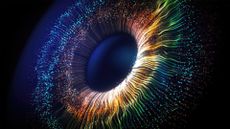 Scientists hijacked the human eye to get it to see a brand-new color. It's called 'olo.'
Using an experimental technique called "Oz," researchers stimulated the human retina such that people saw a brand-new color.
51 Commentsneuroscience -
 Study of 9,000 twins reveals genetics influences how much you enjoy music
Genes affect different aspects of music enjoyment — from the emotional reactions that compositions evoke to the social connection music can foster.
neuroscience -
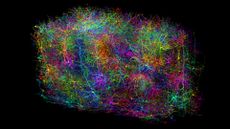 Largest-ever brain 'connectome' built by having a mouse watch 'The Matrix' and 'Star Wars'
Using advanced microscopes that capture brain cell anatomy and activity, a portion of a mouse's brain was mapped and rendered into a 3D atlas that creates new possibilities for neuroscience.
neuroscience -
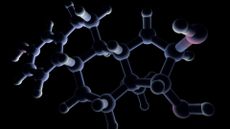 Estrogen may spur the body to make opioids after injury
The female sex hormone estrogen, along with progesterone, appears to underlie a fundamental difference in how males and females process pain, a mouse study finds.
neuroscience -
 The brain may 'move' between related ideas in the same way it navigates from one location to another
Using a mathematical model, scientists explored how the human brain might represent information about physical spaces and about people, places and things. Turns out, it may process both in a similar way.
neuroscience -
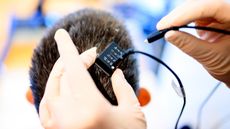 Mind-reading brain implant 'streams' thoughts instantaneously
Researchers have used a mind-reading brain implant to continuously play a paralyzed person's thoughts through a speaker, allowing them to talk again.
2 Commentsneuroscience -
 Your brain starts eating itself during a marathon, study finds
Under extreme metabolic conditions, like a marathon, the brain may turn to cellular fat stores to maintain function, according to a new study.
neuroscience -
 How much of your brain do you need to survive?
Case reports of people with atypical brains reveal the human brain's staggering ability to adapt to damage.
neuroscience -
 Evidence refuting free will is being misinterpreted, scientists argue
Neuroscience research claiming to question the existence of free will may have been misinterpreted.
2 Commentsneuroscience


