
-
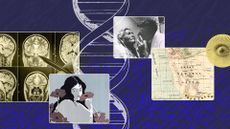 Rare genetic disease makes scientists reconsider what the 'seat of fear' in the brain really is
People with a rare genetic disorder that damages the amygdala are helping neuroscientists rethink how the brain shapes fear, trust and concern for others.
neuroscience -
 Landmark finding that showed brains of kids with ADHD mature later was actually a mirage in the data, new research finds
A "foundational" study found that the brains of children with ADHD matured later, but that finding was likely a mirage tied to issues with how the children were followed over time.
6 Commentsneuroscience -
 Why aren't brain transplants possible?
Life's Little Mysteries Lining up donor and recipient nerves for a potential brain transplant is one thing. Getting them to communicate is another.
3 CommentsLife's Little Mysteries -
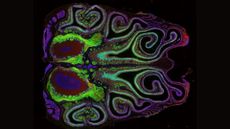 First-of-its-kind map of the mouse nose reveals surprises about the sense of smell
A new map shows how smell receptors in the mouse nose are precisely organized into tight bands based on type.
neuroscience -
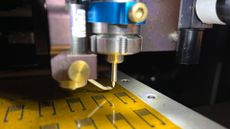 Scientists invent artificial neurons that 'talk' to real brain cells, paving way to better brain implants
Engineers have found a way to fine-tune tiny artificial neurons to fire like real brain cells.
neuroscience -
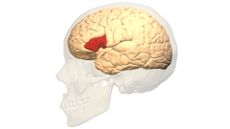 Science history: Doctor autopsies the brain of a man who couldn't speak — and reveals the seat of spoken language — April 18, 1861
Dr. Paul Broca conducted an autopsy on a patient known as "Tan," who had aphasia, or the inability to speak. Broca's work identified a region of the brain that is key to spoken language.
neuroscience -
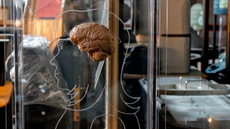 The 'sweet spot' of overconfidence — project a bit to be perceived as competent, but don't be 'too seduced,' a cognitive neuroscientist explains in a Q&A
INTERVIEW Q&A with cognitive neuroscientist Steve Fleming: What the science of self-awareness can tell us about confident decision-making
INTERVIEW -
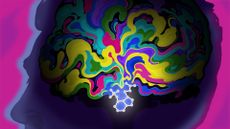 Psychedelics may rewire the brain to treat PTSD. Scientists are finally beginning to understand how.
New research shows MDMA and psilocybin may restore neural flexibility in people with PTSD, thereby helping the brain unlearn fear and relearn safety.
8 Commentsneuroscience -
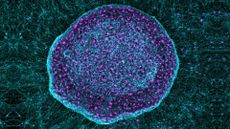 'Pain sponge' derived from stem cells could soak up pain signals before they reach the brain
Scientists are developing a "sponge" that can soak up pain signals in the body before they reach the brain, potentially offering an alternative to painkillers.
4 Commentsneuroscience


