It's quick and easy to access Live Science Plus, simply enter your email below. We'll send you a confirmation and sign you up for our daily newsletter, keeping you up to date with the latest science news.
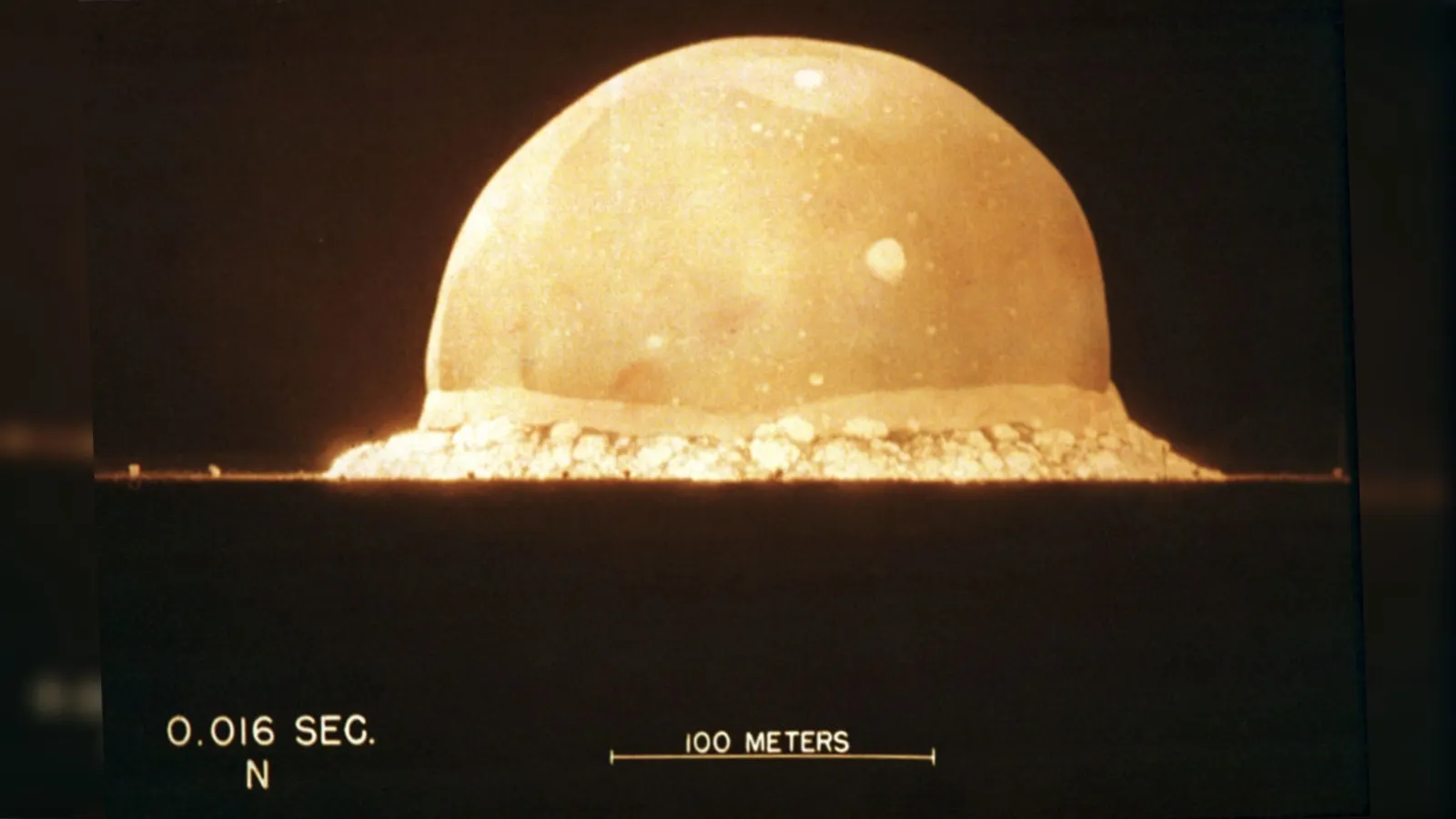
On a dark July morning in 1945, U.S. scientists and military personnel detonated the world's first nuclear bomb in a remote area of New Mexico. The blast unleashed the energy equivalent of 25,000 tons of TNT, completely vaporizing the bomb's drop tower and reducing the desert sand within a 1,000-foot (300 meters) radius to glass.
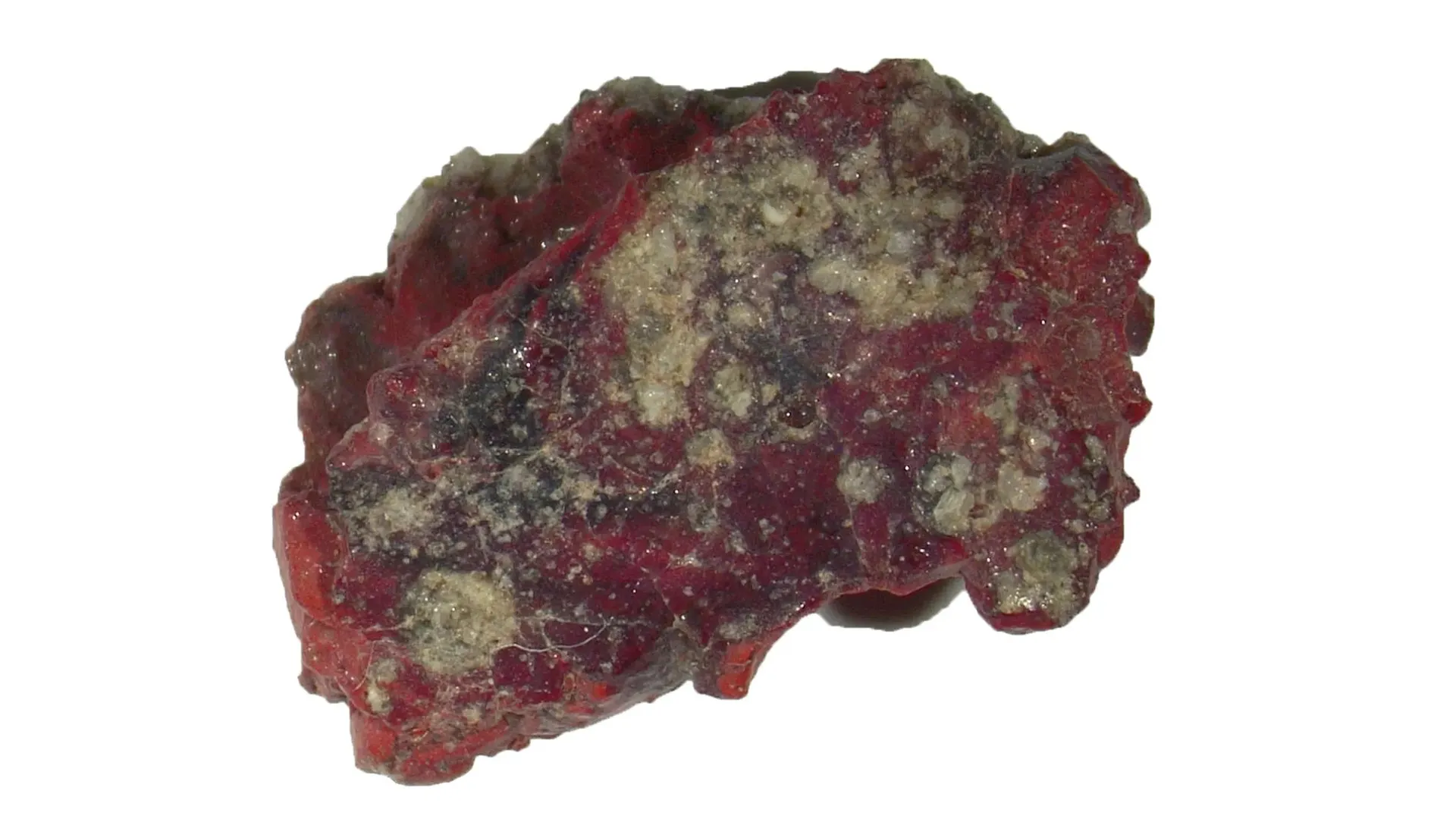
Scientists later dubbed this pale-green-and-red, faintly radioactive glass "trinitite" after the test site, Trinity. Now, more than 80 years later, researchers have discovered that some red trinitite contains unique crystals found nowhere else in nature. They detailed the finding in a study published May 11 in the journalPNAS.
The investigation was sparked by a different mineral: an unusual quasicrystal previously identified in samples of red trinitite. Unlike most quasicrystals, which are composed primarily of aluminum, this quasicrystal is rich in silicon. Its existence suggested there might be other bizarre crystals hidden in the Trinity glass.
"We wanted to further explore these extreme-formation products,"Luca Bindi, a mineralogist at the University of Florence in Italy and first author of the new study, told Live Science in an email.
History in a crystal
Bindi and his team used an electron microprobe and X-ray diffraction to examine a rare "oxblood" variant of red trinitite. The striking crimson color of this sample came from the disintegrated test tower and the metal equipment surrounding it. Metallic droplets from these structures were trapped inside the molten silicon glass as it fused in the blast, changing its hue from sage to scarlet.
A photograph of the Trinity atomic bomb test on July 16, 1945.
(Image credit: Photograph on display in the Bradbury Science museum, photo copied by Joe Raedle)
In this sample, the researchers found a never-before-seen clathrate crystal. Clathrates are a type of crystalline structure in which one element forms a "cage," trapping other atoms inside. In this case, atoms of silicon enclosed copper and calcium inside linked 12- and 14-sided crystal lattices. This type of arrangement is rare in nature, especially for inorganic compounds, the team said.
This marks the first time clathrate crystals have been found as a byproduct of a nuclear blast. During the Trinity explosion, temperatures exceeded 2,700 degrees Fahrenheit (1,500 degrees Celsius), and pressures briefly climbed to 8 gigapascals — comparable to the pressure deep beneath Earth's crust. Such intense conditions forced atoms into configurations they normally wouldn't be able to take.
Sign up for the Live Science daily newsletter now
Get the world’s most fascinating discoveries delivered straight to your inbox.
The team also investigated the possibility that the new clathrate may have been a precursor to the previously described trinitite quasicrystals. A mathematical analysis showed that this was unlikely. But exploring this relationship helps fill out our knowledge of the upper limits of mineral formation, well beyond anything that can be replicated inside a lab.
"Extreme events like nuclear blasts, lightning, or impacts can generate new mineral phases and structures that expand our understanding of how matter organizes under extreme conditions," Bindi said.
Article Sources
Bindi, L., Mihalkovič, M., Widom, M., & Steinhardt, P. J. (2026). Extreme nonequilibrium synthesis of a Ca–Cu–Si clathrate during the Trinity nuclear test. Proceedings of the National Academy of Sciences, 123(21), e2604165123. https://doi.org/10.1073/pnas.2604165123
Joanna Thompson is a science journalist and runner based in New York. She holds a B.S. in Zoology and a B.A. in Creative Writing from North Carolina State University, as well as a Master's in Science Journalism from NYU's Science, Health and Environmental Reporting Program. Find more of her work in Scientific American, The Daily Beast, Atlas Obscura or Audubon Magazine.
You must confirm your public display name before commenting
Please logout and then login again, you will then be prompted to enter your display name.

 Live Science Plus