

-
 CDC panel, stuffed with vaccine skeptics, votes to end recommendation for universal newborn hepatitis B vaccination
The CDC's vaccine committee has voted to roll back a universal recommendation that newborns be vaccinated against hepatitis B, which is one of public health's major success stories.
viruses-infections-disease -
 Science history: Computer scientist lays out 'Moore's law,' guiding chip design for a half century — Dec. 2, 1964
At a small local chapter meeting of a professional society, Gordon Moore's talk laid out the rudiments of what would become "Moore's law", which would govern the electronics industry for a half century.
3 Commentstechnology -
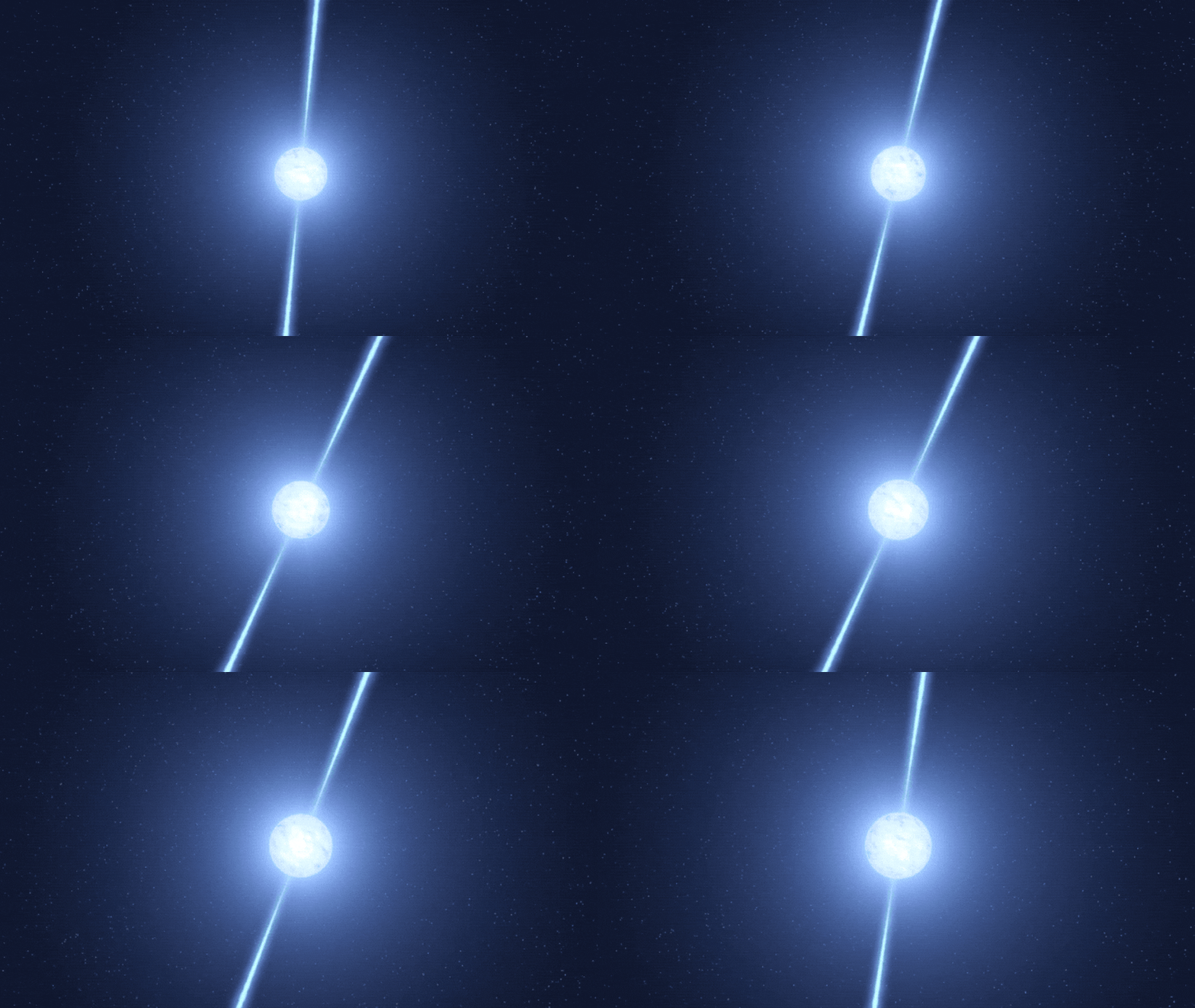 Science history: Astronomy graduate student Jocelyn Bell Burnell discovers a signal of 'little green men,' but her adviser gets the Nobel Prize — Nov. 28, 1967
Astronomer Jocelyn Bell Burnell detected a strange signal from outer space that would lead to the discovery of the radio pulsar. The signal, once described as coming from "little green men," would earn her adviser the Nobel Prize in physics in 1974.
17 Commentsspace -
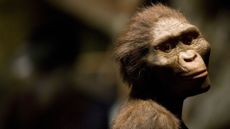 Science history: Iconic 'Lucy' fossil discovered, transforming our understanding of human evolution — Nov. 24, 1974
On an expedition in the Awash Valley in Ethiopia, two anthropologists uncovered the bones of a 3.2 million-year-old human ancestor. The iconic "Lucy" fossil would reveal much about our species' tangled family tree.
3 Commentshuman-evolution -
 That was the week in science: CDC in turmoil | Moss survives space | Comet 3I/ATLAS images
Live blog Friday, Nov. 21, 2025: Your daily feed of the biggest discoveries and breakthroughs making headlines.
Live blog -
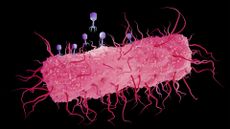 Science history: Experiment shows mutations arise spontaneously, supporting pillar of Darwinian evolution — Nov. 20, 1943
Two bacteriologists showed that mutations arise spontaneously in bacterial cultures, thereby disproving Jean-Baptiste Lamarck's theory of evolution.
evolution -
 Science history: 'Patient zero' catches SARS, the older cousin of COVID — Nov. 16, 2002
A person came down with an atypical form of pneumonia in November 2002, but it would be two months before anyone realized it was the start of a pandemic.
viruses-infections-disease -
 That was the week in science: New Glenn launch | China's astronauts return | 'Other' ATLAS explodes
Live blog Friday, Nov. 14, 2025: Your daily feed of the biggest discoveries and breakthroughs making headlines.
Live blog -
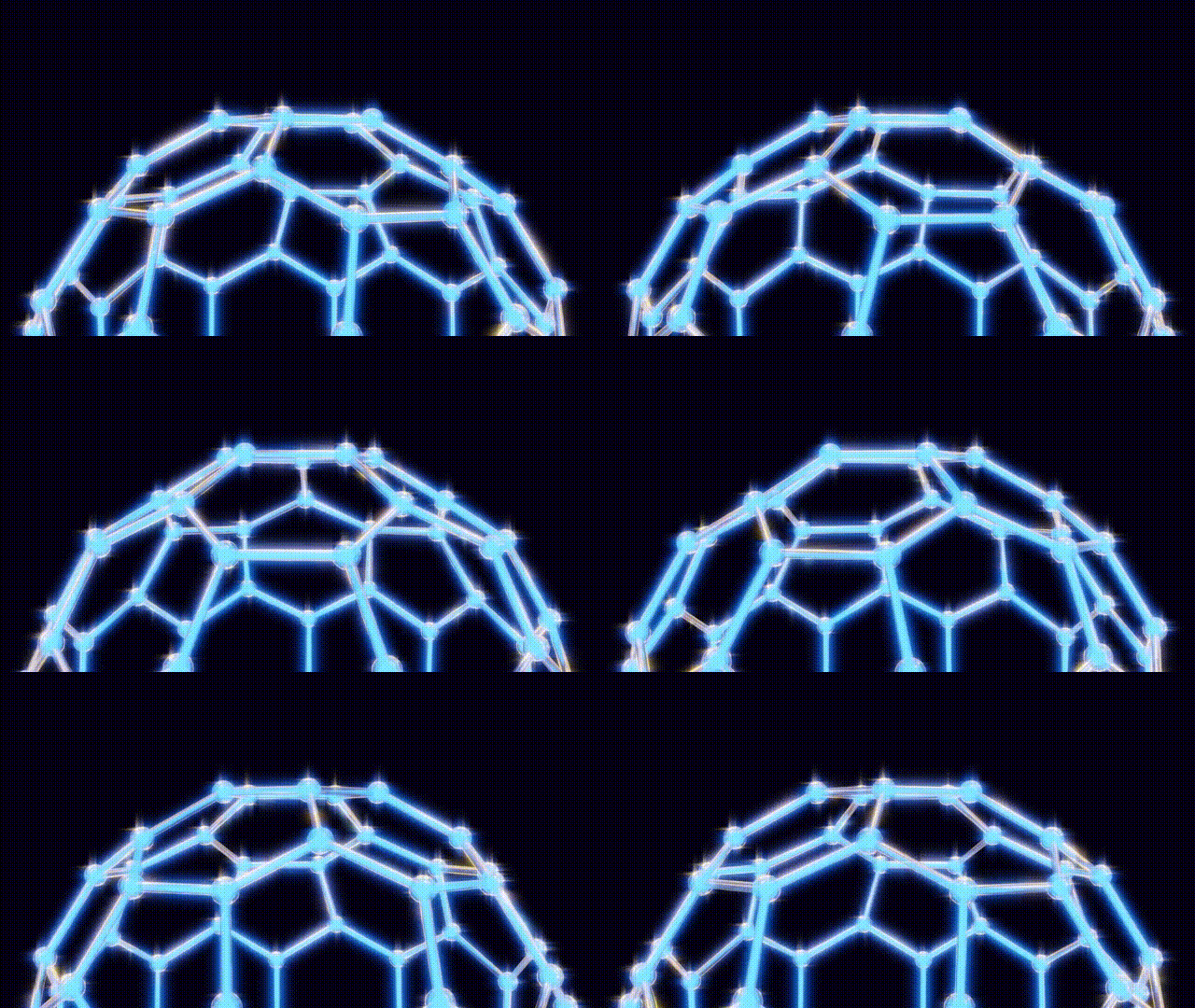 Science history: Chemists discover buckyballs — the most perfect molecules in existence — Nov. 14, 1985
Over a feverish 10-day period, scientists synthesized and described a new class of carbon molecules, called buckminster fullerenes, after the iconic 20th-century inventor.
chemistry -
 Science history: Russian mathematician quietly publishes paper — and solves one of the most famous unsolved conjectures in mathematics — Nov. 11, 2002
Mathematician Grigori Perelman solved the Poincaré conjecture, and then rejected the $1 million prize that came with it.
40 Commentsmathematics -
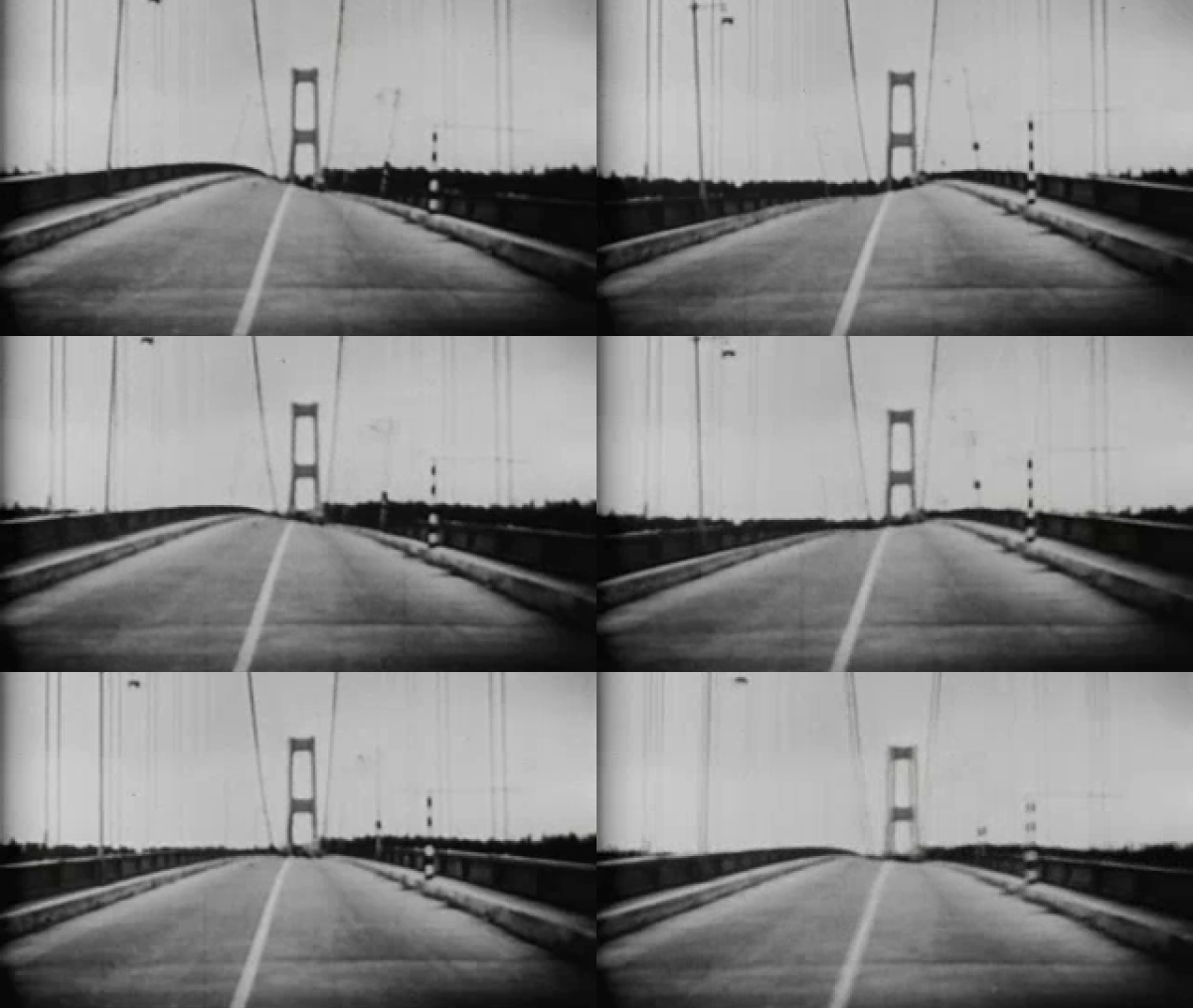 Science history: The Tacoma Narrows Bridge collapses, forcing a complete rethink in structural engineering — Nov. 7, 1940
One morning, the Tacoma Narrows Bridge began bouncing up and down and twisting to and fro before ultimately collapsing into the Puget Sound.
engineering -
 Science history: Archaeologists discover King Tut's tomb, and rumors of the 'mummy's curse' begin swirling — Nov. 4, 1922
While excavating in the Valley of the Kings, an Egyptian worker on an archaeological dig discovered a partially obscured step. It would lead into the unlooted tomb of King Tut.
8 Commentsancient-egyptians -
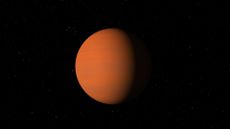 Science history: Astronomers spot first known planet around a sunlike star, raising hopes for extraterrestrial life — Nov. 1, 1995
About 50 light-years from Earth, a gas giant about half the mass of Jupiter orbits a sunlike star. The discovery of Pegasi 51 b ushered in a new era of exoplanet research.
exoplanets -
 Science history: First computer-to-computer message lays the foundation for the internet, but it crashes halfway through — Oct. 29, 1969
Messages transmitted between two computers located about 380 miles apart would form the basis of what would become the internet.
communications -
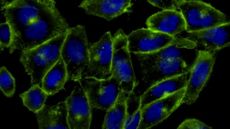 Science history: Scientists use 'click chemistry' to watch molecules in living organisms — Oct. 23, 2007
Carolyn Bertozzi and colleagues laid out a way to make paradigm-shifting "click-chemistry" compatible with living cells, opening up a window into living organisms.
chemistry -
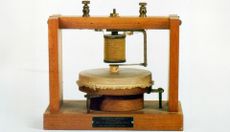 Science history: First two-way phone call across outdoor lines made by Alexander Graham Bell — Oct. 9, 1876
Science history On Oct. 9, 1876, Alexander Graham Bell made a telephone call to his assistant a few miles away — the first demonstration of what would ultimately become a global telephone network.
Science history -
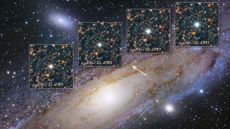 Science history: Edwin Hubble uncovers the vastness of the universe with discovery of 'standard candle' — Oct. 5, 1923
Science history On the night of Oct. 5, 1923, Edwin Hubble observed a strange star that flickered in intensity at regular intervals. The star, dubbed M31-V1, was key to showing that the universe extended far beyond the borders of the Milky Way.
Science history -
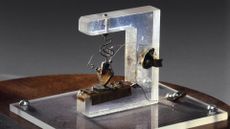 Science history: Invention of the transistor ushers in the computing era — Oct. 3, 1950
On Oct. 3, 1950, three Bell Labs scientists received a patent for a "three-electrode circuit element" that would usher in the transistor age and the era of modern computing.
3 Commentscomputing -
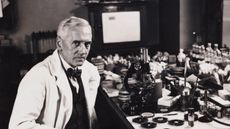 Alexander Fleming wakes up to funny mold in his petri dish, and accidentally discovers the first antibiotic — Sept. 28, 1928
Science history Alexander Fleming was doing experiments with bacteria when he woke up to a strange mold growing in his petri dish. The "mold juice" would usher in the first antibiotic, penicillin, and would revolutionize medical care for bacterial infections.
11 CommentsScience history -
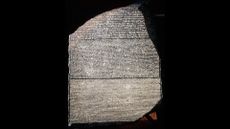 Science history: Rosetta stone is deciphered, opening a window into ancient Egyptian civilization — Sept. 27, 1822
On Sept. 27, 1822, French philologist Jean-François Champollion announced that he had deciphered ancient Egyptian hieroglyphics, using the Rosetta stone. This ushered in a new craze for Egyptology and helped us understand one of the world's longest-running civilizations.
archaeology -
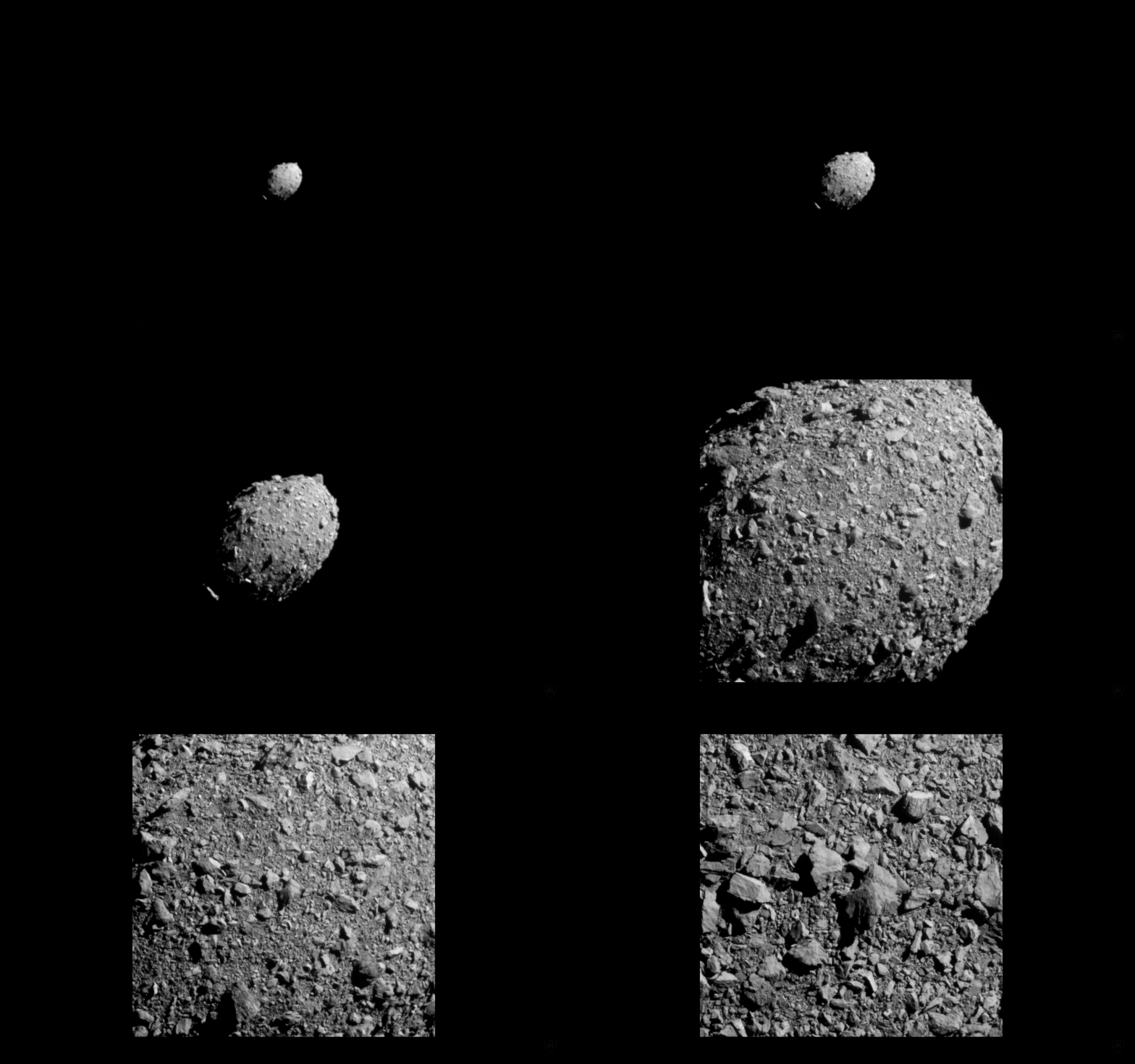 Science history: DART, humanity’s first-ever asteroid deflection mission, punches a space rock in the face — Sept. 26, 2022
On Sept. 26, 2022, NASA's Double Asteroid Redirection Test craft smashed into its target, the hazardous asteroid Dimorphos, and raised hopes that a space rock could be deflected from a collision course with Earth.
asteroids -
 A tragic gene therapy death that stalled the field for a decade — Sept. 17, 1999
Sept. 17, 1999: Jesse Gelsinger died after receiving a gene therapy treatment to treat a liver disease. The death sparked an investigation and caution around gene therapy, which ultimately stalled the field for years.
genetics -
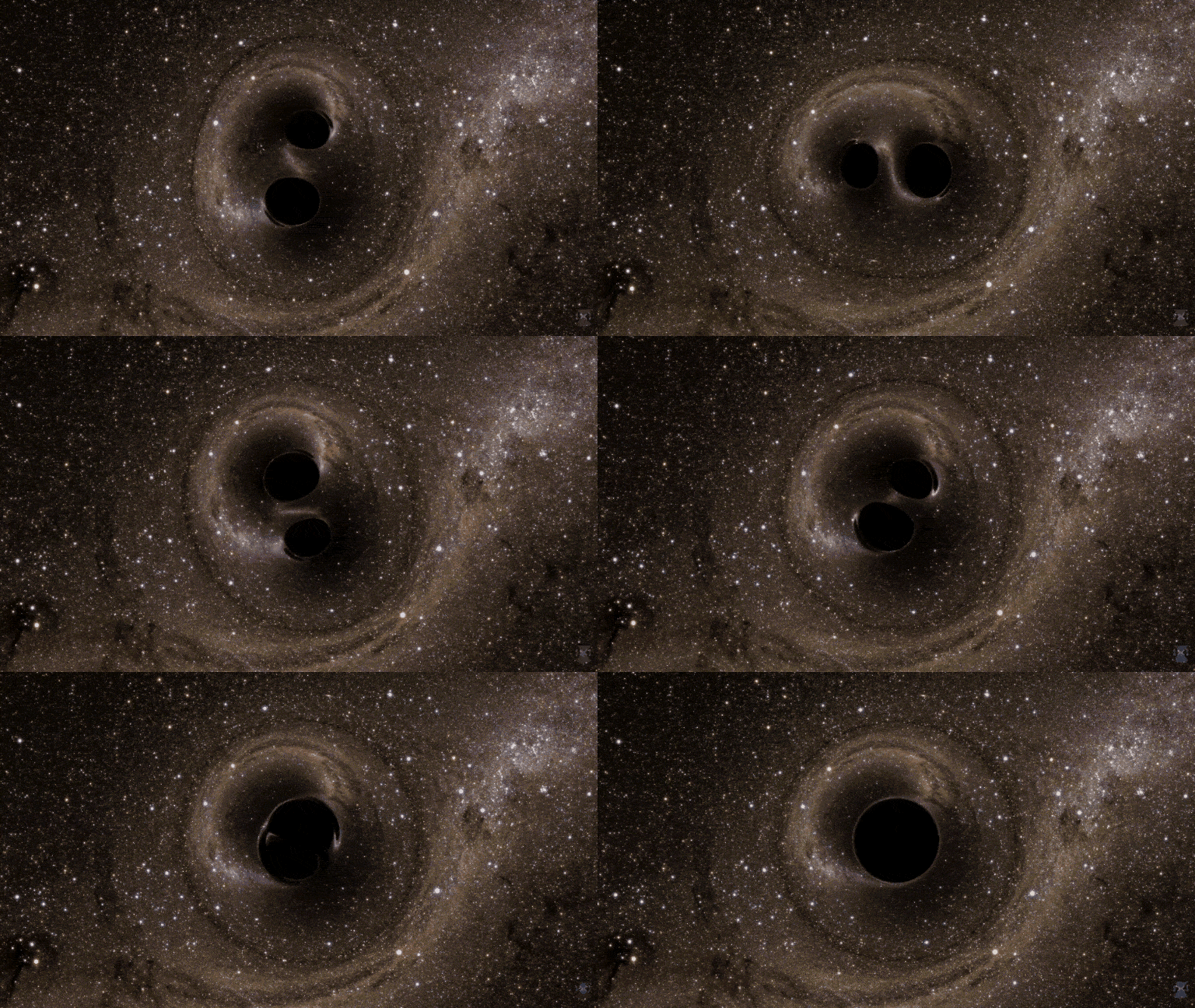 Science history: Gravitational waves detected, proving Einstein right — Sept. 14, 2015
When LIGO detected gravitational waves unleashed from two colliding black holes for the first time in science history, it set off a whole new era in astronomy.
7 Commentsblack-holes -
 The 21 largest recorded earthquakes in history
Countdown A handful of regions around the world regularly unleash terrifyingly large earthquakes. Here are the 21 largest earthquakes on record.
Countdown


