













Flu Deaths Caused by Immune System 'Storm'
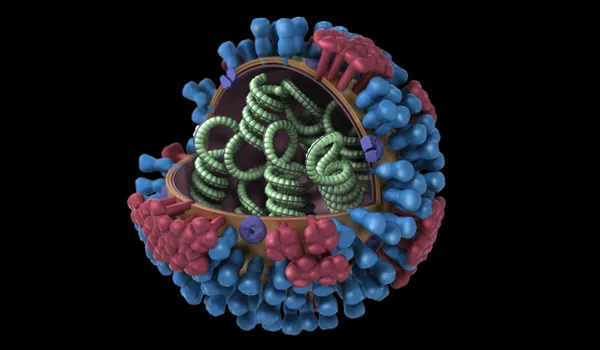
When you get sick with the flu, it's not always the virus itself that's to blame. In some people, the immune system's response to influenza can be so overblown that it's the very cause of sickness, a new study shows.
The researchers uncovered some of the proteins in the body responsible for that reaction, and say that drugs that target those proteins could ease the severe inflammation caused by the flu .
"Blunting the patient response may in fact provide for a better outcome," while still eradicating the virus, said Dr. Hugh Rosen of the Scripps Research Institute in LaJolla, Calif., senior author of the new study.
Rosen and his colleagues suppressed this hyped-up immune response in mice and found that the animals were more likely to survive a flu infection. The results are published today (Sept. 15) in the journal Cell.
Cytokine storms
Many of the most severe cases of influenza , including deadly cases, are caused when the body produces too many immunity molecules called cytokines. The sudden release of cytokines is dubbed a "cytokine storm." Normally, cytokines help the body respond to infections, but a cytokine storm leads to widespread inflammation.
"If you look at the 2009 flu pandemic , where millions of people got sick, many of the people who were hospitalized or died are those that had significant amounts of cytokines in their blood stream," Rosen said.
Get the world’s most fascinating discoveries delivered straight to your inbox.
Scientists previously thought that cytokine storms happened when cells infected with a virus released cytokines. But the new work showed that it's cells lining blood vessels, called endothelial cells, that are opening the floodgates, and that a protein called S1P1 is key to the release.
Rosen's team hypothesized that they could block S1P1 and the body would still fight the flu virus but without the risk of dangerous inflammation. Indeed, they found that mice treated with a drug that targeted S1P1 survived the flu without showing signs of massive cytokine production and inflammation.
Who's at risk of dying?
"This was an outstanding piece of work," said viral immunologist Dr. Herbert Virgin of Washington University in St. Louis. "It shows, in a very careful way, that the activities of the endothelial cells are intimately involved in the harmful effects of inflammation."
The next step, Virgin said, is to find out who is most at risk of cytokine storms and why. "By definition, a weaker immune system means you do poorly during an infection," said Virgin. "But what does weaker really mean? Maybe it means you're more prone to inflammation."
Those at highest risk of influenza-related cytokine storms could perhaps be treated with the S1P1 drug if they show early signs of the flu, Rosen said.
"If you can know in advance who in a population is at risk, you could target preventive efforts toward those people."
Pass it on: The body's reaction to the flu virus can be deadly. Now, researchers have discovered one way to decrease the chances of influenza leading to severe inflammation.
- 5 Most Likely Real-Life 'Contagions'
- 5 Dangerous Vaccine Myths
- 10 Medical Myths that Just Won't Go Away
Follow MyHealthNewsDaily on Twitter @MyHealth_MHND and on Facebook.