













Survival Dance: How Humans Waltzed Through the Ice Age

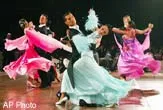
Some people are naturally graceful on the dance floor, while others seem burdened by two inept left feet. Blame it on the Ice Age.
According to new research, the ability to dance may have been a factor in survival for our prehistoric ancestors, who used their moves to bond and communicate with each other when times were tough.
A study published in a recent issue of the Public Library of Science's genetics journal, suggests that, as a result, today's creative dancers actually share two specific genes. Both genes are associated with a predisposition for being good social communicators.
Scientists believe this gave early humans who were well coordinated and rhythmic a distinct evolutionary advantage.
Dancing genes
"Dance, like music, is an activity dating to prehistoric times that is sometimes a sacred ritual, sometimes a form of communication, and sometimes an important social and courtship activity," wrote the researchers, who were psychologists based primarily out of universities in Jerusalem. "We hypothesized that there are differences among individuals in aptitude, propensity, and need for dancing that may partially be based on differences in common [genes]."
DNA was obtained from 85 elite dancers and their parents to compare with a group of people lacking any distinguishing characteristics, as well as a group of athletes. The genes studied don't control a specific physical ability, but they dictate two well-known social and behavioral chemicals in the body: serotonin and vasopressin.
Get the world’s most fascinating discoveries delivered straight to your inbox.
As researchers suspected, both chemicals were found in much larger quantities among the dancers. In other words, while the elite dancers couldn't be put in a different physical category from everyone else, they all shared genes that made them more social.
The survival dance
This innate ability was crucial in prehistoric times, according to Steven J. Mithen, and archaeologist at the University of Reading in the United Kingdom.
In his new book "The Singing Neanderthals: The Origins of Music, Language, Mind, and Body" (Harvard University Press, 2006), Mithen contends that because of their communication powers, dance and music likely became an important tool of social interaction as soon as humans could walk and talk.
"It has been argued that the specific nature of human anatomy suggests that it evolved for endurance running as much as walking. As such it could have also been used for dancing, as bipedalism requires high degrees of muscle control, balance and flexibility," he said.
Dance like a Neanderthal
Mithen's research focuses on the Neanderthals—our prehistoric cousins—as opposed to Homo sapiens' direct ancestors. But he believes the importance of dance was widespread and probably practiced by early humans, too, as far back as 1.5 million years ago.
And, as it is on modern dance floors, their prehistoric moves had a lot to do with hooking up.
"In many societies today dancing is used as a form of display for attracting mate," Mithen points out. "Dancing is a means to show off one's physical fitness and co-ordination, qualities that would have been useful for survival in prehistoric hunter-gatherer societies."
