













Wetsuit's Inventor Dies

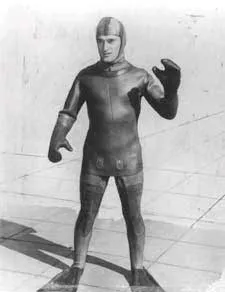
Undersea divers would still be shivering and facing a high risk for hypothermia if it weren't for Hugh Bradner, inventor of the first wetsuit. Bradner, a renowned physicist and professor emeritus at the Scripps Institution of Oceanography died May 5, 2008, in San Diego after a prolonged illness. He was 92.
Bradner had a lifelong passion for the ocean. He enjoyed diving and sailing and was one of the first Americans to make a deep-water SCUBA dive. In 1951, while working at University of California, Berkeley, he decided to spend some weekend time improving diving equipment for Navy frogmen, which began his pioneering research on the wetsuit. Bradner focused on the design of a wetsuit for military underwater swimmers and developed a foam wetsuit using a unicellular material known as neoprene.
"He was an adventurous man who enjoyed traveling," said Walter Munk, professor emeritus at Scripps, which is part of the University of California, San Diego. "He built a successful career by combining his geophysical work with his South Pacific adventures."
Bradner collaborated with scientific divers at Scripps who were experimenting with the new SCUBA regulator (which supplies divers with breathing gas on demand and at the proper pressure) invented by Jacques Cousteau and Emile Gagnan. Scripps divers first tested Bradner's wetsuit designs at their SCUBA training classes in the pool of the La Jolla Beach and Tennis Club.
"Brad’s neoprene wetsuit was a tremendous contribution to scientific diving," said James Stewart, professor emeritus at Scripps. "He was a great guy and a lot of fun to work with."
Bradner was well regarded for his collaborative approach to science, evident in his reluctance to claim himself as sole inventor of the wetsuit. He continued to consult for the military throughout his scientific career. His other research endeavors led to novel diving equipment, including underwater contact lenses, a single-hose regulator and a decompression meter. Bradner even developed a loop system for quickly extracting U.S. Navy SEALs from bodies of water via inflatable boats.
During his distinguished career as a nuclear physicist, Bradner worked at the U.S. Naval Ordnance Laboratory in Washington, D.C., and the Lawrence Radiation Laboratory at UC Berkeley. He also worked on the Manhattan Project as one of the founding scientists of the Los Alamos National Laboratory. It was at Los Alamos that he met Marjorie Hall, his wife of 65 years.
Get the world’s most fascinating discoveries delivered straight to your inbox.
In 1961, Bradner joined Scripps as a research geophysicist in the Institute of Geophysics and Planetary Physics. He published extensively in the fields of physics, seismology, geophysics and diving.
Bradner was an avid outdoorsman, hiking in the Sierra Nevada Mountains, swimming in the La Jolla Rough Water Swim and traveling all over the world to enjoy the oceans. His greatest joy was said to be to watch as he guided students, family and friends to the discovery of something new. He also was a painter, a photographer and a jeweler.
Bradner graduated from Caltech with a Ph.D. in physics, where he coached the swimming and water polo teams. He received his undergraduate degree from the Miami University in Ohio and received the Miami University medal in 1960 and an honorary doctorate in 1961.
He is survived by a daughter, Bari Bradner Cornet of Berkeley, Calif., three grandchildren and a great granddaughter. His wife died April 10.
- Video: Diver's Mask Displays Data
- Video: Underwater Flare-up
- Image Gallery: Underwater Explorers
