













Neanderthals Grew Up Faster than Humans

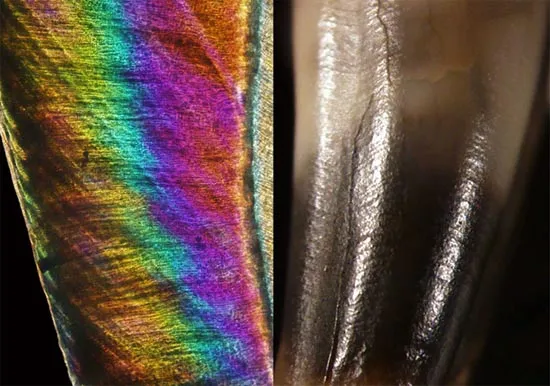
The teeth of Neanderthal children grew faster than the teeth of human children today, a new analysis shows, suggesting that a long childhood and slow development are uniquely human traits.
Across all primates, including ourselves and Neanderthals, tooth development, specifically the age of molar eruption, is related to other developmental landmarks, such as weaning and first reproduction. Anthropologists have long debated the timing of such events in Neanderthals, with evidence both supporting and refuting the idea that our distant cousins grew up differently than we do.
To better understand Neanderthal tooth development, anthropologists at the Max Planck Institute in Germany examined the growth lines on the teeth of a 100,000 year-old juvenile found in the Scladina caves of Belgium.
They found that the duration of tooth growth was shorter for the Neanderthal compared to modern humans. This faster growth rate resulted in a more advanced pattern of dental development than in members of our own species—the Neanderthal child grew teeth over a shorter period of time and had more teeth present in its mouth than similarly-aged fossil and living humans.
The Neanderthal child in the study appeared developmentally similar to a 10- to 12-year-old human, but is estimated to be only about 8 years old at the time of its death.
This new evidence, detailed in the Dec. 3 online edition of the journal Proceedings of the National Academy of Sciences, suggests that other aspects of physical development were also likely more rapid in Neanderthals than in humans (Homo sapiens), indicating that the slow development and long childhood of humans today is a recent condition uniquely evolved to our species.
"Given the well established relationship between molar eruption and major events in life history, this work suggests that the Scladina Neanderthal developed more rapidly than living and fossil H. sapiens, experiencing a shorter childhood and a life history that was accelerated relative to that of H. sapiens," the authors wrote.
Get the world’s most fascinating discoveries delivered straight to your inbox.

Andrea Thompson is an associate editor at Scientific American, where she covers sustainability, energy and the environment. Prior to that, she was a senior writer covering climate science at Climate Central and a reporter and editor at Live Science, where she primarily covered Earth science and the environment. She holds a graduate degree in science health and environmental reporting from New York University, as well as a bachelor of science and and masters of science in atmospheric chemistry from the Georgia Institute of Technology.