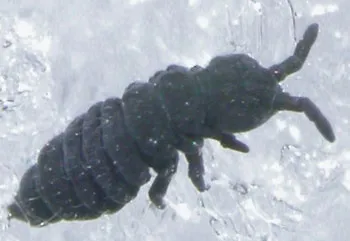
Snow fleas know how to ward off cold. They have natural antifreeze in their bodies that keeps ice from forming.
Now scientists say the antifreeze could be tapped to allow human organs to be stored at lower temperatures, increasing the time allowed between removal and transplant.
"Transplant organs must now be kept at the freezing point or slightly warmer,” said Laurie Graham of Queen's University in Ontario, Canada. “If we can drop the temperature at which the organ is safely stored, there will be a longer preservation period.”
Latest Videos From
Graham's team isolated the specific protein behind the antifreeze.
They say it might also be developed to help increase frost resistance in plants or inhibit crystallization in frozen foods.
Snow fleas are also known as springtails because they can leap hundreds of times their diminutive size of about 1 millimeter in length. Graham first noticed them while cross-country skiing.
“They looked like dots of pepper sprinkled on the snow," she said.
The study was published in today's issue of the journal Science.



 Live Science Plus


