













Grandma Is Better Babysitter Than Mom
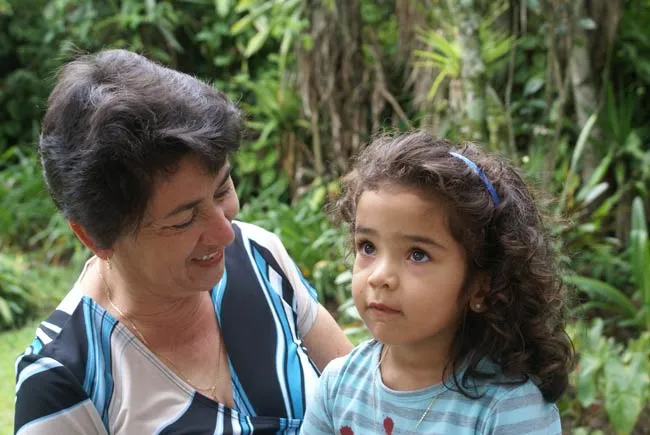
Common wisdom might suggest that because of their age, grandmothers are inappropriate caretakers for infants and children. Sure, they might have years and years of parenting experience from bringing up their own children (and they must be OK parents because their children obviously lived long enough to have children) but people over 50 simply can't run as fast or react as quickly as young parents. And they presumably tire more quickly and must want to take a load off even more often than the most exhausted parent. Research at the Johns Hopkins Bloomberg School of Public Health have, however, turned that assumption upside-down. Turns out, children cared for by a grandmother have half the risk of injury than kids cared for by a daycare center, other relatives, or even the child's own mother. In other words, if granny watches the kids, they are much less like to end up in the pediatrician’s office with broken bones or bleeding. And this decrease in risk is not just about Band-Aids and plaster casts; injury is the leading cause of childhood deaths in the United States. The finding was detailed in the November 2008 issue of the journal Pediatrics. It's a sign of Western culture that we assume older relatives would be incompetent and unsafe with our kids. It's an old saw that we live in a youth-oriented culture where age gets no respect. But in that assumption, we overlook why grandparents actually make the best caretakers of children. They usually share genes in common with those kids, and therefore have solid evolutionary reasons for taking good care of the next generation. In fact, anthropologist Kristen Hawkes of the University of Utah has suggested that being a grandmother is just what evolution ordered. Humans are the only species in which females biologically end reproduction long before they die, while men can theoretically be fathers right before they step into the grave. Why all those years of menopause? Using data from the Hadza, hunter and gatherers of Northern Tanzania, Hawkes has suggested that mothers who have menopausal mothers to gather for them could up their rate of reproduction. Finding and processing the Hadza staple, tubers, is an arduous task. And then women have to beat the tubers into something edible. Although mothers can usually support themselves and one child on their own, when that child is weaned and the mother becomes pregnant again, she's in a nutritional bind. With a newborn she simply has to stop walking so far and working so hard. And so women who have gathering help from their mothers can save their energy and keep on reproducing. For the Hadza, it's not about daycare, but daily care in the form of more to eat, which translates into passing on more genes. In other cultures, of course, grandmothers help out with direct care; they watch kids as mothers work in the fields or while Mom is working in a factory or an office. It's only in the United State that we don’t acknowledge the role of grandparents in child care. But 8 percent of American children live with a grandparent, more than 900,000 grandparents provide daycare, and 30 percent of children under the age of 5 with working mothers are regularly cared for by their grandparents. Apparently in this country too, no matter what we assume, grandparents are quietly and safely providing the help that busy parents need. And in doing so, they, like Hadza grandmothers, are helping their genes make it into future generations.
- Video – A Mother’s Touch
- Top 10 Hereditary Diseases
- All About Children
Meredith F. Small is an anthropologist at Cornell University. She is also the author of "Our Babies, Ourselves; How Biology and Culture Shape the Way We Parent" (link) and "The Culture of Our Discontent; Beyond the Medical Model of Mental Illness" (link).
Get the world’s most fascinating discoveries delivered straight to your inbox.