













Scientists Discover the 'Evil Spirits' in Devil's Gardens
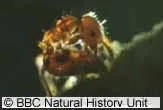
According to local legend, peculiar clearings in the Amazon rainforest made up of a single tree species were created by an evil spirit.
Now researchers have identified a more likely culprit for these so-called devil's gardens. It's a chemical-wielding ant that looks to be nature's own little gardener.
The ant, Myrmelachista schumanni, makes its home in the hollow, swollen stems of Duroia hirsuta, the tree that dominates devil's gardens. D. hirsuta trees only grow to about 12 feet, much shorter than the rest of the rainforest's canopy.
"Someone walking around the jungle who steps into a devil's garden would immediately notice the difference between the garden and the surrounding vegetation," study author Megan Frederickson of Stanford University told LiveScience. "It looks a lot like an orchard – as if someone had come along and planted the trees."
Ant attack
Scientists previously thought that the D. hirsuta bullied out other plants in the area to create the devil's gardens. Now evidence suggests that it's the ants doing the bullying, by using their own herbicide to kill trees and plants that don't serve them.
To determine if this is indeed the case, Frederickson and her colleagues planted saplings of a common Amazonian cedar tree – Cedrela odorata – inside and outside the devil's gardens.
Get the world’s most fascinating discoveries delivered straight to your inbox.
"We found that the M. schumanni workers promptly attacked the saplings in devil's gardens," Frederickson said in the Brief Communications section of Nature.
The ants injected poison into the saplings leaves, which began to die within 24 hours. Most of the leaves fell off over the course of the next five days.
Frederickson also protected some of the cedar saplings planted in the garden from the ants, and these saplings fared just as well as saplings planted outside the garden.
Modest start
Chemical analysis showed that the ants use formic acid to kill intrusive plants. While formic acid production isn't uncommon in ants, this research provides the first known instance of ants using it as an herbicide.
Each devil's garden is the home to one giant ant colony – as many as three million workers and 15,000 queens. The colony's immense size, and ridiculously high number of queens, contributes to the longevity of the colony, which can span more than 800 years.
A devil's garden can start with just one queen ant and one D. hirsuta tree. Over time, the colony grows and begins to wipe out the surrounding plants, creating a small clearing for D. hirsuta saplings to prosper and expand and provide homes for future generations of ants.
This research is detailed in the Sept. 22 issue of the journal Nature.
- Amazing Ants 'Fly' When They Fall
- Ants Ambush Prey from Foxholes
- Hope for Eradicating Red Fire Ants
- Killer Caterpillar Eats Snails Alive