
 Live Science Plus


In Photos: The Wonders of the Deep Sea

Brittle star
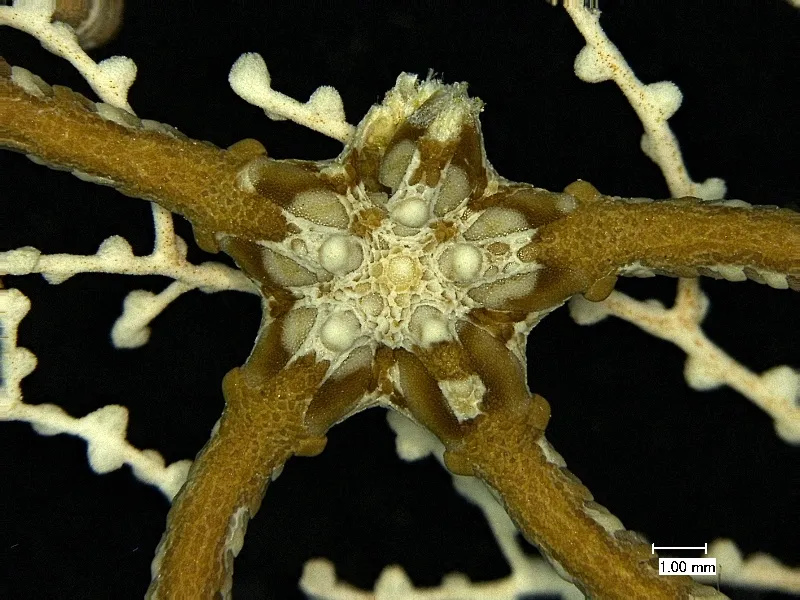
Ancient fossils now reveal that the deep sea may be the origin of many lineages of sea creatures found closer to the surface, such as a number of sea stars, sea urchins and snails, researchers say.
Shown here, A close-up look of a deep-sea brittle star. [Read full story]
Brittle star

Recent brittle star (Hemieuryale pustulata) from the deep sea, sitting on a hydrozoan colony. This type of brittle star still lives in present-day deep-sea habitats.
Deep-sea habitats

Recent brittle star (Ophiochondrus stelliger) from the deep sea. Close relatives of this brittle star, which still lives in present-day deep-sea habitats, were found in the deep-sea rocks of the Alps near Salzburg.

Fossil sea urchin

With the help of amateur paleontologist Gero Moosleitner, Ben Thuy, an invertebrate paleontologist at the National Museum of Natural History of Luxembourg, and other scientists have discovered fossils of 180-million-year-old deep-sea animals in the Austrian Alps. These now shed light on the surprising history of deep-sea life.
Here, a fossil sea urchin in the family Aspidodiadematidae from deep-sea rocks of the Alps near Salzburg, Austria. Close relatives of this sea urchin still live in the present-day deep sea. [Read full story]
Sea Lilies

Living isocrinid sea lilies and feather stars in the deep sea. Like their relatives in the Early Jurassic, these animals play a major role in present-day deep-sea ecosystems.
Sea stars

Living sea stars in the deep sea extending their arms into the water column to catch floating prey, much like their relatives in the Lower Jurassic deep sea.
Fossil snail

Living sea urchin (Family Aspidodiamdematidae) from the deep sea. Members of this sea urchin family were discovered in Lower Jurassic deep-sea rocks of the Alps near Salzburg, Austria, and are the oldest of their kin.
Get the world’s most fascinating discoveries delivered straight to your inbox.
Sea lily

Living sea lily in the deep sea. Close relatives of this type of sea lily were discovered in the Early Jurassic deep-sea rocks of the Alps near Salzburg.
Extended arms

Living sea stars in the deep sea extending their arms into the water column to catch floating prey, much like their relatives in the Lower Jurassic deep sea.
Fossil snail

Fossil snail found in the Lower Jurassic deep-sea rocks of the Alps near Salzburg. Close relatives of this type of snail still live in the modern deep sea.
Deep-Sea discoveries

Here, the place in the Austrian Alps where the deep-sea fossils were discovered.
"The slopes of the gorge we got fossils from were quite steep, which made work a bit difficult, but it was also quite fun," Thuy told Live Science. "We dug up the rock, put it in a sieve, and washed [the rocks] in the brook downslope to get fossils. It was a bit like panning for gold." [Read full story]
