















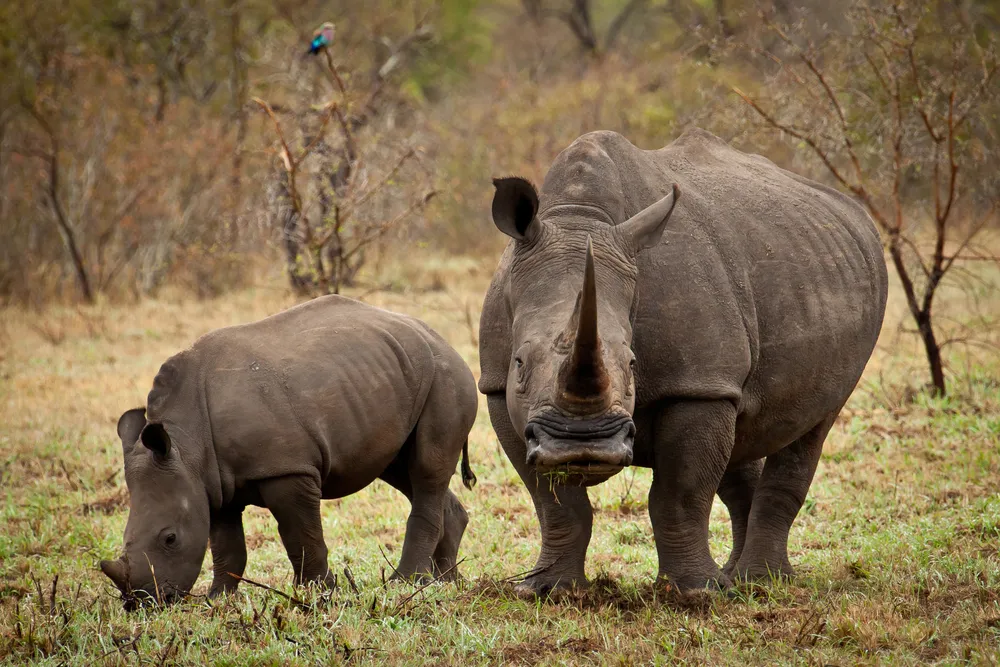
Already this year, 618 rhinos have been killed in South Africa, with three months left to go in the year. That represents a dramatic rise over years past: Last year 668 rhinos were killed in the country, up from just seven in 2007. South Africa is home to 18,000 white rhinos and 4,000 black rhinos, The Guardian reported.
The slaughters are driven by the demand for rhino horn in Asia, where the animals' horns are prized as status symbols or social currency in networking. Conservationists are hoping that anti-poaching efforts, such as the use of drones to catch culprits in the act, could help lessen the toll on wildlife.
Follow Tia Ghose on Twitter @tiaghose. Follow LiveScience @livescience, Facebook & Google+.
Get the world’s most fascinating discoveries delivered straight to your inbox.

Tia is the editor-in-chief (premium) and was formerly managing editor and senior writer for Live Science. Her work has appeared in Scientific American, Wired.com, Science News and other outlets. She holds a master's degree in bioengineering from the University of Washington, a graduate certificate in science writing from UC Santa Cruz and a bachelor's degree in mechanical engineering from the University of Texas at Austin. Tia was part of a team at the Milwaukee Journal Sentinel that published the Empty Cradles series on preterm births, which won multiple awards, including the 2012 Casey Medal for Meritorious Journalism.