Mammal Evolution Took No Great Leap, Study Suggests

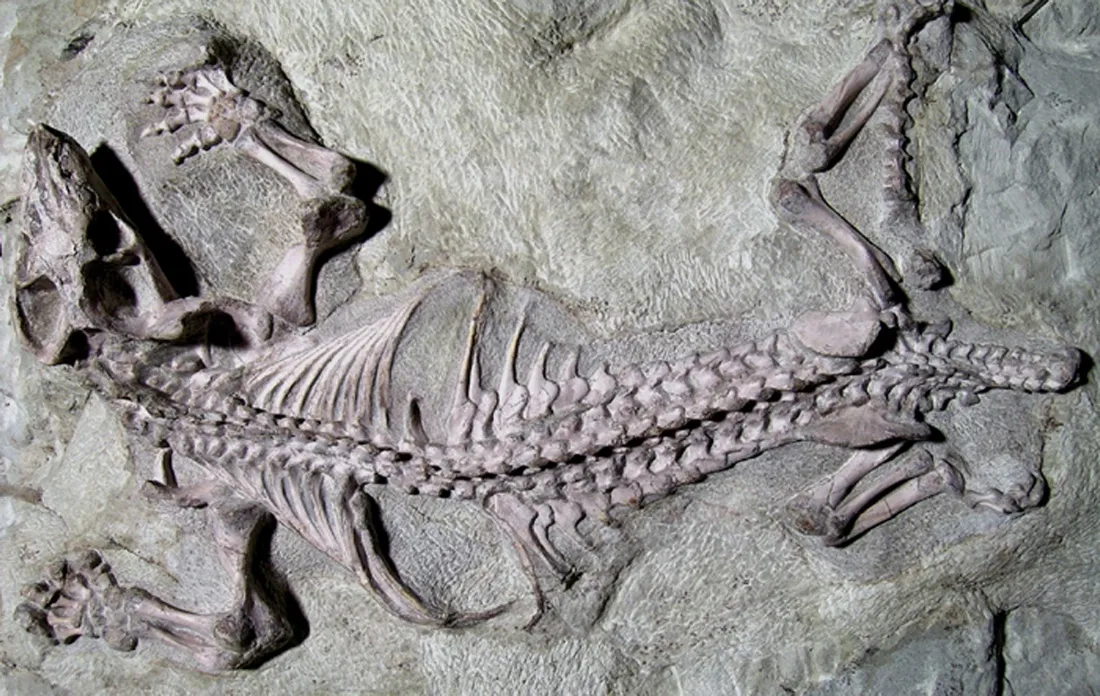
After the greatest mass extinction on Earth, mammals apparently evolved not in a great leap forward, but rather in small ways that did not stand out much from their ancestors, researchers say.
These findings shed light on how new kinds of life evolve and succeed after mass extinctions, scientists added.
The most lethal mass extinction of all time, the end-Permian extinction, claimed 90 percent of all ocean life and 70 percent of all land species about 250 million years ago. Key factors behind this disaster probably include catastrophic volcanic activity in what is now Siberia that spewed out as much as 2.7 million square miles (7 million square kilometers) of lava, an area nearly as large as Australia, as well as feverishly hot ocean surface waters potentially reaching more than 104 degrees Fahrenheit (40 degrees Celsius). [Wipe Out: History's 7 Most Mysterious Extinctions]
In the aftermath, creatures known as the cynodont therapsids arose, the closest relatives of mammals. A number of features of their skeletal anatomy, such as in the braincase, lower jaw, teeth and limbs, foreshadow the mammalian body plan that arose more than 225 million years ago. For instance, a number of jawbones became the inner ear bones, as seen today in mammals, and legs went from structures that sprawled away from their bodies as in reptiles to those resting directly under their bodies as in mammals.
The cynodonts split into two groups: the cynognathians, which were mainly plant-eaters, and the probainognathians, which were mostly flesh-eaters.
"Mass extinctions are seen as entirely negative," researcher Marcello Ruta, an evolutionary paleobiologist at the University of Lincoln in England, said in a statement. "However, in this case, cynodont therapsids, which included a very small number of species before the extinction, really took off afterwards and were able to adapt to fill many different niches in the Triassic, from carnivores to herbivores."
The rise of mammals
Get the world’s most fascinating discoveries delivered straight to your inbox.
To learn more about how mammals arose from cynodonts, scientists conducted the most comprehensive analysis to date of the relationships between cynodonts. They compared 150 distinct skeletal features in 52 species of cynodonts and two early mammal species.

"As mammals ourselves, we are good at seeing why mammals are so successful today — warm-bloodedness and ability to operate in the cold; large brain and adaptable behavior; differentiated teeth and dietary flexibility," researcher Michael Benton, a vertebrate paleontologist at the University of Bristol in England, told LiveScience. "We might then expect to find evidence for some major burst of evolution as some of these characters were acquired."
The researchers found both major groups of cynodonts experienced different rates of evolutionary change early in their history. Cynognathians saw high evolutionary rates and diversity of species early in their history, whereas probainognathian rates were low. [In Photos: Mammals Through Time]
"Even closely related groups of organisms, such as the two main cynodont groups, may go through substantially different patterns of evolutionary change," Ruta told LiveScience.
Nevertheless, "in the end, the probainognathians became the most diverse and most varied in adaptations, and they gave rise to the first mammals some 25 million years after the mass extinction," researcher Jennifer Botha-Brink at the National Museum in Bloemfontein, South Africa, said in a statement.
Mammal changes
The researchers also saw that when a major group of animals such as the cynodonts diversifies, "it is the body shape or range of adaptations that expands first," Benton said in a statement. The diversity or number of species of a group then arises after all the body shapes available to that group have been tried out, he added.
The researchers discovered there were very few anatomical differences between the first mammals and their immediate cynodont predecessors.
"The first mammals included in our analysis did not stand out in any way from the other non-mammalian cynodonts," Benton said. "Many of the unique characters of mammals had indeed been acquired earlier, and that they had been acquired piecemeal and gradually over perhaps 50 million years."
Although scientists had previously found that many of the unique characteristics of mammals had gradually evolved in cynodonts beforehand, "nobody yet had sought to quantify the relative rates of acquisition of those mammal-like characters," Benton said. "We had hankered after some evidence of a 'great leap forward' with the origin of mammals, but this was not to be."
The scientists detailed their findings online today (Aug. 27) in the journal Proceedings of the Royal Society B: Biological Sciences.
Follow us @livescience, Facebook & Google+. Original article on LiveScience.