













Bad Sleep? Blame the Moon

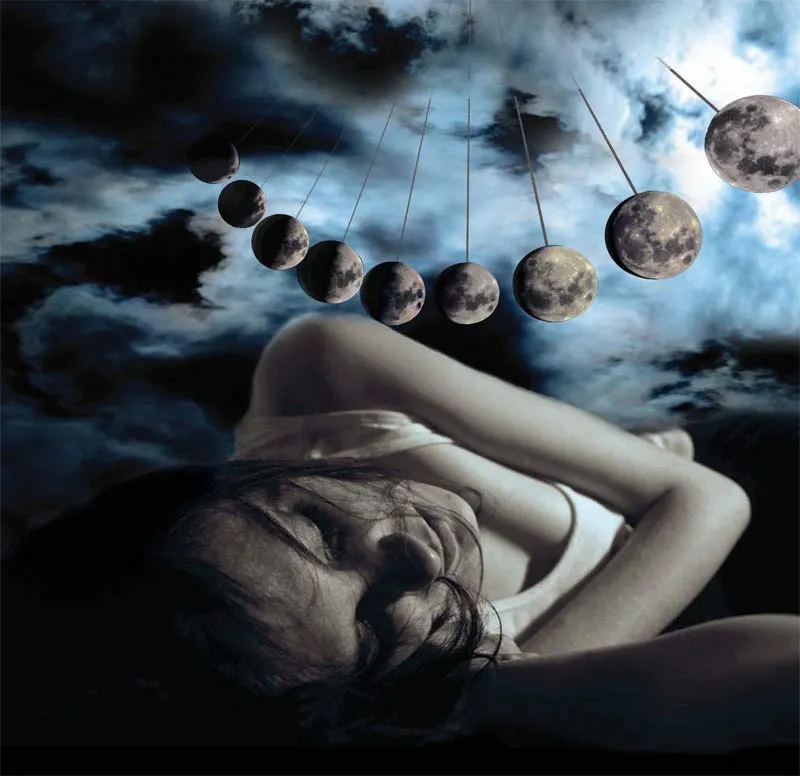
The moon could be to blame for a bad night's sleep, researchers now say.
These findings are the first reliable evidence that lunar rhythms can influence sleep in humans, scientists added.
The moon often gets blamed for madness on Earth. In fact, the Latin name for the moon, Luna, is the root of the word "lunatic."
However, research has repeatedly shown the full moon apparently has no effect on human health. Although a few studies have found weak links with the full moon and increased aggression, unintentional poisonings and absenteeism, a 1985 analysis found no convincing evidence that full moons spur uptakes in mental hospital admissions, psychiatric disturbances, and homicides or other crimes. A 2010 study similarly found a lack of excess criminal activity on full-moon nights. [Stop the Lunacy! 5 Mad Myths About the Moon]
As such, chronobiologist and sleep researcher Christian Cajochen at the Psychiatric Hospital of the University of Basel in Switzerland was skeptical when people complained about poor sleep around the full moon. However, over drinks at a pub one evening on a full moon, Cajochen and his colleagues recalled they had completed a lab study on sleep a few years before whose results they could review for possible evidence of effects the moon had on people.
Unexpectedly, the scientists found "the lunar cycle seems to influence human sleep, even when one does not see the moon and is not aware of the actual moon phase," Cajochen said.
Circalunar rhythms
Get the world’s most fascinating discoveries delivered straight to your inbox.
Over the course of four years, the researchers had monitored the brain activity, eye movements and hormone secretions of 33 volunteers in the lab while the participants slept. All the participants were healthy, good sleepers, and did not take any drugs or medication.
After reviewing their data, the scientists found during the time of the full moon, brain activity related to deep sleep dropped by 30 percent. People also took five minutes longer on average to fall asleep, and they slept for 20 minutes less overall on full-moon nights. The volunteers felt as though their sleep was poorer when the moon was full, and they showed diminished levels of melatonin, a hormone known to regulate sleep and wake cycles. [7 Strange Facts About Insomnia]
"It took me more than four years until I decided to publish the results, because I did not believe it myself," Cajochen told LiveScience. "I was really skeptical about the finding, and I would love to see a replication."
Scientists have long known the human body often bases key activities on regular cycles, such as circadian rhythms, which are roughly a day in length. Based on these findings, the researchers suggest that humans might also experience circalunar rhythms that drive cycles a month long, roughly matching the time between two full moons.
A number of patterns in animal behavior are linked with the lunar cycle, such as coral sex. Adult women also experience the menstrual cycle, which is usually a month or so long. This circalunar effect on sleep might be a relic from a past in which the moon synchronized human behaviors for sex or other purposes, much as it does in other animals.
Moonlight tugs on humans
Although the moon's gravitational pull clearly drives tides in the ocean, its tidal effects are much weaker on lakes and virtually nil on the human body. Rather than being driven by gravity's tug, any circalunar rhythms the body experiences may be set by moonlight.
The influence of electrical lighting and other aspects of modern life may mask the moon's hold on the human body. "It would be interesting to look at this in people still living outside without artificial light, but light from fireplaces," Cajochen said. "Another possibility would be to test different moonlight simulations and their repercussions on sleep in the lab."
As to whether disrupting circalunar rhythms might have ill effects on health, the effect of moonlight on any potential circalunar clock appears much weaker than that of daylight on the circadian clock, Cajochen said.
"I don't think that modern people constantly ruin their sleep when they don't see moonlight," Cajochen said. "However, exposure to artificial light at night — that is, a time when our body clock does not expect light — ruins our sleep-wake rhythm considerably."
Still, "for some people who are sensitive to the effects of the moon on sleep, clinicians should probably take it seriously and not just think of it as an excuse for bad sleep," Cajochen said.
The scientists detailed their findings July 25 in the journal Current Biology.
Follow LiveScience @livescience, Facebook & Google+. Original article on LiveScience.com.
