













Fish Diseases Threaten Food Supply In Warm Climates
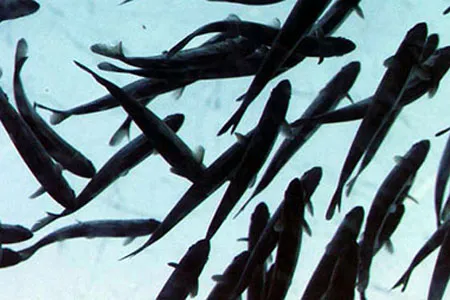
(ISNS) -- A rise in fish farms has meant cheap, fast-growing protein to feed the world's growing human population. But a new study suggests that countries located at lower latitudes – many of which rely heavily on fish farming – may be most at risk for fish disease outbreaks. The tropical environments in countries near the equator are ripe for breeding waterborne pathogens.
Aquaculture, the technical term for the farming of aquatic plants and animals, is the fastest-growing agricultural industry in the world. The term refers to farming in all sorts of water environments, including ponds, rivers, lakes and controlled areas in the ocean. According to the Food and Agriculture Organization of the United Nations, more than 90 percent of these fish farms are located in developing countries, which often have warm, tropical environments, conducive to raising fish year-round.
A study published earlier this year in the Journal of Applied Ecology, however, shows that operations near the equator are also more prone to dangerous and rapid disease outbreaks that could wipe out entire stocks of fish.
Tommy Leung, a lecturer in parasitology and evolutionary biology at the University of New England in Armidale, Australia, and his colleague Amanda Bates at the University of Tasmania, reviewed 114 previously published reports on disease outbreaks at fish farms from Norway to South America.
The implications of these findings for developing countries, many of which are located near the equator, could be dire.
"A lot of these countries are really dependent on aquaculture as a way to have a secure food source, so it provides them with food security, as well as a way of supporting their economy," said Leung.
In their analysis, Leung's team considered the geographical location of the fish farm outbreaks, the severity of the outbreaks, the type of fish or shellfish involved, and the type of farm -- fresh or saltwater, and how the farms were separated from the surrounding waters. They also considered the types of pathogens that caused disease, generally viruses, bacteria or parasites.
Get the world’s most fascinating discoveries delivered straight to your inbox.
Diseases ranged from skin flukes, which make fish scales appear discolored and peel off, to salmon anemia, a viral disease thought to be carried by sea lice.
The findings showed that the closer the fish farms were to the equator, the more likely they were to have an outbreak and the more severe the outbreaks were compared to fish farms located farther away from the equator. Young fish and shellfish were particularly susceptible to the deadly outbreaks. Leung said, on average, disease outbreaks in tropical areas wipe out 88 percent of the fish in any given stock. This is mainly because diseases tend to breed and spread faster in the warmer waters of the tropics.
In addition, disease is difficult to contain in water. "Unlike on a dairy farm where if you have a sick calf you can put them aside to quarantine them, it's much harder to quarantine in an aquatic environment," said Leung.
According to Jeffrey Lotz, an aquaculture specialist at the University of Southern Mississippi in Ocean Springs, Miss., diseases will always threaten aquaculture. "Certainly there have been more problems in the tropics but there are disease problems in the [higher] latitudes as well," he explained.
Lotz said he’s worried about the implications for imports. According to the National Oceanic and Atmospheric Administration the U.S. imports 85 percent of its seafood, more than half of which is from aquaculture operations rather than wild-caught.
While imported pork, beef and chicken are subject to inspections by the Food and Drug Administration, fish imports don't face the same scrutiny. According to Lotz, the less stringent inspection regulations could allow diseased fish imported from tropical countries onto grocery store shelves in the U.S., potentially posing a threat to public health.
Both Leung and Lotz are concerned about the implications for the future, saying global warming could result in rising temperatures and thus, a rise in the incidence of fish disease across the globe. Lotz said some of the tropical diseases will likely move farther from the equator and the overall prevalence of fish disease will increase, impacting both supply and food safety.
This story was provided by Inside Science News Service. Tegan Wendland is a science writer in Madison, Wisconsin.