
Video from James Cameron Deep-Sea Dive Reveals New Species

Update: This article was updated at 3:15 pm ET to add comments from researcher Natalya Gallo.
When movie director James Cameron dove to the bottom of the Pacific Ocean early last year, he and his team captured hours of video of strange new deep sea life. Today, a researcher is giving a peek into this bizarre new world, presenting preliminary findings based on analysis on reams of footage from the so-called Deepsea Challenge expedition.
One of the strangest new finds is a sea cucumber seen in the Challenger Deep, the deepest spot in the world's oceans at approximately 36,000 feet (11 kilometers) below the surface, said Natalya Gallo, a doctoral student and researcher at the Scripps Institution of Oceanography at the University of California, San Diego. This new sea cucumber is almost certainly a new species, and lives in large numbers at this deep spot, Gallo told OurAmazingPlanet.
Article continues belowThe research has likely revealed a second previously unknown species, a type of squid worm, Gallo said. These wormy animals are several inches long and live in the mid-water, above the sea floor, she said. "When you first see it, it looks like a squid because it has all of these modified feeding appendages," she said. Until actual physical specimens are collected, however, the new species won't be able to be definitely recorded, she added. [Images: James Cameron's Historic Deep-Sea Dive]
Video has also revealed the presence of giant single-celled amoebas called xenophyophores — bizarre creatures that are among the biggest cells known to humans — near the Challenger Deep, Gallo said.
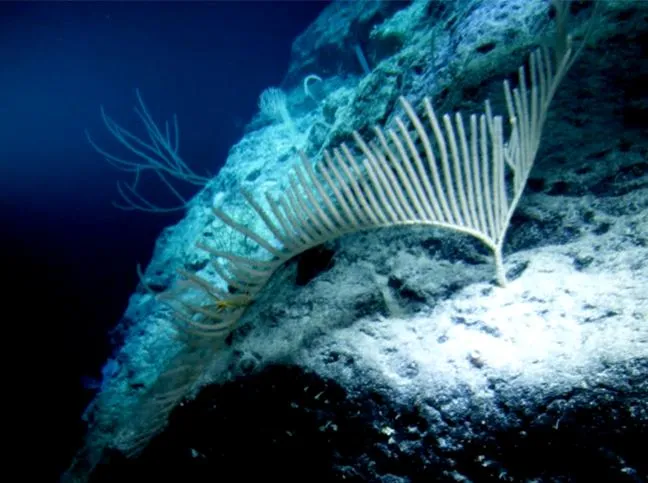
She also examined video from expeditions to the nearby New Britain Trench and Ulithi, which has revealed a diverse mixture of life. In the New Britain Trench, Gallo noted the presence of hundreds of stalked anemones growing on pillow lavas at the bottom of the trench. The seafloor here is dominated by the spoon worm, an animal that burrows and licks organic matter off the sea bottom with its tonguelike proboscis. Ulithi, on the other hand, was home to atolls with a high biodiversity of sponges and corals, Gallo said.
"Only a small fraction of the deep seafloor has been fully explored, and this expedition really opens your eyes to how much more there is to do, and how much is waiting to discover," Gallo said.
Get the world’s most fascinating discoveries delivered straight to your inbox.
Gallo presented her research today (Feb. 22) at the meeting of the Association for the Sciences of Limnology and Oceanography in New Orleans.
Reach Douglas Main at dmain@techmedianetwork.com. Follow him on Twitter @Douglas_Main. Follow OurAmazingPlanet on Twitter @OAPlanet. We're also on Facebook and Google+.
