It's quick and easy to access Live Science Plus, simply enter your email below. We'll send you a confirmation and sign you up for our daily newsletter, keeping you up to date with the latest science news.
Scientists have kept a close watch on the dazzling northern lights on Earth and other planets in our solar system, but now they have the chance to explore the auroras of alien planets orbiting distant stars, a new study suggests.
Auroras on Earth occur when charged particles from the sun are funneled to the planet's poles and interact with the upper atmosphere, sparking spectacular light shows. Similar processes have been observed on other planets in the solar system, with Jupiter's auroras more than 100 times brighter than those on Earth, scientists said.
Now, scientists are finding evidence of aurora displays on exoplanets for the first time. Researchers used the Low-Frequency Array radio telescope based in The Netherlands to observe radio emissions most likely caused by powerful auroras from planets outside of our solar system.
"These results strongly suggest that auroras do occur on bodies outside our solar system, and the auroral radio emissions are powerful enough — 100,000 times brighter than Jupiter's — to be detectable across interstellar distances," study lead author Jonathan Nichols, of the University of Leicester in England, said in a statement.
Jupiter's auroras are caused by an interaction of charged particles shot from its volcanic moon, Io and the rotation of the planet itself. The gas giant turns on its axis once every 10 hours, dragging its magnetic field along for the ride, and effectively creating a whirl of electricity at each of the planet's poles.
Images of Jupiter’s northern UV auroras were obtained using the Advanced Camera for Surveys onboard the Hubble Space Telescope in February 2007.
(Image credit: Boston University/NASA)
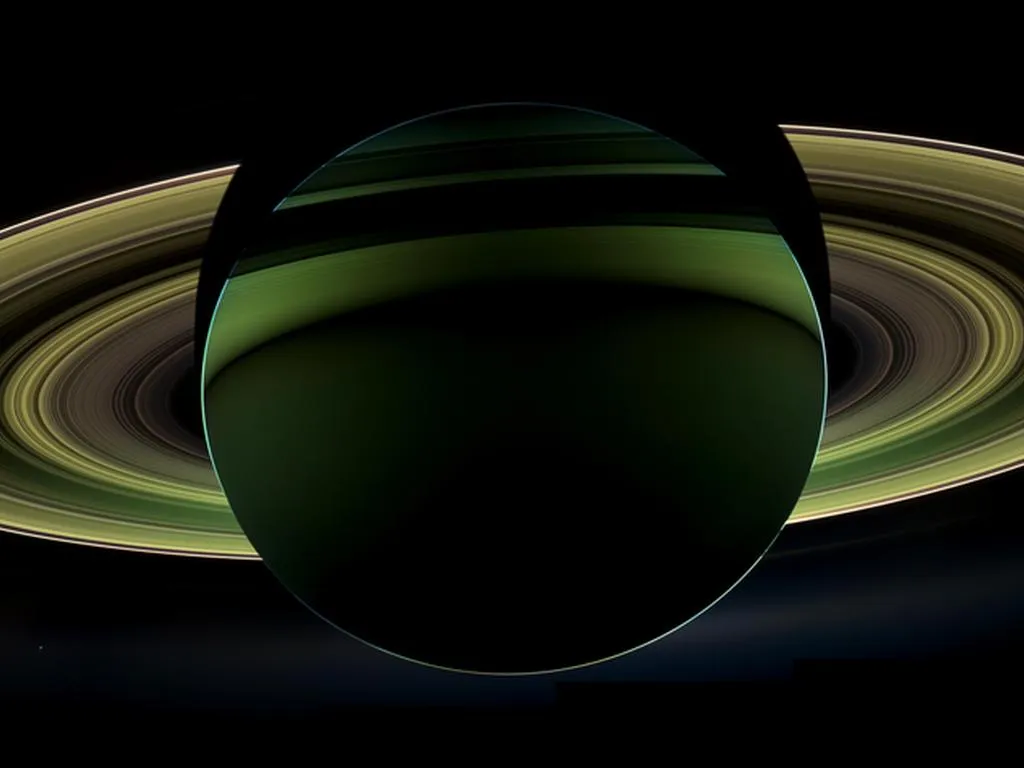
Auroras akin to Earth's have been spotted on Saturn. But these newest findings show that auroras on exoplanets probably aren't formed from charged particles travelling on the solar wind. Instead, the auroras on the dim, "ultracool dwarf" stars and "failed stars" known as brown dwarfs that Nichols studied probably behave more like Jupiter's northern and southern lights.
By studying these radio emissions, scientists will gain more insight into the strength of a planet's magnetic field, how it interacts with its parent star, whether it has any moons and even the length of its day.
Sign up for the Live Science daily newsletter now
Get the world’s most fascinating discoveries delivered straight to your inbox.
The new research is detailed in a recent issue of The Astrophysical Journal.
Miriam Kramer joined Space.com as a staff writer in December 2012. Since then, she has floated in weightlessness on a zero-gravity flight, felt the pull of 4-Gs in a trainer aircraft and watched rockets soar into space from Florida and Virginia. She also serves as Space.com's lead space entertainment reporter, and enjoys all aspects of space news, astronomy and commercial spaceflight. Miriam has also presented space stories during live interviews with Fox News and other TV and radio outlets. She originally hails from Knoxville, Tennessee where she and her family would take trips to dark spots on the outskirts of town to watch meteor showers every year. She loves to travel and one day hopes to see the northern lights in person.