
 Live Science Plus


New Vaccine Could Help Women Who Already Have HPV

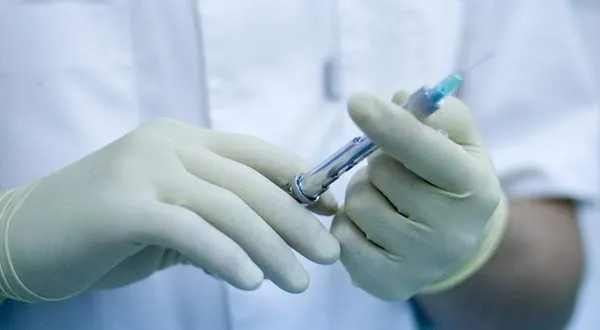
A new vaccine could help women infected with the human papillomavirus (HPV) who are at risk for cervical cancer, according to early results from a small study.
In the study, the experimental vaccine — which differs from existing HPV vaccines that are given to prevent HPV infections — was given to 18 women with cervical dysplasia, a precancerous condition of the cervix caused by a chronic HPV infection.
Along with the vaccine, patients also received a brief, mild electric shock at the injection site, which the researchers say allows their vaccine to work better than those tested in the past by helping to get the vaccine's DNA into the woman's cells.

Results showed that after vaccination, the women produced immune cells that were capable of attacking and killing HPV-infected cells.
The findings suggest this vaccine could clear chronic HPV infections, and prevent precancerous cells from becoming cancerous, the researchers say.
Current HPV vaccines prevent infection with cancer-causing strains of HPV, but do not help women already infected with the common, sexually transmitted virus. Most HPV infections go away on their own, but some linger and cause precancerous lesions to develop.
Doctors have effective treatments for removing these lesions, but they often come back, said Eduardo Franco, a cancer epidemiologist at McGill University in Montreal, who was not involved in the study.
A vaccine that treats chronic HPV infections would be useful, Franco said, because women with precancerous cells have to be continuously monitored to make sure their disease does not return, or worsen.
However, the new findings are preliminary. Because women in the study had been treated for their lesions before they got the vaccine, there's no proof yet the vaccine actually treats the disease, said Dr. Tzyy-Choou Wu, a cervical cancer researcher at Johns Hopkins University, who was not involved in the research.
The study is published today (Oct. 10) in the journal Science Translational Medicine.
The vaccine, called VGX-3100, works in a way similar to gene therapy: It contains pieces of DNA that, once inside cells, instruct them make specific proteins. These proteins train the body's immune system to recognize and attack cells infected with HPV 16 and HPV 18, which cause most cervical cancers, said study researcher Niranjan Sardesai, chief operating officer of Inovio Pharmaceuticals, the company that makes VGX-3100.
The electric pulse administered at the injection site (in the arm) lasts about 15 milliseconds, and the whole vaccination process takes about four seconds, Sardesai said.
The vaccine appeared to be safe, according to the study's results. The most common side effects were pain and tenderness at the injection site, with some participants experiencing swelling. For the most part, the pain went away within 10 minutes of the procedure, the researchers said.
The researchers are conducting another study to see if the vaccine could treat precancerous lesions. In that study, women will be given either the vaccine or a placebo. Knowing how well the vaccine compares with a placebo is important, because in some cases, the lesions go away without treatment.
It's possible a vaccine similar to the one used in this study could treat other types of cancer caused by HPV, such as some head and neck cancers, Sardesai said.
Pass it on: A new vaccine may prevent cervical cancer in women who already have chronic HPV infections.
This story was provided by MyHealthNewsDaily, a sister site to LiveScience. Follow Rachael Rettner on Twitter @RachaelRettner, or MyHealthNewsDaily @MyHealth_MHND. We're also on Facebook & Google+.
