Hitchhiking fish that are famous for suctioning themselves to other marine animals have a very unexpected hiding place: the rear ends of manta rays, a new study finds.
These fish, known as remoras (family Echeneidae), frequently get free rides when they use their suction discs — modified backs, or dorsal fins — to latch onto marine animals like sharks, whales and sea turtles. It has generally been thought that remoras provide a cleaning service to the animal they are traveling with, picking parasites off their skin. But this new discovery shows that this relationship might not always be beneficial to the manta rays.
The suckerfish's behavior is "pretty weird," study first author Emily Yeager, a doctoral candidate in the Department of Marine Biology and Ecology at the University of Miami, told Live Science.
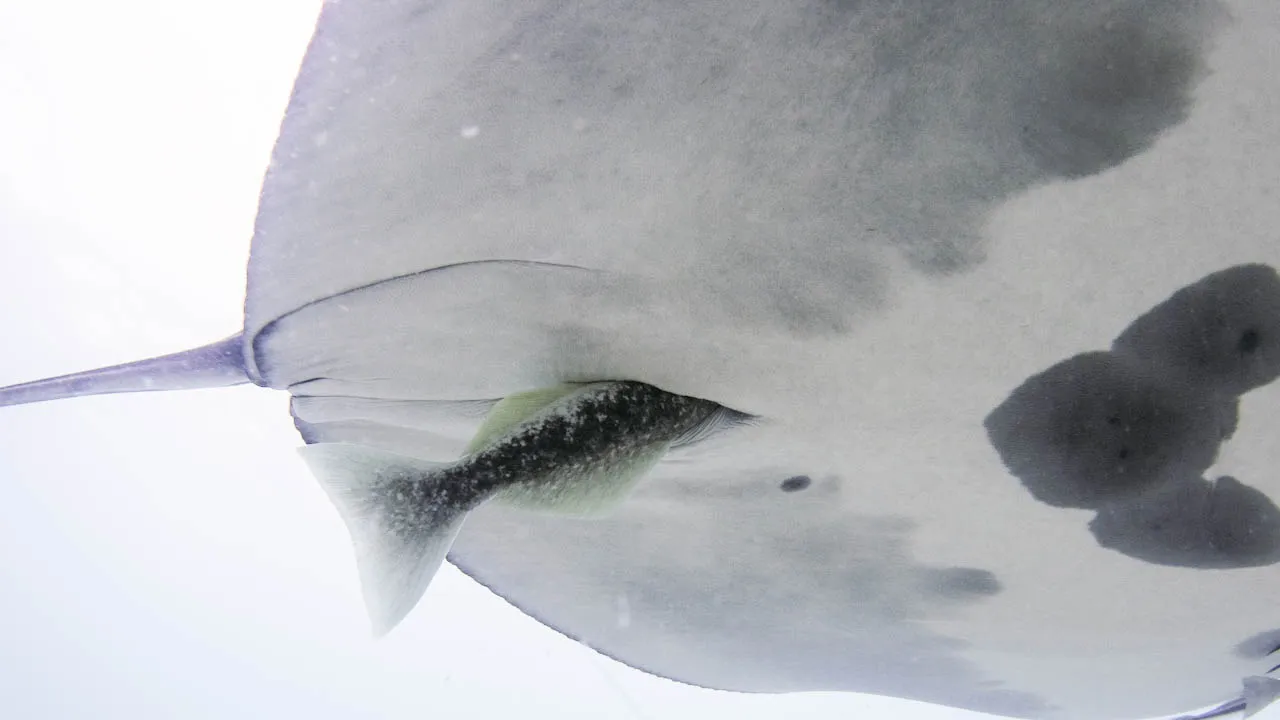
In one observation, a free diver swam near an adult Atlantic manta ray (Mobula yarae) and noticed a common remora (Remora remora) was near the ray's pelvic fins. The diver's presence seemed to startle the remora, which then "quickly inserted itself into the manta ray's cloacal opening," the researchers wrote in the study, which was published Monday (May 11) in the journal Ecology and Evolution.
The manta ray appeared bothered by the abrupt insertion. "In response to this intrusion, the manta ray briefly shuddered before continuing to swim away with the remora still inside of its cloacal opening," the team wrote.
The researchers were surprised to find remoras inside the cloaca, a hole that's a one-stop shop for copulating, having offspring and eliminating waste, Yeager said. The remora's cloacal proclivities reveal a previously undocumented behavior in one of the ocean's best known symbiotic relationships and may change how scientists view symbiotic relationships overall, Yeager said.
"Oftentimes they're just sort of seen swimming along with their hosts with no kind of visual negative consequence to their host," Yeager said.
Sign up for the Live Science daily newsletter now
Get the world’s most fascinating discoveries delivered straight to your inbox.
But based on the images and videos of remoras sliding up manta ray behinds, Yeager thinks it may not be a harmless relationship. "The manta's ability to remove the remora is probably pretty non-existent," she said.
"My first reaction was a combination of amazement and horror — it's so cool that remoras can do that, but I imagine it's no fun for the manta," David Shiffman, an independent marine conservation biologist and author based in Washington, D.C. who was not involved with the study, told Live Science in an email.
An October 2025 observation of a remora's tail within a female Mobula yarae, nicknamed Ms. Pac-Man by scientists,in Florida, USA.
For this study, Yeager collected data from manta ray scientists around the world and found cloacal diving recorded seven times in 15 years. These instances occurred in multiple oceans, spanning from the Maldives to Florida, in all three manta ray species (M. yarae, M. birostris and M. alfredi) and in both juveniles and adults. It's likely a widespread behavior but rarely seen, she said.
According to Yeager, one previous study hinted that very small remoras might have been in the cloacae of manta rays, and another study mentioned one remora in the cloaca of a whale shark. Sometimes, small remoras are spotted in the gill cavities of sailfish and rays.
Symbiosis or something else?
Yeager studies symbiosis — close, long-term interactions between two species living together — in the ocean. Historically, scientists have categorized these relationships into one of three types: mutualism, where both species benefit; commensalism, where one benefits without affecting the other; and parasitism, where one benefits at the other's expense. Remoras and their hosts have been thought of as either mutualism or commensalism, she said.
As far as remoras and manta rays, "I'd argue that this is evidence of more of a parasitic relationship, which is new to our kind of understanding of what these relationships are and how they function in the wild," she said.
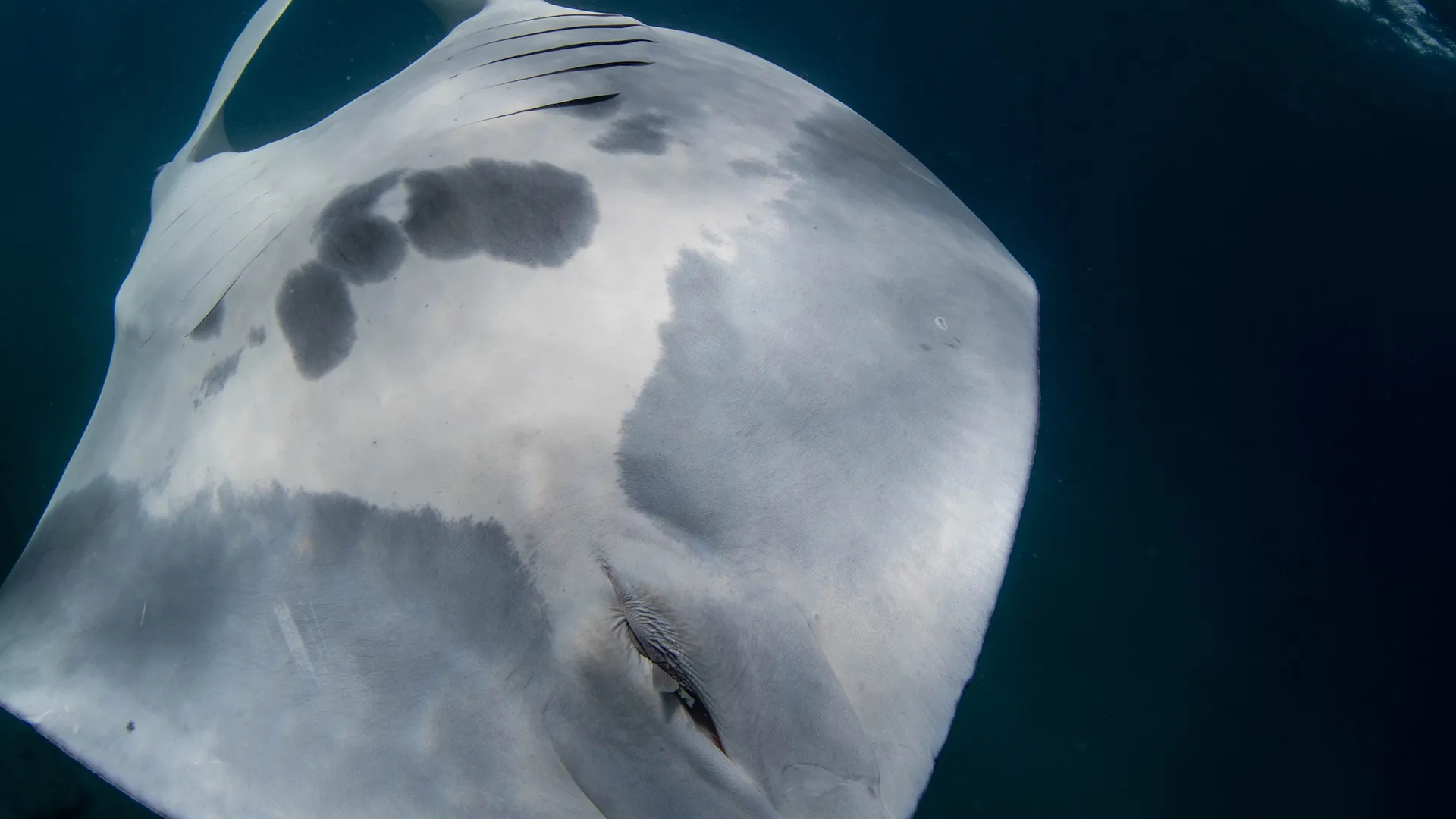
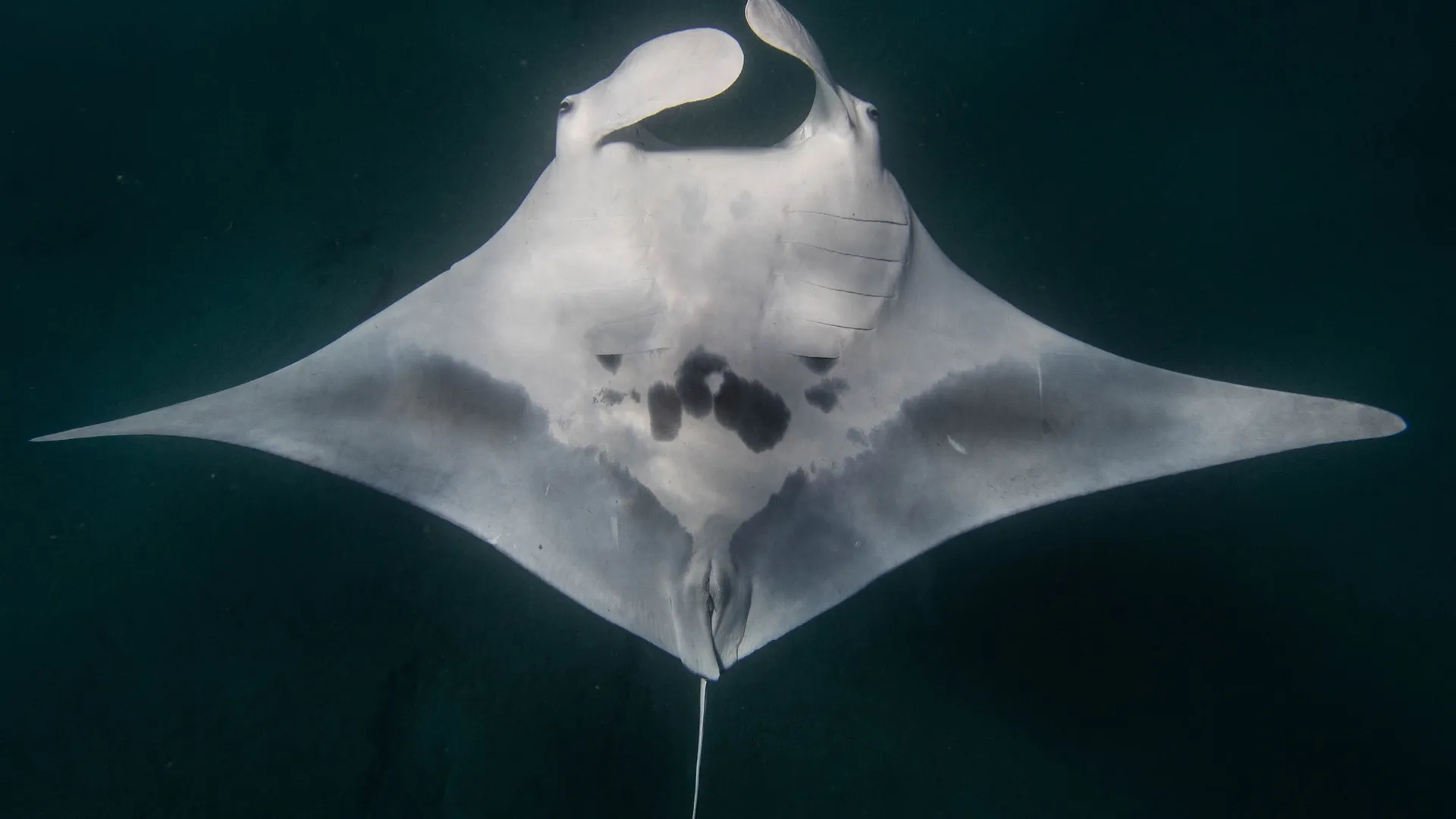
A female manta ray, nicknamed Ms. Pac-Man by scientists, with a remora within the cloaca, sighted in South Florida in October 2025.
For the manta rays, the suction may lead to physical injury or discomfort, increase their energetic costs as the manta rays try to remove the fish, and even interfere with reproduction, Yeagar said. She noted that mantas have been observed trying to dislodge remoras by leaping out of the water or scraping against the sand.
This reasoning contributes to Yeager's overall argument that symbiotic relationships shouldn't exist in discrete categories but rather a continuum, in which their partnership varies.
She compared it to relationships with your family. "You guys get along really well, but sometimes you're fighting, right?" she said. "And those types of relationships likely also exist in these ecological communities." It's just a matter of spending the time to observe them.
Article Sources
Yeager, E. A., J.Pate, G. M. W.Stevens, B.Turffs, and C.Macdonald. 2026. Hiding in Plain Sight: Evidence of Echeneidae Cloacal and Gill Diving Behavior in Manta Ray Hosts. Ecology and Evolution. 16, no. 5: e73548. https://doi.org/10.1002/ece3.73548
Bethany Augliere is a former marine biologist turned science communicator, with graduate degrees from University of California, Santa Cruz and Florida Atlantic University. Her writing and photography have appeared in National Geographic, National Geographic Kids, Oceanographic Magazine, Scuba Diving Magazine, among others, and she has co-produced award-winning children’s nature documentaries with Schoolyard Films.
You must confirm your public display name before commenting
Please logout and then login again, you will then be prompted to enter your display name.