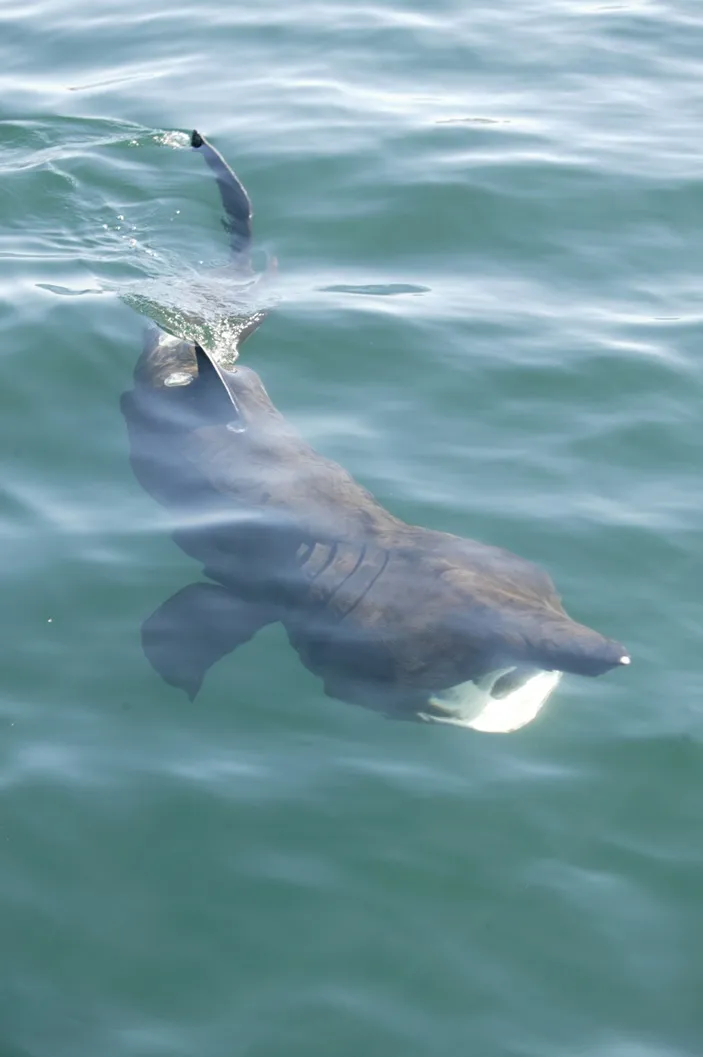
The number of basking sharks — one of the biggest fish in the ocean — seen off the British Isles has increased since 1980, suggesting populations of the animal may expanding in the area, a new study finds.
More medium-size and large sharks have also been spotted, suggesting that the population is aging — a good sign for this slow-growing, vulnerable species, according to a statement from the University of Exeter in England.
There used to be many more basking sharks in the northeast Atlantic, but their numbers plummeted because they were hunted for their liver oil. More than 81,000 animals were killed between 1952 and 2004, according to the statement. Large-scale hunting ended in the United Kingdom in the 1950s, though it continued at low levels in Norway until 2000.
Protected under British legislation since 1998 and more recently under international conservation agreements, basking sharks are regularly seen off the English coast during summer, but little is known about where and how they live for the rest of the year.
Researchers from the University of Exeter and the Cornwall Wildlife Trust, along with others, analyzed more than 20 years of data from public sightings and boat shark surveys, and published their findings in the July issue of the journal Marine Ecology Progress Series.
Basking shark populations are believed to recover slowly from overfishing because they grow slowly, reproduce infrequently and have few offspring. But these results suggest long-term protections in the United Kingdom could be paying off.
The creatures are nevertheless listed as endangered in the northeast Atlantic by the International Union for the Conservation of Nature, and despite being protected from fishing in most areas, basking shark numbers worldwide are declining for unknown reasons.
Sign up for the Live Science daily newsletter now
Get the world’s most fascinating discoveries delivered straight to your inbox.
Basking sharks can make long migrations and live throughout the world. They are filter-feeders, making a living on plankton and other material they trap in their large mouths. They can grow up to 45 feet (13 meters) long, second only to whale sharks in sheer size.
"This research has proved the value of data collected by members of the public and our volunteers, and highlights the importance of public engagement with such recording schemes," said Ruth Williams, a conservation manager with Cornwall Wildlife Trust, in a statement. "It is hugely encouraging to see the positive trend in numbers of basking sharks in our waters."
For the science geek in everyone, Live Science offers a fascinating window into the natural and technological world, delivering comprehensive and compelling news and analysis on everything from dinosaur discoveries, archaeological finds and amazing animals to health, innovation and wearable technology. We aim to empower and inspire our readers with the tools needed to understand the world and appreciate its everyday awe.