













Baldness Treatments May Mimic Growth of Animals' Winter Coats

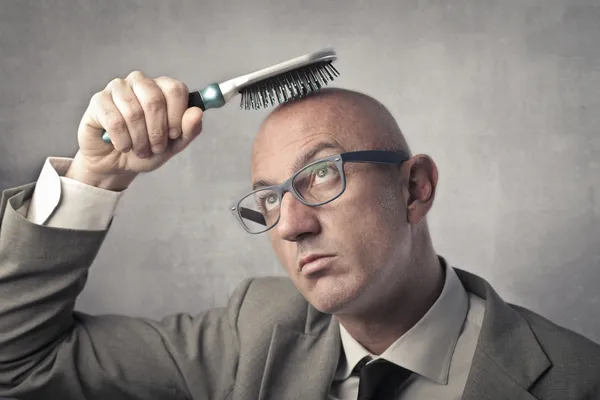
Research into treatments that fight male-pattern baldness might take a lesson from animals that beef up their fur coats at certain times of the year.
In animals, hair growth is triggered not only by hormones in the layer of skin called the dermis, but also by signals coming from elsewhere in the body, said study author Dr. Cheng-Ming Chuong, a professor at the University of Southern California.
These signals vary with the seasons, the research showed, which is why some animals lose and gain coats of hair at different times of the year.
"The hair-follicle stem cell is not only listening to the voice in the stem cell, but also the voice from outside," Chuong explained, in an interview prior to his presentation today at the meeting of the American Society for Cell Biology in Denver.
The search for ways to regrow hair has recently turned to stem cells, but the new study indicates that instead, a treatment could aim at altering the environment around hair follicles, rather than implanting stem cells within them.
These outside signals that are present in animals are missing in people.
"This extra follicle-affecting factor has disappeared during human evolution," so human hair follicles are activated only by signals internal to the hair follicle, Chuong told MyHealthNewsDaily.
Get the world’s most fascinating discoveries delivered straight to your inbox.
So to regrow hair for men who have lost it with age, a treatment could be developed that targets the tissue around the hair follicle to stimulate hair growth.
"To deal with the hair growth, you not only try to help the stem cell, but you can improve the 'soil,' like — You put a tulip bulb in a nicer soil, you will grow a nicer hair," Chuong said.
Last month, a paper in the Journal of Investigative Dermatology from researchers at the University of California - Irvine noted that this line of research contributes to an understanding of how to trigger hair growth once a follicle is in the "resting phase" of hair growth.
This story was provided by MyHealthNewsDaily, a sister site to LiveScience. Follow MyHealthNewsDaily on Twitter @MyHealth_MHND. Find us on Facebook.
