
-
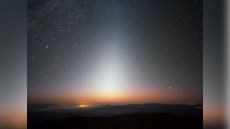 A strange triangle will appear in the zodiac this month. How to see rare 'zodiacal light,' before it disappears.
A 'false dusk' will be visible during twilight in February, but only from locations that are free of light pollution. Here's everything you need to know about zodiacal light.
planets -
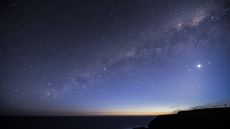 Venus, the 'love planet', will look extra special this Valentine's Day. Here's why.
In a cosmic coincidence, Venus — the planet named for the Roman goddess of love — will be at its brightest and best on Valentine's Day. Heres where and when to see it.
venus -
 Jupiter's 'tormented moon' Io just unleashed the most powerful volcanic event ever seen
NASA's Juno spacecraft has discovered a giant volcanic hot spot on the surface of Jupiter's hellish moon Io. The eruptions in this area are chucking out six times the energy being produced by all Earth's power stations, researchers say.
planets -
 Which planet is closest to the sun?
Mercury takes only 88 Earth days to orbit the sun.
2 Commentsplanets -
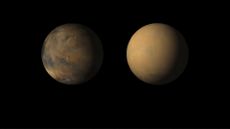 We may finally know what causes Mars' gigantic, planet-wide dust storms
Mars' southern hemisphere absorbs a lot of the sun's energy during the Red Planet's spring, and that may be causing Mars' dust storms, a new study suggests.
mars -
 See a 'parade' of 6 planets fill the sky on Saturday night — before a bonus 7th planet joins in March
Worlds will align for a "planetary parade" in January, with four bright and easily visible to the naked eye. But an even better view arrives in February and March. Here's what you need to know.
planets -
 An interstellar visitor may have changed the course of 4 solar system planets, study suggests
An object eight times the mass of Jupiter may have swooped around the sun, coming superclose to Mars' present-day orbit before shoving four of the solar system's planets onto a different course.
astronomy -
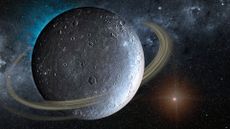 Earth's moon could've had Saturn-like rings, new study hints
A new study implies that in the past, moons in our solar system may have had rings just like planets do — deepening the mystery of why no ringed moons exist today.
the-moon -
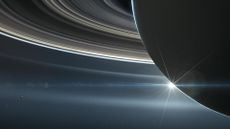 We might have been completely wrong about the origin of Saturn's rings, new study claims
Computer modeling suggests Saturn's rings are billions of years older than previous research suggests — but the new findings are up for debate.
saturn


