
-
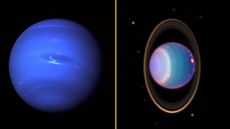 Uranus and Neptune may be 'rock giants,' not 'ice giants,' new model of their cores suggests
A new computational model suggests that Uranus' and Neptune's cores may be less icy than their "ice giant" nickname suggests.
4 Commentsplanets -
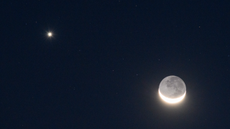 Why is Venus so bright?
The "morning star" is bright because of several factors, including having an atmosphere filled with sulfuric acid.
2 Commentsvenus -
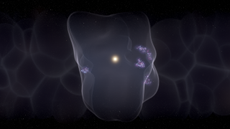 Mysterious, irradiated 'scar' in our galaxy may finally have an explanation
Astronomers traced a mysterious 'scar' of ionized gas around the solar system to two stars that had a close flyby with our sun millions of years ago.
3 Commentsastronomy -
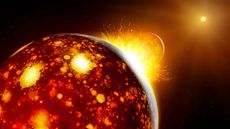 Earth had a secret neighbor, and it may explain our moon
Earth may have a moon today because a nearby neighbor once crashed into us, a new analysis of Apollo samples and terrestrial rocks reveals.
planets -
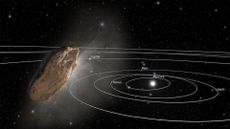 How dangerous are interstellar objects like 3I/ATLAS?
Interstellar objects like 3I/ATLAS are most likely to enter our solar system from two specific directions, a new study suggests. What does it mean for Earth?
astronomy -
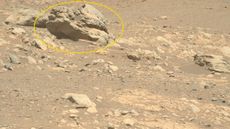 Odd-looking rock on Mars is totally alien to the Red Planet, Perseverance rover finds
NASA's Perseverance Mars rover recently came across an odd rock, dubbed "Phippsaksla," that is unlike anything else the robot has found on the Red Planet. It turns out that it probably isn't from our neighboring world and likely crashed on Mars instead.
mars -
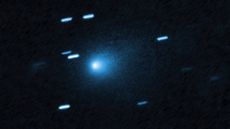 Is it aliens? Here's why that's the least important question about 3I/ATLAS.
Opinion Conspiracy theories have raged about 3I/ATLAS being an unnatural object. But the alien question, while fun, generates misinformation and distracts from the science.
Opinion -
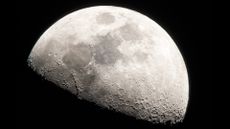 Scientists finally find explanation for lopsided cloud that follows Earth's moon through space
The moon's oddly skewed dust cloud may be caused by an extreme day-night temperature difference, a new study suggests.
the-moon -
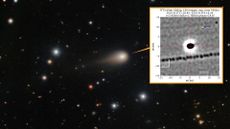 New images of interstellar object 3I/ATLAS show giant 'jet' shooting toward the sun
New telescope images show that the interstellar comet 3I/ATLAS is shooting a giant jet of gas and dust toward the sun. This is normal behavior for comets, an expert told Live Science.
9 Commentscomets


