
-
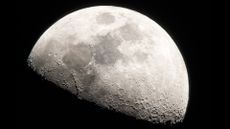 Scientists finally find explanation for lopsided cloud that follows Earth's moon through space
The moon's oddly skewed dust cloud may be caused by an extreme day-night temperature difference, a new study suggests.
the-moon -
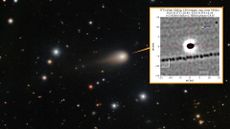 New images of interstellar object 3I/ATLAS show giant 'jet' shooting toward the sun
New telescope images show that the interstellar comet 3I/ATLAS is shooting a giant jet of gas and dust toward the sun. This is normal behavior for comets, an expert told Live Science.
9 Commentscomets -
 Astronomers discover skyscraper-size asteroid hidden in sun's glare
The newly discovered "twilight" asteroid, 2025 SC79, was obscured by the sun's glare until an astronomer pointed the Dark Energy Camera at it, highlighting the potential dangers of unseen asteroids.
asteroids -
 Which planets are the youngest and oldest in our solar system?
There are a couple of ways that scientists can date planets, so which planets formed first in our solar system?
3 Commentsplanets -
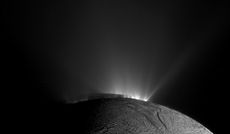 Scientists find best evidence yet that icy moon Enceladus is habitable
An ocean flowing beneath the surface of Saturn's moon Enceladus is spewing ice that holds the building blocks of life.
11 Commentssaturn -
 Our solar system's asteroid belt is slowly disappearing
A new analysis estimates that the asteroid belt is steadily losing mass each year, and may not be as permanent a feature of the solar system as we thought.
asteroids -
 'Completely unexplained': James Webb telescope finds strange 'dark beads' in Saturn's atmosphere
The beads appear above a swirling hexagonal jet stream at the gas giant's north pole, and could emerge from interactions between its magnetosphere and atmosphere.
3 Commentsspace -
 Why does Pluto have such a weird orbit?
The dwarf planet has a strange orbit and tilt — what gives?
pluto -
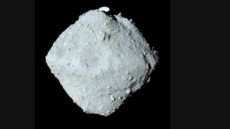 'A genuine surprise': Near-Earth asteroid Ryugu once had 'flowing water' that transformed its insides
A new analysis of asteroid Ryugu hints that the "potentially hazardous" space rock once had flowing water in its core, possibly leftover from the impact that created it.
asteroids


