
-
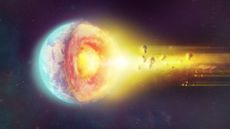 'Primordial' helium from the birth of the solar system may be stuck in Earth's core
The discovery that helium and iron can mix at the temperatures and pressures found at the center of Earth could settle a long-standing debate over how our planet formed.
3 Commentsplanet-earth -
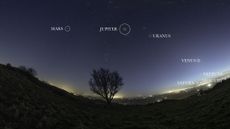 'Planet parade' photo captures 7 planets in a line over Earth — possibly for the 1st time ever
A stunning photo of a "parade of planets", shows Mars, Jupiter, Uranus, Saturn, Venus, Neptune, and Mercury in alignment from Earth. The image could be the first of its kind.
6 Commentsastronomy -
 Did a supernova 6 million years ago kickstart evolution in Africa? New study offers a clue
A curious connection between an ancient supernova and virus diversification in one of Earth's biggest lakes means that crazy cosmic events may have had more influence on our planet than we thought.
astronomy -
 'Planet parade' 2025: See the ultra-rare planetary alignment peak this week, before Saturn gets swallowed by the sunset
A stunning "parade of planets" will grace the night sky this week, with all seven of Earth's celestial neighbors joining the show. Here's how to spot it and why it happens.
space -
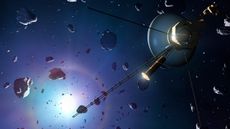 NASA supercomputer reveals strange spiral structure at the edge of our solar system
The mysterious Oort cloud is the source of many of our solar system's comets, but astronomers still have no idea what it looks like. Now, new simulations may have given them a first glimpse.
29 Commentsspace -
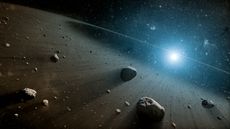 1 million 'interstellar objects' — each larger than the Statue of Liberty — may lurk in the outer solar system
New simulations reveal that around 1 million "macroscopic" objects from our closest stellar neighbors, the Alpha Centauri system, may already reside in the Oort Cloud, far from sight.
7 Commentsastronomy -
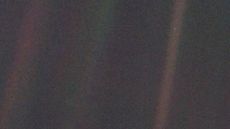 Pale Blue Dot: The iconic Valentine's Day photo of Earth turns 35 today — and you're probably in it
On this day 35 years ago, NASA's Voyager 1 spacecraft took a picture that changed how we see our planet. The iconic "Pale Blue Dot" image is just as awe-inspiring today.
planets -
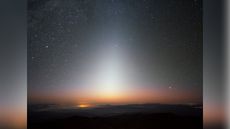 A strange triangle will appear in the zodiac this month. How to see rare 'zodiacal light,' before it disappears.
A 'false dusk' will be visible during twilight in February, but only from locations that are free of light pollution. Here's everything you need to know about zodiacal light.
planets -
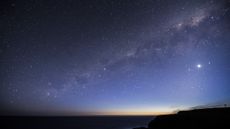 Venus, the 'love planet', will look extra special this Valentine's Day. Here's why.
In a cosmic coincidence, Venus — the planet named for the Roman goddess of love — will be at its brightest and best on Valentine's Day. Heres where and when to see it.
venus


