
-
 When is the fall equinox, and why does it happen?
On Monday, Sept. 22, day and night will be nearly equal in length as Earth's axis is side-on to the sun, officially beginning autumn in the Northern Hemisphere.
astronomy -
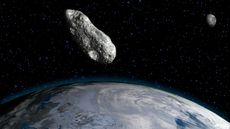 Newly discovered bus-size asteroid will zoom close past Earth today — and will not return for exactly 100 years
Asteroid 2025 QV5, which was first spotted in late August, will make a close approach to Earth on Wednesday (Sept. 3). It will not get this near to us again until Sept. 4, 2125.
4 Commentsasteroids -
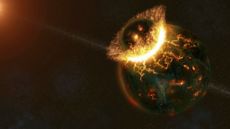 Cataclysmic crash with neighboring planet may be the reason there's life on Earth today, new studies hint
Early Earth may not have had the right ingredients for life — until a nearby Mars-size planet crashed into it, two new studies hint.
4 Commentsastronomy -
 Tiny devices propelled by sunlight could explore a mysterious region of Earth's atmosphere
"Being able to send something out there would enable us to take a lot more precise data than we currently can."
-
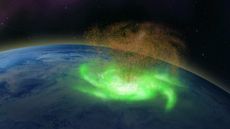 'Space hurricane' caught raging over North Pole during one of the sun's quietest days
A rare "space hurricane" that swirled over Earth's North Pole in 2014 caused intense space weather effects despite unusually quiet solar conditions, a new study reports.
astronomy -
 Meteorite that crash landed through Georgia man's roof is 20 million years older than Earth, scientists say
Researchers have analyzed the McDonough meteorite, which crashed through a man's home in June, and determined that it is older than our planet.
11 Commentsmeteoroids -
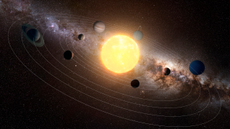 Earth, Mars, Venus — and a long-lost planet — may have once 'waltzed' in perfect harmony around the sun
New simulations suggest that up to four of the solar system's rocky planets, including Earth and a long-lost world, once orbited in mathematical harmony around the infant sun.
planets -
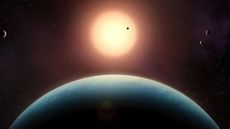 5th planet found orbiting nearby star may lie in habitable zone
A super-Earth exoplanet has been detected within the habitable zone of a nearby red dwarf star, where liquid water might exist on its surface under the right atmospheric conditions.
-
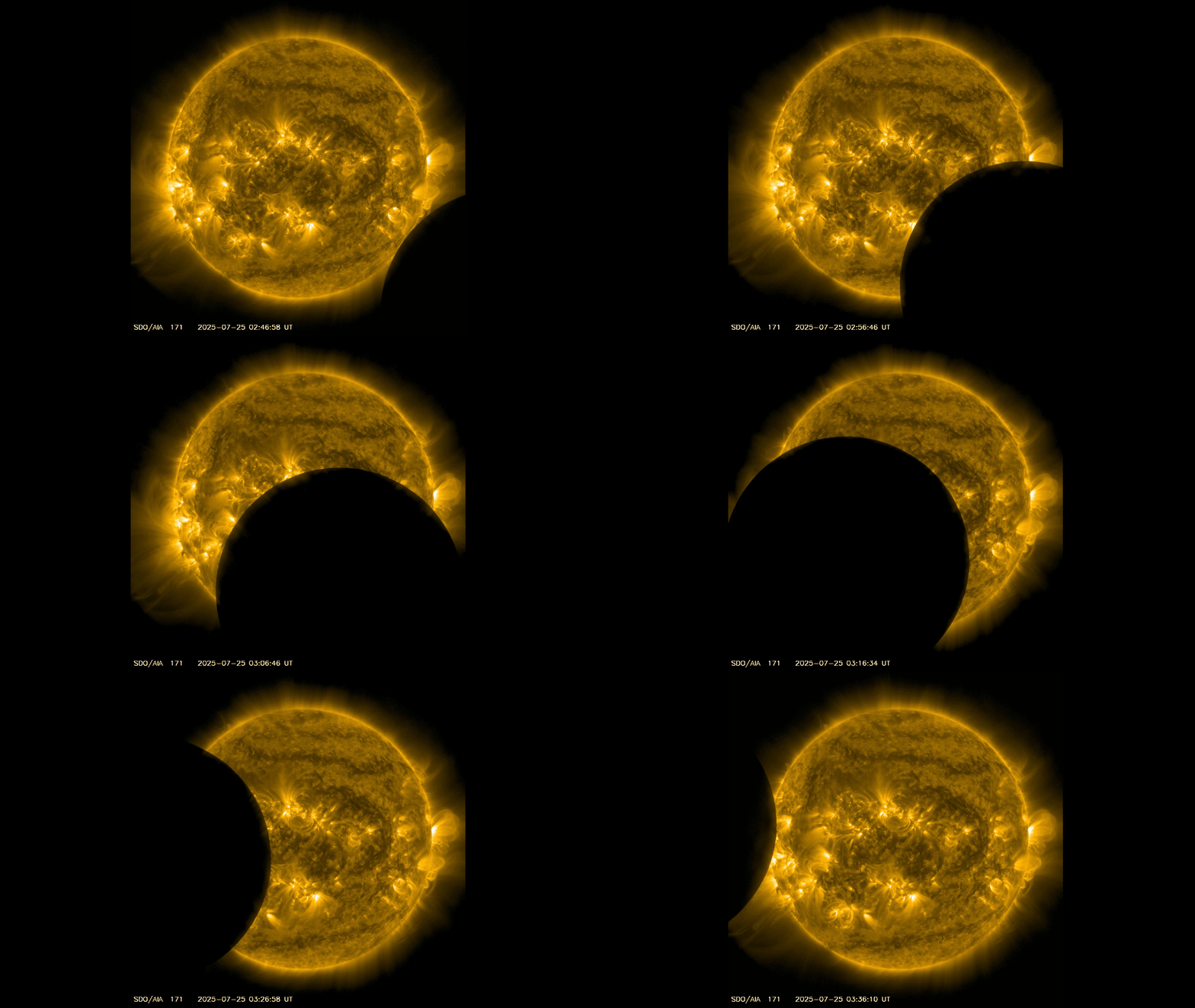 NASA spacecraft snaps images of lunar transit and Earth eclipse on the same day — see the photos
The Solar Dynamics Observatory saw a lunar transit and an Earth eclipse on July 25 — the first when the moon passed between it and the sun, and another when Earth did the same.
the-sun


