
-
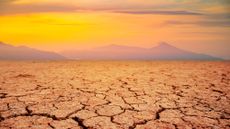 Study suggests life on Earth has around 1.8 billion years left — but the biosphere might evolve to survive even longer
Using complex climate models, researchers have pinned down the point at which life will no longer be able to survive on Earth.
2 Commentsplanet-earth -
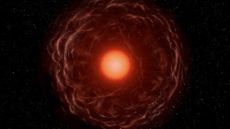 Earth may survive the fiery death of the sun after all, new models suggest
When the sun dies, it will become hundreds of times its current size and engulf the innermost planets. Earth may escape this infernal fate, according to state-of-the-art stellar evolution models.
4 Commentsthe-sun -
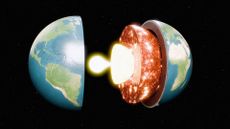 How hot is Earth's core?
Life's Little Mysteries What's the temperature in Earth's core, and how did we figure that out?
Life's Little Mysteries -
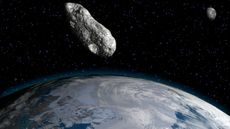 Watch a newly discovered, blue-whale-size asteroid fly super close to Earth today
Newly spotted asteroid 2026 JH2, which could be up to 115 feet wide, will fly past Earth closer than some satellites on Monday (May 18). The close approach will be visible to stargazers and can be viewed via livestream.
asteroids -
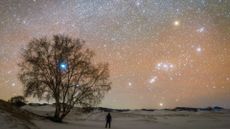 Why are some constellations visible for only part of the year?
Why do some constellations stay in the sky all year, while others disappear?
astronomy -
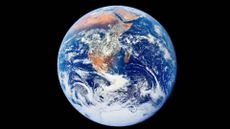 Earth quiz: What do you know about our planet's most amazing features?
Do you know Earth's highest peak, deepest point, and more? Test your knowledge about our planet in this quiz.
planet-earth -
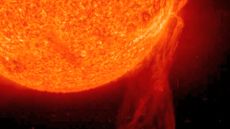 What would happen to Earth if the sun suddenly vanished?
Earth is habitable due to warmth from the sun. So what would happen if the sun disappeared?
3 Commentsplanet-earth -
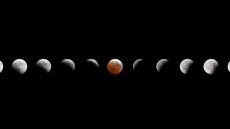 Can you see Earth's shadow?
Earth's shadow follows the planet as it orbits the sun. You can get a sense of its enormous, awe-inspiring size by seeing this silhouette cast on objects ranging from satellites to the moon.
4 Commentsspace -
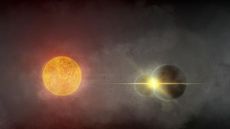 Exceptionally rare sighting of planets colliding may shed light on the crash that formed the moon
Astronomers say a distant, sunlike star shows signs of a catastrophic planet-on-planet crash that may mirror the ancient impact that formed Earth's moon.
5 Commentsspace


