
-
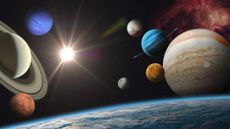 How long do most planets last?
Planets are born, and they can also "die." So what's the lifespan of a typical planet?
2 Commentsplanets -
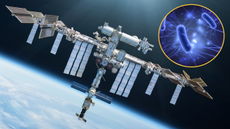 Viruses that evolved on the space station and were sent back to Earth were more effective at killing bacteria
Near-weightless conditions can mutate genes and alter the physical structures of bacteria and phages, disrupting their normal interactions in ways that could help us treat drug-resistant infections.
bacterial-fungal -
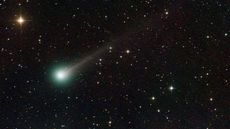 Astronomers may have already spotted the 'Great Comet of 2026' — and it could soon be visible to the naked eye
Recently discovered Comet C/2025 R3 (PanSTARRS) will make its closest approach to the sun and Earth in late April and could potentially be visible to the naked eye. It may end up being the brightest comet of the year.
2 Commentscomets -
 When does winter start? Your guide to the 2025 winter solstice.
Astronomical winter begins Sunday, Dec. 21 in the Northern Hemisphere. Here's how the solstice works.
astronomy -
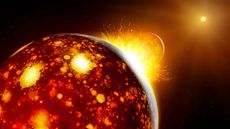 Earth had a secret neighbor, and it may explain our moon
Earth may have a moon today because a nearby neighbor once crashed into us, a new analysis of Apollo samples and terrestrial rocks reveals.
planets -
 Hidden, supercharged 'thermostat' may cause Earth to overcorrect for climate change
Rising levels of CO2 in the atmosphere may trigger a series of geological and biological processes that could ensure the next ice age arrives on time instead of being delayed, researchers say.
6 Commentsclimate-change -
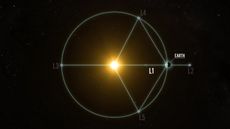 NASA launches special mission to study Earth's mysterious "halo"
NASA's Carruthers Geocorona Observatory has taken flight, and will soon start a two-year mission to study Earth's mysterious "halo".
space -
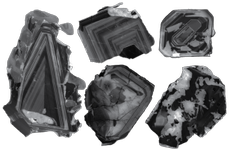 Vast source of rare Earth metal niobium was dragged to the surface when a supercontinent tore apart
Potentially the largest known source of niobium discovered in central Australia formed 830 million years ago, and we can thank the breakup of the ancient supercontinent Rodinia.
3 Commentsgeology -
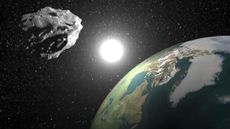 New 'quasi-moon' discovered in Earth orbit may have been hiding there for decades
A near-Earth asteroid lurked undetected for decades until a telescope in Hawaii spotted it earlier this year. It may be Earth's newest quasi-moon.
astronomy


