













'A single magma ocean' once covered the moon, data from India's Chandrayaan-3 mission suggests
The moon was once engulfed by a massive magma ocean, analysis of geological samples collected by India's Chandrayaan-3 mission suggests.


Data from India's recent Chandrayaan-3 mission supports the idea that an ocean of molten rock once covered the moon. Scientists from the mission have published their new findings in the journal Nature.
On August 23 2023, a lander called Vikram successfully touched down on the lunar surface. Controllers then deployed a rover called Pragyan, which had been stowed on Vikram, to explore the landing site.
The location where Vikram touched down was further south than any other landing craft had previously been on the moon. It gave scientists an insight into geology of the moon that had not yet been sampled.
Pragyan's measurements found that the particular mix of chemical elements in the lunar soil (or regolith) surrounding the lander was relatively uniform. This regolith was primarily made up of a white rock type called ferroan anorthosite.
The scientists say the chemical composition of the lunar south pole regolith is intermediate between those of samples from two locations in the moon's equatorial region: those collected by astronauts on the US Apollo 16 flight in 1972, and those returned to Earth by the robotic Luna-20 mission, flown by the Soviet Union the same year.
The broad similarity in the chemical compositions of all these samples, despite the fact they came from very distant geographical locations on the moon, supports the idea that a single magma ocean covered the moon early in its history.
Get the world’s most fascinating discoveries delivered straight to your inbox.
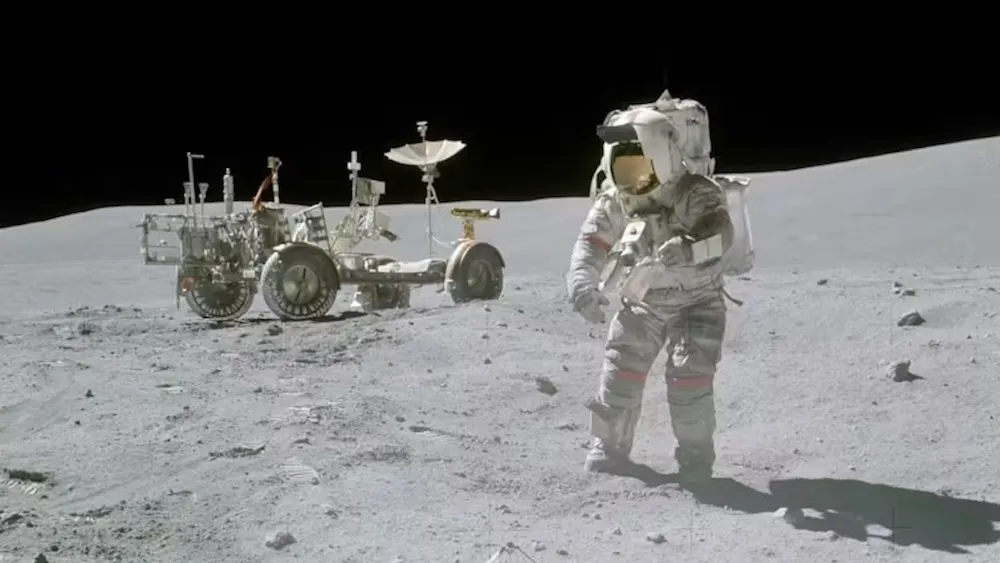
Measurements taken by Pragyan resemble those of samples from the US Apollo 16 mission.
The moon is thought to have formed when a Mars-sized planet collided with Earth, ejecting rock that subsequently coalesced to form our planet's only satellite. The lunar magma ocean is thought to have been present from its formation to tens or hundreds of millions of years afterwards.
The cooling and crystallisation of this magma ocean eventually led to the ferroan anorthosite rocks that make up the moon's crust.
Orbital measurements
Geologically, the lunar highlands are thought to partially represent the ancient lunar crust. Chandrayaan-3, Apollo 16 and Luna 20 all landed in highland regions, allowing comparisons. As such, it presented an opportunity to test predictions of the theory that the moon was covered in a global ocean of liquid rock — known as the lunar magma ocean (LMO) model.
The authors highlight how their measurements show the uniformity in the composition of the moon's surface over several tens of metres where the rover was operating.
"Ground-truth" measurements such as these are crucial for interpreting observations made by orbiting spacecraft. For example, the authors compared these results with data from two previous Indian lunar missions, Chandrayaan-1 and -2, which both measured the lunar surface from orbit.
The consistency between these earlier spacecraft measurements and those made by the Pragyan rover gives new confidence to the orbital datasets. The orbital data suggests the lunar surface in this region is uniform in its chemical composition over an area of several kilometres.

There are many differences between the moon's nearside (left) and farside (right).
These measurements are also invaluable when it comes to interpreting lunar meteorites. These are samples of rock ejected into space from the lunar surface when a space rock collides with the moon.
These rock fragments may later enter the Earth's atmosphere, and some even hit the ground. These represent fantastic samples, as the random nature in which they are thrown from different parts of the moon means we receive samples from areas not visited by previous missions.
However, precisely because of this random mode of sampling, it is difficult to know where on the moon they have come from, preventing us from placing them in their proper context. So, the Pragyan rover measurements help us build a picture of what different regions of the moon look like, and how our meteorite samples compare.
Nearside and farside
The lunar magma ocean model was first conceived following the return of samples from the Apollo 11 mission. That mission landed in an area dominated by dark basaltic rock (think of the stuff produced by volcanoes in Iceland or Hawaii). However, researchers at the time noticed the Apollo 11 soils also contained fragments of white rock, rich in the mineral anorthite, which was given the name ferroan anorthosite.
This observation led to the suggestion that the white rock represented tiny fragments of the original, ancient lunar crust. As the magma ocean cooled, denser minerals such as olivine and pyroxene sank to form a deeper layer called the mantle, while the ferroan anorthosite — being less dense than the surrounding magma — floated to form the moon's first crust.
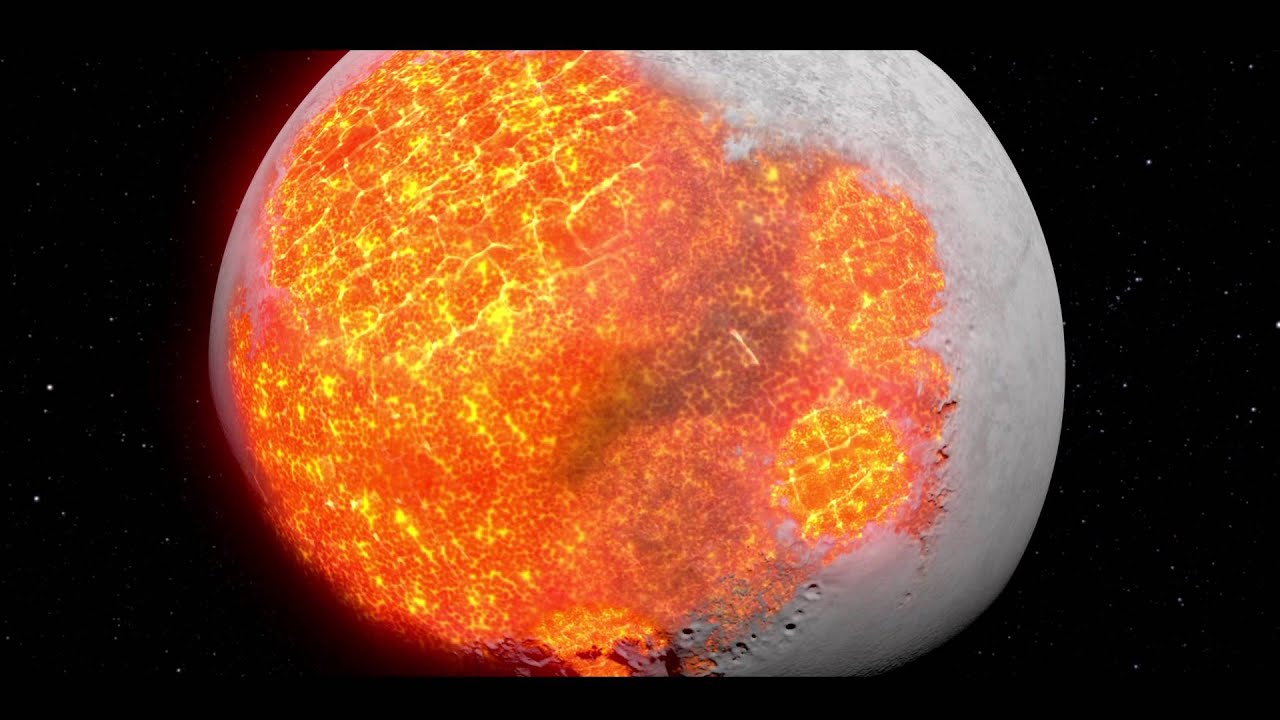
Since the original lunar magma ocean models were proposed, various suggestions have been made to explain additional complexities about lunar samples and geological observations of the moon more generally — for example, the fact that the lunar nearside crust appears to be much thinner than that of the farside.
Equally, it is unclear exactly why the nearside has experienced so much more volcanic activity, resulting in it being dominated by vast plains of dark basaltic rock, while the farside appears to comprise more of ferroan anorthosite.
In trying to address these problems, researchers have developed detailed models to explain how the lunar crust formed and was later modified by volcanic eruptions and impact cratering. Some models have predicted multiple layers to the lunar crust, with the ferroan anorthosite rocks at the top and more magnesium-rich rocks underneath.
Interestingly, the composition measured in this study is not what would be expected of the pristine ferroan anorthosite thought to have comprised the ancient lunar crusts. Instead, it contains more magnesium.
This observation indicates a higher concentration of certain minerals in the lunar crust than was suggested by the original lunar magma ocean models. The authors suggest their measurements may represent a mixed composition of the ferroan anorthosite rock that makes up the ancient lunar crust, together with material from the underlying layers of more magnesium-rich rocks.
RELATED STORIES
These different layers of material would have been mixed by the excavation of material during impact cratering on the moon. In particular, the Chandrayaan-3 landing site would probably have been covered by about 1.5-2km of ejected rock from the so-called "South Pole-Aitken" impact basin — a 2,500km diameter depression in the surface that is thought to have been created by a colossal impact event early in the moon's history.
Later impact cratering events would have further mixed and distributed this material, resulting in the kind of chemical signature measured by the Chandrayaan-3 mission in this study.
This edited article is republished from The Conversation under a Creative Commons license. Read the original article.

I am a research fellow at the University of Manchester, studying how the Moon and other planetary bodies evolved. My work involves the analysis of extraterrestrial materials (e.g. meteorites and samples returned by space missions) and performing experiments designed to simulate the conditions in evolving planets (e.g. high temperature and pressure). I completed my undergraduate and doctoral studies at University College London, followed by postdoctoral positions at the Open University, the Swedish Museum of Natural History, the VU Amsterdam.