













Scientists Catch Enzyme in Strange State, Shed Light on How We React to Meds

Medications affect some people differently than others, and a new study could help scientists understand why, possibly leading to the more-efficient design and production of pharmaceuticals.
Certain enzymes that break down drugs in the liver carry out their chemical reactions much more efficiently than chemists have been able to do in laboratories. The new findings give science a better idea of how the enzymes can do this: They go through a phase that scientists had suspected but had never seen before.
A family of enzymes known as P450s is found in many places in nature, and the human liver has five or six types that are responsible for metabolizing about 75 percent of drugs. (Enzymes are proteins that help speed up chemical reactions.)
Researchers had hypothesized that, as P450 enzymes break down pharmaceuticals, the enzymes pass through a very brief, unstable state, dubbed "Compound I" by scientists. But the state is so fleeting no one had ever seen it.
The new study captured a snapshot of P450s in this state by freezing them at just the right moment.
Now that scientists can freeze Compound I, they can more thoroughly examine how the enzymes interact with drugs . Doing so may help them learn why some people experience bad reactions to drugs , or why some people metabolize drugs or other compounds faster than others do, the researchers said.
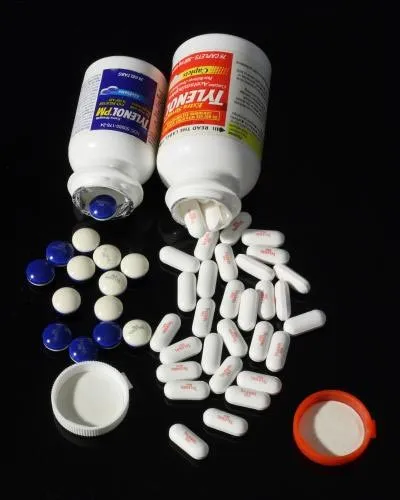
For instance, P450s help break down Tylenol, opiates and caffeine, and people have variations of P450s that may affect the way the enzymes interact with these substances, the researchers said.
Get the world’s most fascinating discoveries delivered straight to your inbox.
Also, P450s carry out some particularly tricky chemistry, and understanding the processes may help scientists mimic them, which in turn could help them build drugs. It also could be helpful for industries that use similar reactions to make products, such as nylon, said study researcher Michael Green, a professor of chemistry at Penn State University.
Green and his colleagues first grew P450s inside the bacteria E. coli. Then they cooled the enzymes to almost minus 328 degrees Fahrenheit (minus 200 degrees Celsius), which froze the reaction in a thousandth of a second. The researchers were then able to analyze the enzyme and see it in the Compound I state.
The study will be published Nov. 12 in the journal Science.

Rachael is a Live Science contributor, and was a former channel editor and senior writer for Live Science between 2010 and 2022. She has a master's degree in journalism from New York University's Science, Health and Environmental Reporting Program. She also holds a B.S. in molecular biology and an M.S. in biology from the University of California, San Diego. Her work has appeared in Scienceline, The Washington Post and Scientific American.