Get the world’s most fascinating discoveries delivered straight to your inbox.
You are now subscribed
Your newsletter sign-up was successful
Want to add more newsletters?
Join the club
Get full access to premium articles, exclusive features and a growing list of member rewards.
An account already exists for this email address, please log in.
Scientists infected a 'vagina on a chip' with gonorrhea — then cured it with a new antibiotic found by AI
To sift through 6 million molecules in pursuit of new gonorrhea treatments, researchers trained AI to select the best drug candidate and then tested it in a "vagina on a chip."
With the aid of AI, scientists have identified a potential new antibiotic to treat gonorrhea, a sexually transmitted bacterial infection that's increasingly resistant to drugs. The newfound antibiotic has shown promise in lab experiments involving a "vagina on a chip," researchers report in a new study.
"There's an urgent need to address antibiotic resistance in gonorrhea, and discovering new antibiotics is one of the key strategies," Dr. Jeffrey Klausner, a clinical professor at the University of Southern California who was not involved with the work, told Live Science. "It's exciting to see the application of AI in this area of public health."
Every year, over half a million people in the United States catch gonorrhea, which causes symptoms such as pain and fluid discharge. In severe cases, untreated gonorrhea can lead to infertility. If it's acquired during pregnancy, the infection can pose risks of miscarriage and early birth, and if it's passed to babies, it can potentially cause sepsis or newborn blindness if left untreated.
Gonorrhea bacteria, called Neisseria gonorrhoeae, often carry mutations that confer resistance to one or more antibiotics, limiting treatment options. The widely used antibiotic ceftriaxone remains the go-to drug, but resistance to this drug is soaring globally. For now, only 0.1% of cases in the U.S. are resistant, but rates are as high as 10% in some Chinese provinces and 27% in Hanoi, Vietnam.
Scientists are searching for novel antibiotics to tackle resistant bugs. To pinpoint new drugs, they typically screen large libraries of compounds to find ones that kill the bacteria. However, these experiments are slow and don't keep up with the pace at which new resistant strains are emerging.
So, in a study published June 17 in the journal Science Translational Medicine, researchers instead harnessed AI to expeditiously wade through a bevy of antibiotic candidates. They trained the AI models to spot potential antibiotics by studying patterns in the chemical properties of 1,755 clinically approved drugs that either do or don't treat drug-susceptible gonorrhea.
Next, they ran their trained models on a different set of approximately 6 million compounds, finding 213 possible hits. They whittled down that list by process of elimination, first by excluding compounds that were too similar to existing drugs in modeling experiments. Those drugs might not have worked against drug-resistant superbugs. Next, through lab experiments, they removed compounds that weren't potent enough against gonorrhea or were too toxic to human cells.
Sign up for the Live Science daily newsletter now
Get the world’s most fascinating discoveries delivered straight to your inbox.
One of the most promising compounds that emerged was called MP20, which the researchers then put to the test.
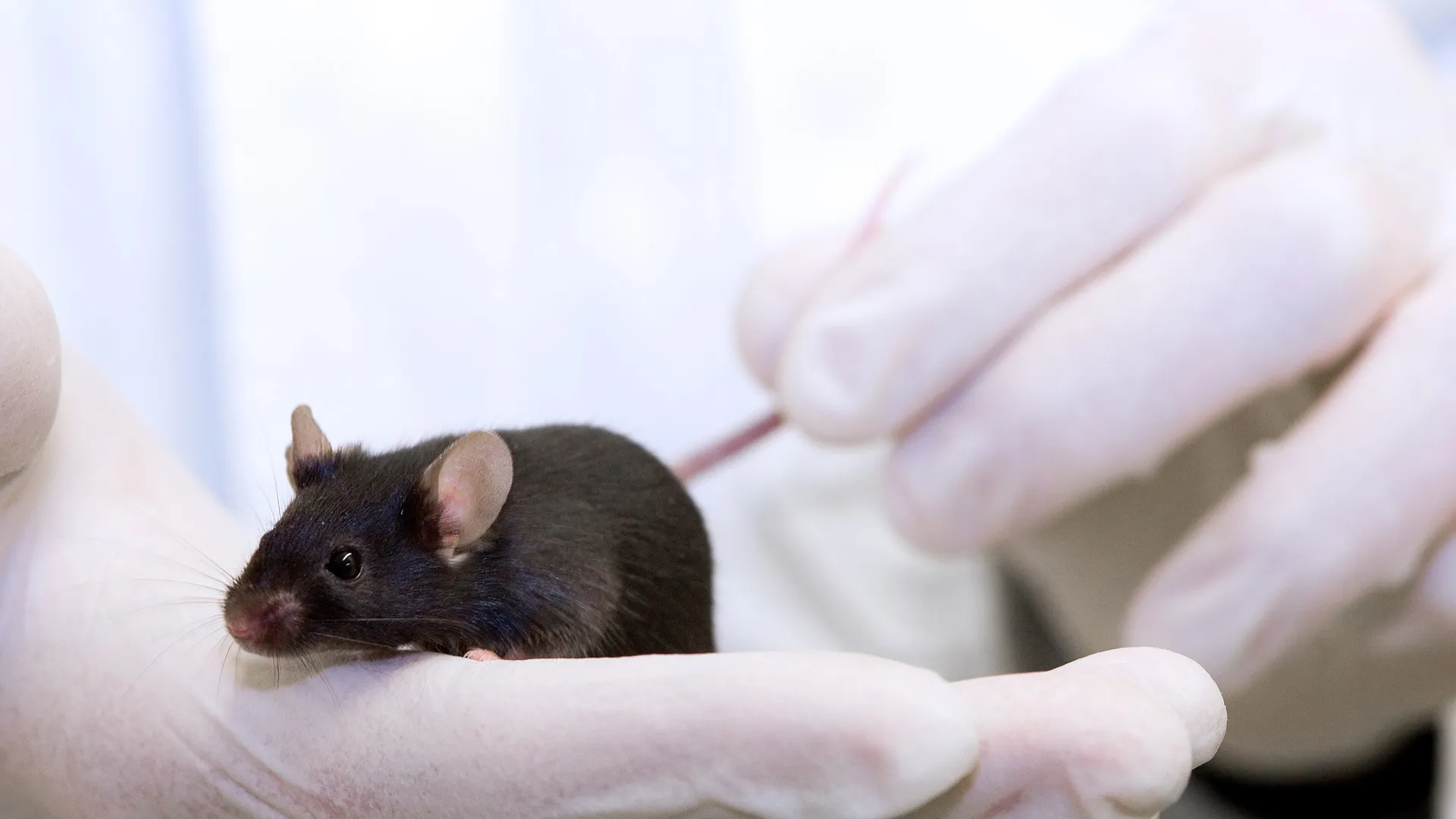
Scientists often use laboratory mice to study new drugs, but it's difficult to establish a gonorrhea infection in mice. That's because the bacteria are so adapted to humans, study co-author Dr. Melis Anahtar, a physician scientist at Massachusetts General Hospital, told Live Science. (She is listed as an co-inventor on a provisional patent for MP20.)
It can be difficult to establish a gonorrhea infection in mice.
(Image credit: dra_schwartz via Getty Images)
Additionally, "there is a large push, especially in the U.S. administration, to move away from animals and to use more human-organ-mimicking systems" to test new drugs, she added. (Many scientists are developing such laboratory models of the human body for drug testing, but those models aren't necessarily ready to replace animal testing yet.)
For this study, the researchers tested MP20 using a vagina-on-a-chip model. This small device contains a layer of cells that mimics the lining of the vagina and a layer of fibroblast cells, which are found deeper in the tissue. These layers are connected to a nutrient-filled flow channel that mimics the bloodstream.
The researchers added gonorrhea bacteria to the chip's first layer, mimicking how the bug is sexually transmitted. Then, they administered MP20 through the flow channel, mimicking body-wide administration of the drug, to see if the antibiotic could cross through these different tissues and reach the bacteria.
"It could actually get through all those epithelial barriers and accumulate at a concentration that was sufficient to kill the gonorrhea," Anahtar said. MP20 worked just as well as the existing drug ceftriaxone; no bacteria were detected at all after treatment with either drug.
More experiments are needed before MP20 could potentially reach the clinic and help patients. "You need to demonstrate these chemical compounds are safe and are not going to have any human liver toxicity, kidney toxicity or severe side effects," Klausner said.
He noted that an antibiotic's effectiveness depends on the anatomical site infected by the bug. So the researchers will need to assess how effectively their compounds, if delivered via the bloodstream, can reach the penis, rectum, throat and vagina to treat gonorrhea at any of those sites.
Anahtar thinks AI models will prove pivotal in the quest for new drugs, especially now that chemists can prepare a wider array of compounds than ever before. "In 2012, I think there were a million compounds that you could just buy from commercial vendors, and now it's more than 70 billion," she said. She aims to grow and improve her models to test even more compounds at once.
Disclaimer
This article is for informational purposes only and is not meant to offer medical advice.
Article Sources
Anahtar, M. N. et al. (2026) Deep learning–enabled discovery of antibiotics effective against Neisseria gonorrhoeae. Science Translational Medicine 18(854). https://doi.org//10.1126/scitranslmed.ads4699
Kamal Nahas is a freelance contributor based in Oxford, U.K. His work has appeared in New Scientist, Science and The Scientist, among other outlets, and he mainly covers research on evolution, health and technology. He holds a PhD in pathology from the University of Cambridge and a master's degree in immunology from the University of Oxford. He currently works as a microscopist at the Diamond Light Source, the U.K.'s synchrotron. When he's not writing, you can find him hunting for fossils on the Jurassic Coast.
You must confirm your public display name before commenting
Please logout and then login again, you will then be prompted to enter your display name.