













Chimps Demonstrate Empathy with Yawns

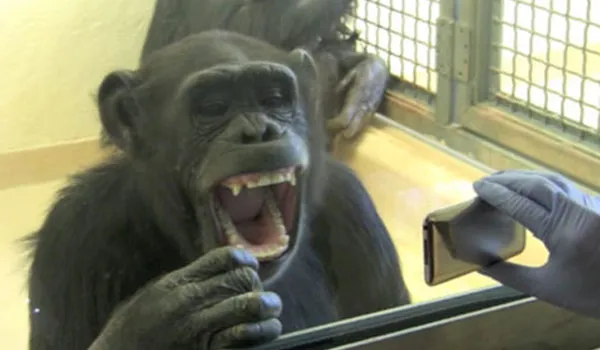
For chimpanzees, like humans, yawning can be contagious. And new research offers evidence that for these apes picking up a yawn is a sign of social connection.
The researchers showed chimpanzees a video of other chimpanzees and found they yawned more frequently after watching a chimpanzee from their own group yawn than a chimpanzee from another group — evidence that they were more influenced by others with whom they empathized. [Video of Yawning Chimpanzee]
Like chimpanzees, humans show more empathy — the ability to understand and share in another's feelings — for members of their own social group. No one has studied whether or not biases like this affect contagious yawning in humans, but the researchers believe we are like our closest living relatives in this regard.
"The idea is that yawns are contagious for the same reason that smiles, frowns and other facial expressions are contagious," write the researchers, Matthew Campbell and Frans de Waal of the Yerkes National Primate Research Center at Emory University in Georgia, online Wednesday (April 6) in the journal PLoS ONE. "The mechanism that allows someone to reflexively mimic a smile is thought to also allow for reflexive mimicry of yawns." [Kids with Autism Don't Experience Contagious Yawns]
Campbell and de Waal showed 23 chimpanzees from two separate groups video clips of other chimpanzees yawning or doing something else. The chimps yawned 50 percent more frequently in response to video of members of their group yawning versus video of the other group members yawning. The researchers note that the chimps paid more attention to the video of unfamiliar chimps.
It's important to note that humans and chimpanzees have different parameters for determining the insider who elicits empathy and the outsider who doesn't. Humans define their own social group more broadly than do chimpanzees. So, an unfamiliar person can be included within a human social group, but an unfamiliar chimpanzee is by definition an outsider, they write. (Chimps have also been shown to yawn in response to yawning animated characters; however, this is likely because the artificial nature of the animation prevented the chimps from perceiving the character as an outsider, Campbell and de Waal write.)
Contagious yawning has been documented in five species, including dogs, which can catch yawns from people.
Get the world’s most fascinating discoveries delivered straight to your inbox.
You can follow LiveScience writer Wynne Parry on Twitter @Wynne_Parry.
