















We Learn More from Success than Failure

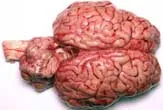
We learn from our mistakes, right? Well, maybe not as much as we learn from our successes, according to a new study. The research, done on monkeys, suggests that the brain neurons involved in learning may process information more effectively after a success than after a failure, which in turn leads to an improvement in behavior. The study looked at neural changes in the monkeys' brains as they learned a specific task. The animals were shown pictures every few seconds and had to look either left or right depending on the image they saw. They learned by trial-and-error which image was associated with looking in a particular direction, and they were rewarded if they chose correctly. The researchers monitored neurons in the monkey's prefrontal cortex and the basal ganglia — two areas of the brain thought to be involved in learning. They found that neurons in these brain areas are indeed important for learning — they "keep track of recent successes and failures," said Earl K. Miller, a researcher at MIT's Picower Institute for Learning and Memory. But what surprised the researchers was that these neurons actually became more "finely tuned" after a correct response than after an incorrect response, meaning that the neurons were able to better distinguish between the two different associations that the monkey was learning.
"The neurons in these areas improve their tuning, they learn better when the animal had a recent success, versus when the animal had a failure," Miller said. "When the animal had a failure, there was virtually no change in neural processing, the neurons didn’t improve at all."
In practical terms, after a success the monkeys were more likely to get an answer correct on the next trial, indicating a link between the improved neuron activity and the animal's behavior.
Previous research has shown that there is some very transient activity in these brain areas during learning, lasting only a few milliseconds. But scientist did not understand how this short-lived activity could influence the animal's behavior since trials are typically a few seconds apart. This study showed that the learning-associated neural signals actually lasted for several seconds.
"By careful examination of this neural activity, we [found] the signal does in fact linger, it lingers on for multiple seconds, long enough to be the bridge between the feedback the animal got from the environment and the very next learning episode," Miller said.
Further experiments will need to be carried out to find out how the sustained neural signals relate to the previously identified transient activity. "These transient responses might be the initial signal that kicks off the sustained response, [but] we don’t know yet," Miller said.
Learning more from success than failure would perhaps explain why we sometimes repeat mistakes. But this research seems to contradict the results of previous studies that suggest we do learn from our mistakes. However, this assumption is not necessarily true, since what we learn depends on the type of mistake, according to Miller.
Get the world’s most fascinating discoveries delivered straight to your inbox.
"There’s lots of different types of learning, and when you say learning from mistakes, the question is what is the nature of the mistake," Miller said.
"In our study, the situation was a reward versus no reward, success versus the absence of success … but there’s some cases where mistakes can actually lead to very bad negative consequences, like a loss of money, or loss of a scholarship. When the failure actually leads to a negative consequence rather than just the absence of a positive, that might engage learning mechanisms that rely on feedback from that negative consequence, so maybe it’s a different situation," he said.
The results were published in the July 30 issue of the journal Neuron.

Rachael is a Live Science contributor, and was a former channel editor and senior writer for Live Science between 2010 and 2022. She has a master's degree in journalism from New York University's Science, Health and Environmental Reporting Program. She also holds a B.S. in molecular biology and an M.S. in biology from the University of California, San Diego. Her work has appeared in Scienceline, The Washington Post and Scientific American.