













Study Reveals Why We Learn From Mistakes
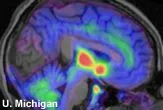
Researchers have pinpointed an area in the brain that alerts us in less than a second of an impending mistake so we don’t repeat it.
Scientists have long known that mistakes are conducive to learning, suggesting the reason lies in the element of surprise upon finding out we are wrong. But how the brain manages to learn from mistakes and how quickly it does so have been unknowns.
“It's a bit of a cliché to say that we learn more from our mistakes than our successes,” said lead author of the study Andy Wills, a psychologist at the University of Exeter, “but for the first time we’ve established just how quickly the brain works to help us avoid repeating errors.”
The scientists monitored the brain activity of a group of volunteers as they made predictions based on information each read on a computer screen. Then, they were given new information that made many of the predictions incorrect. The participants had to learn from the mistake in order to repeat the error next time around.
The researchers measured activity in the lower temporal region of the brain, near the temples, which is responsible for processing visual information.
“By monitoring activity in the brain as it occurs, we were able to identify the moment at which this mechanism kicks in,” Wills said.
Activity increased immediately after the individual saw the new information flash onto the computer screen—within 0.1 seconds—before there was time for any conscious consideration.
Get the world’s most fascinating discoveries delivered straight to your inbox.
Most previous research had focused on the brain’s frontal lobes, which are associated with complex thought processes, such as planning and conscious decision-making. This study, announced today and published in the Journal of Cognitive Neuroscience, indicates the brain reacts to mistakes before information even gets processed consciously. The scientists call it an "early warning signal" from a lower region of the brain.
- Top 10 Mysteries of the Mind
- Vote: The Greatest Modern Minds
- Study: Your Brain Works Like the Internet
Jeanna Bryner is managing editor of Scientific American. Previously she was editor in chief of Live Science and, prior to that, an editor at Scholastic's Science World magazine. Bryner has an English degree from Salisbury University, a master's degree in biogeochemistry and environmental sciences from the University of Maryland and a graduate science journalism degree from New York University. She has worked as a biologist in Florida, where she monitored wetlands and did field surveys for endangered species, including the gorgeous Florida Scrub Jay. She also received an ocean sciences journalism fellowship from the Woods Hole Oceanographic Institution. She is a firm believer that science is for everyone and that just about everything can be viewed through the lens of science.