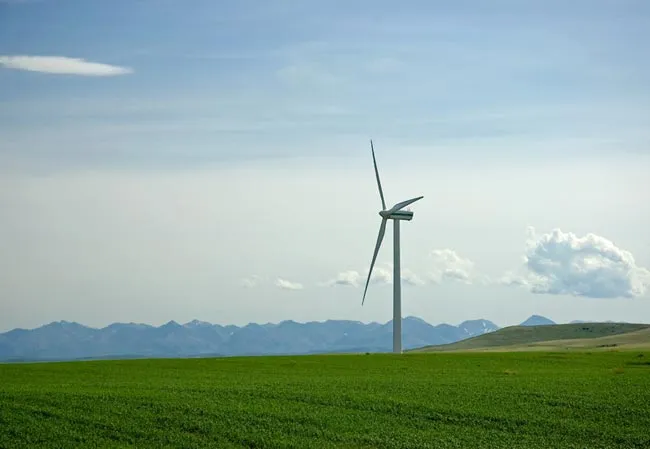
The 'easyJet ecoJet'¯ would emit 50 percent less CO2 than today's newest ...
To Catch the Wind, Bigger is Better
By Michael Schirber, Special to LiveScience
posted: 15 October 2007 09:10 am ET
Wind energy carries the promise of tapping into a free, seemingly endless supply of energy. But those thinking to capture the breeze in their backyard with a personal windmill might be surprised how much the wind actually costs.
"Small wind doesn't make economic sense," says Paul Gipe, who has written several books and commentaries on wind energy.
The only people who should consider small wind systems (less than 100 kilowatts) are those who have to because they aren't connected to the power company, Gipe said. These "off-grid" consumers made up 90 percent of small wind turbine sales last year in the United States.
Gipe said it's fine if someone on-grid wants to help save the planet by buying a "dinky windmill" for home use, but they should know that it very likely won't last long enough to pay for itself in lowered energy bills.
And they should know to never put one on their roof.
The cost
A typical American home uses about 10,000 kilowatt-hours of energy per year. Depending on the average wind speed, a 10 kilowatt turbine with a 20-foot rotor diameter could supply most of the electricity for a house. Such a system will likely cost around $40,000.
According to the American Wind Energy Association (AWEA), a person who is living in a windy area (about 10 mph average wind speed or better)—and is eligible for certain government rebates or tax credits—could expect a payback time of 15 years on their small wind system.
Mick Sagrillo, a small-windmill expert for AWEA, agrees with Gipe that some turbines have proven unreliable, but he says that well-built ones can last 20 years or more.
"It's like you are prepaying your electricity bill for two decades," Sagrillo said.
Size matters
But for Gipe it's still too risky. A better investment is a bigger turbine that is more reliable and much better at extracting energy from the wind.
"With wind energy, size does matter," Gipe said.
He's thinking million dollar turbines with 100-foot or more wingspans—out of reach for individual homeowners, but a possibility for businesses and communities. Gipe wishes more Americans would do as some Europeans and pool their resources together to buy large turbines that could supply 500 homes or more.
"Americans are raised on the mythology of individual action," Gipe said. "But not everyone can put a windmill in their backyard."
The cost per kilowatt to build and maintain a large turbine is less than half that for a small turbine. That means large turbines pay for themselves at least twice as fast, and in some cases can even turn a profit for the owners, Gipe said.
The neighbors
Whether in Europe or America, one of the biggest obstacles to owning a piece of the wind is sometimes the neighbors.
"It's often just a matter of 'I don't want to look at it,'" Sagrillo said.
A turbine needs to be at least 30 feet above the tree-line to be effective, which could mean as much as a 100-foot tower. The neighbors might consider that an eyesore or worry that it will fall down.
But falling down "just doesn't happen," Sagrillo said. "Turbines are typically designed for 100-110 mph winds."
Another concern is the noise. Manufacturers typically recommend placing turbines at least 600 feet from any house, but it still might be heard over the background noise. Whether the sound is annoying will depend on subjective experience.
And though putting a turbine on the roof might seem like a short-cut, both Gipe and Sagrillo strongly advise against it. The vibrations could damage the building. But even before that, the wind is too turbulent around a building to get any significant power out.
"There's just no 'fuel' on a roof," Sagrillo said.
"Small wind doesn't make economic sense," says Paul Gipe, who has written several books and commentaries on wind energy.
The only people who should consider small wind systems (less than 100 kilowatts) are those who have to because they aren't connected to the power company, Gipe said. These "off-grid" consumers made up 90 percent of small wind turbine sales last year in the United States.
Gipe said it's fine if someone on-grid wants to help save the planet by buying a "dinky windmill" for home use, but they should know that it very likely won't last long enough to pay for itself in lowered energy bills.
And they should know to never put one on their roof.
The cost
A typical American home uses about 10,000 kilowatt-hours of energy per year. Depending on the average wind speed, a 10 kilowatt turbine with a 20-foot rotor diameter could supply most of the electricity for a house. Such a system will likely cost around $40,000.
According to the American Wind Energy Association (AWEA), a person who is living in a windy area (about 10 mph average wind speed or better)—and is eligible for certain government rebates or tax credits—could expect a payback time of 15 years on their small wind system.
Mick Sagrillo, a small-windmill expert for AWEA, agrees with Gipe that some turbines have proven unreliable, but he says that well-built ones can last 20 years or more.
"It's like you are prepaying your electricity bill for two decades," Sagrillo said.
Size matters
But for Gipe it's still too risky. A better investment is a bigger turbine that is more reliable and much better at extracting energy from the wind.
"With wind energy, size does matter," Gipe said.
He's thinking million dollar turbines with 100-foot or more wingspans—out of reach for individual homeowners, but a possibility for businesses and communities. Gipe wishes more Americans would do as some Europeans and pool their resources together to buy large turbines that could supply 500 homes or more.
"Americans are raised on the mythology of individual action," Gipe said. "But not everyone can put a windmill in their backyard."
The cost per kilowatt to build and maintain a large turbine is less than half that for a small turbine. That means large turbines pay for themselves at least twice as fast, and in some cases can even turn a profit for the owners, Gipe said.
The neighbors
Whether in Europe or America, one of the biggest obstacles to owning a piece of the wind is sometimes the neighbors.
"It's often just a matter of 'I don't want to look at it,'" Sagrillo said.
A turbine needs to be at least 30 feet above the tree-line to be effective, which could mean as much as a 100-foot tower. The neighbors might consider that an eyesore or worry that it will fall down.
But falling down "just doesn't happen," Sagrillo said. "Turbines are typically designed for 100-110 mph winds."
Another concern is the noise. Manufacturers typically recommend placing turbines at least 600 feet from any house, but it still might be heard over the background noise. Whether the sound is annoying will depend on subjective experience.
And though putting a turbine on the roof might seem like a short-cut, both Gipe and Sagrillo strongly advise against it. The vibrations could damage the building. But even before that, the wind is too turbulent around a building to get any significant power out.
"There's just no 'fuel' on a roof," Sagrillo said.
Find a Recycling or Re-Use Location:
Related Items from the LiveScience Store
-
Intelligent Weather Station $99.95
-
Soda Pop Science $19.95
More Stores to Explore
Most Popular
- Recommended
- Commented
Community
- From Our Blogs
-
From Our Blogs
-
07.17.08 | by Robert Roy Britt
Wind Power Gets Wings in Texas
-
07.16.08 | by Leonard David
NASA-China Eye Cooperative Earth, Space Science Tasks
-
07.14.08 | by Leonard David
Asteroid Threat to Earth: Call for Global Attention
-
07.17.08 | by Robert Roy Britt
Animals
Marketplace Links
- Meet the HP ProLiant DL385 G5
- The best-selling server of its kind boasts a suite of management tools that will help you reconnect with your business
- Science. Technology. Sustainability.
- Visit the new Innovation Channel on LiveScience.com.
- LiveScience Store
- Find everything from weird science to cool gadgets!
- Don't toss it, Recycle it!
- Find local recycling centers now
- FREE Starry Night Widgets
- Get awesome cosmic power in friendly applet form!
- Like Sci Fi? You’ll Love Newsarama
- Reviews & previews of your favorite movies and TV shows
- Feel Strongly About Energy Options?
- Speak your mind about technologies and innovations in our forums.
- BP
- Beyond Petroleum