Demote Pluto and Kill Xena

April 11th, 2006
Author Robert Roy Britt

» Demote Pluto and Kill Xena

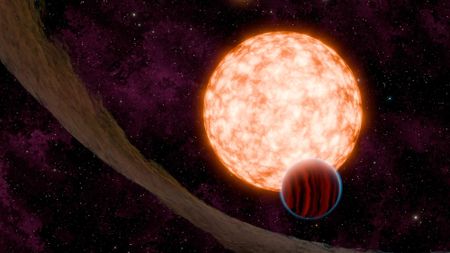
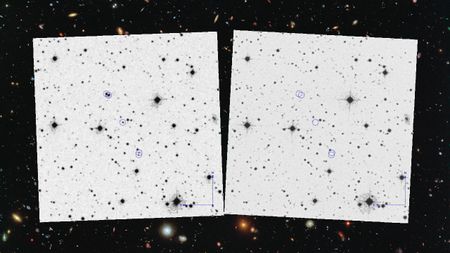
A press release today from the good folks who operate the Hubble Space Telescope contained 13 mentions of “Xena,” an unofficial term given to a Pluto-sized world that its discoverer hopes will be called the 10th planet. The object is smaller than first thought. It’s also less significant than some argue.

The world is not “Xena.” Officially, it is 2003 UB313.

But discoverer Mike Brown of Caltech is on a mission to have 2003 UB313 declared a planet, so he gave it a catchy nickname.

Other astronomers, and the good folks at Hubble, should not use the nickname. What they should do is finally agree on a definition for the word “planet.” And 2003 UB313 should not be included.

The reasons are simple. Even Mike Brown says there is no scientific basis for calling 2003 UB313 a planet. Here is what he said last year:

I will not argue that it is a scientific planet, because there is no good scientific definition which fits our solar system and our culture, and I have decided to let culture win this one.

If scientific decisions are to be henceforth based on the whim of culture, it is time for astronomers to pack up their telescopes and go back to dreaming up stick figures out of random star patterns. And while we’re at it, perhaps we should consult religious leaders for their opinions on how to interpret the results of astronomical observations.

At any rate, it is not Mike Brown’s place to decide this. The International Astronomical Union governs nomenclature in astronomy.

The problem all started when Pluto was discovered in 1930 and called a planet. That was a mistake that astronomers only realized later. Diminutive Pluto’s orbit, like that of 2003 UB313, is way out of whack with the main plane in which the other eight planets roam. And we now know there are a handful of other offbeat worlds almost as large as Pluto. Estimates suggest there are hundreds of Pluto-sized worlds out there waiting to be spotted.

If 2003 UB313 gains planet status, we’ll instantly have so many planets that kids won’t be able to memorize them all. Worse, the list will be a lie, made up of eight bona-fide planets and dozens of compounded mistakes. That’s not science.

The solution is simple. It is high time astronomers stop arguing minor details and come together to hammer out a definition. One distinction should be clear:

Objects like Pluto and 2003 UB313 should be called minor planets or dwarf planets or something else that denotes their relative insignificance compared to the four inner terrestrial planets and the four outer giants. And therein lies the precedent: We already have terrestrials and giants. Just add dwarfs.

School children will initially rally and astronomers will get angry emails (just ask Neil Tyson). But science will have done the right thing and everybody will get an education about the makeup of Our New Solar System, a place packed with a much wider variety of objects than anyone dreamed of just a few decades ago.

Is it really that hard for astronomers to be honest, scientific and accurate?

Meanwhile, those who write press releases and journalists who cover all this should stop using the nickname “Xena” to describe 2003 UB313. Only when a proper definition for “planet” has been agreed on by the International Astronomical Union can astronomers decide on a name for the tiny, way-out world.

36 Responses to “Demote Pluto and Kill Xena”
  1. wolvsden Says:

    It’s indeed a shame that the wheels of planetary nomenclature revolve so slowly. The bulk of the buzz I’ve seen since July’s announcement has largely centered upon whether or not 2003 UB313 will be granted planetary status rather than upon the (planetary?) science itself or the significance of this KBO’s characteristics. I’d find this understandable if such discussions were limited to laypeople… but such is not the case, and that rather perplexes me.

    I’ll cope with whatever the IAU decides, as I’ve no significant emotional attachment and am merely an interested amateur. However, you make a compelling point about not basing these decisions upon the public’s whim.

    Some months ago I thought the latter seemed like a neat idea, and might serve as a vehicle for beneficial public outreach. After some reflection, though, I agree wholeheartedly with your position. The science is what counts.

  2. bwithrow Says:

    To have a solid definition sounds wise. Having simply called something a planet because it is accepted that way “culturally” is extremely arbitrary. I was excited to hear that 2003 UB313 was larger than Pluto, but now to find out it’s much smaller than previously thought, calling it and Pluto Minor Planet sounds good.

  3. Colony Worlds Says:

    Xena Slightly Larger Than Pluto

    Apparently Hubble has discovered that object 2003 UB313, nick named “Xena” by Mike Brown is slightly larger than Pluto. [...] Xena lies roughly ten billion miles away from Earth and is an unlikely spot for a colony world. Although most people probabl…

  4. telerion1050 Says:

    Mercury, Venus, Earth and Mars are too insignificant to be called planets, just rocks. Only Jupiter, Saturn Neptune and Uranus deserve the status of planet. Make the 4 little rocks planettes, and Pluto and Xena, excuse me, 2003 UB313, are to be called planitsy-bitsies.

    Realistically, it doesn’t matter what they’re called. There is no importance to what a planet is, the definition is arbitrary. If people want to cal Xena a planet, let them.

  5. bobwaters Says:

    OK. Let’s get this straight: Brown did not give “Xena” (given its eccentricity, and the name of the next most distant planet, I personally prefer “Goofy”) a “catchy nickname.” “Xena was merely an in-house codename; a previous object, discovered on Christmas Eve, was “Santa.”

    Secondly, if Kuiper Belt objects are going to be disqualified, willy-nilly, from planethood, on what basis? Do we now have qualifications as to what a planet has to be made of?

    Pluto is an established planet. My suggestion: take its size as the minimum. Anything smaller is merely a KBO. Anything larger, and orbiting the sun, is a planet.

  6. theolein Says:

    I haven’t laughed as hard for a long time. Someone, who didn’t discover a celestial object, is unhappy because others are calling it things he doesn’t like. I wonder how Robert Roy Britt copes when he sees the media and the public calling his favourite ice-cream vanillia ice cream when he’s adamant that it should be called essense of plant scrapings ice cream.

    Ouch.

    A little tip for you, Robert. It is NOT the International whatever Union who decides what something it is called. It is the name that sticks in the public imagination that decides what something is called.

    The French officially don’t use the word “email”, but the rest of the world does. Which one is right, Robert?

    Btw, I think we should not be calling 2003 UB313, “the planet, Xena”. I think we should be calling it “The Planet”. ;-)

  7. Robert Roy Britt Says:

    theolein: I get your point and appreciate the criticism. But the salient issue here is that astronomy (and all of science) progresses through order and logic. If scientists can’t agree on what to call things, and if they’re going to name and classify based on culture and popular opinion, and if they are unwilling to overturn what they all agree was a mistake (Pluto) just because school children get upset (as occurred a few years back) then science risks degenerating into disarray.

    And astronomers agree that the IAU *does* decide these things. If you can find a single professional astronomer who thinks this decision should not be made by the IAU, get them to comment here. The problem right now is that the dozen or so members on an IAU working group tasked with defining “planet” can’t agree on a definition. My challenge is largely to them … hard-working, well-intentioned astronomers all … to hammer out a resolution asap so researchers *will* know what to call the dozens of round, Pluto-sized objects they’re bound to find in coming years.

  8. smeyers Says:

    Minor Planets? Dwarf Planets? Seems like we’d be virtually guaranteeing the discovery of a really big KPO. Then where would we be? Giant Dwarf Planet? Major Minor? Argh.

    Precise nomenclature is important when it expands understanding, when the implied hierarchy adds significantly to our ability to make connections and have insights.

    In this case, I think that we gain more by keeping Pluto as the anomolous planet, forcing us to pull up and consciously remind ourselves of how our understanding of the solar system can change. Lets revisionism in the name of neatness and leave the subject messy as a footnote to ourselves and our future selves not to get too smug.

    Mercury -> Pluto: planets. Xena, Sedna etc: KBO’s. There might be another actual planet out there, perhaps to be defined by orbital plane, or size, or composition, and definitely to be argued about, leaving the subject rough, unplaned and interesting.

  9. greatdarkspot Says:

    I must say, this seems like it comes right out of one of those fables ‘Ivory towers’. How DARE the great unwashed have anything to say about our sacred science?
    The word ‘planet’ is not defined - even if they do come up with a definition, there will be those scientists that disagree with it. If the answer were obvious, they would have settled it by now. Do we want to limit the number of planets in our solar system because it’s easy for schoolchildren to memorize them? Then why are there 50 states in the United States - shouldn’t they limit what they call a ’state’ so that there will be only a handful for kids to learn?
    Mike Brown was quite clever in giving his new planet the name Xena - instead of some obscure diety from a pantheon very few people have heard of like the other big KBO’s found, he chose something that people would understand and remember. Of course, it gets up the hackles of the science snobs because it comes from popular culture. Of course, the moons of Uranus were named in the same way but they were from (gasp!) Shakesphere so that’s okay.
    I’m not going to try to nail down what a planet is. But this I will say - Pluto IS a planet and whatever definition that they eventually come up with will likely include it or else it will not be taken seriously. Ergo, anything bigger than Pluto and orbiting the Sun will also be a planet. Therefore, Xena is also a planet. And if you don’t like the name, too bad.

  10. Moonage Spacedream Says:

    Nix Pluto, Sedna, and Xena

    I so agree with Robert Britt that I am going to do the unthinkable and steal his entire comment from Livescience. Here goes:Demote Pluto and Kill Xena Author Robert Roy Britt A press release today from the good folks who

  11. jvannini Says:

    Hello.

    I agree the Idea of having a good and accurate “Nomenclature System” in order to have a well defined guide.

    On my local Astronomy Group, there are discrepances about the main topic but I preffer to wait until the IAU settled down and gives us the right answer.

    But also, I wonder this: If we are talking that “size matters”… where then, the giant moons Titan and Ganymede should be placed? they are bigger than Pluto and Mercury.

    A multiple planetary system on Jupiter and Saturn? Is Mercury a Wanderer Moon?

    Talking about “Wanderers”, that’s the translation for “Planet”… so, aren’t Pluto and 2003 UB313 and the others “Wanderers” too?

    It is fun (I think) how SciFi solves this kind of dilemma very often. Let’s take a sneak-peak on Star Trek: they have a (maybe not so accurate) system to define Planet Types, but it works, bringing order to the chaos, at least inside the ST Universe, as some people (me included) thought.

    As an amateur, I’m not worried about planetary definitions; but as a scientist, I have to be guided by procedures, rules and scientific methods. There could be a spot, where the joy of amateur astronomy and rigid science should meet.

    Perhaps Pluto should keep its planetary category and after that, following bobwaters’ comment, everything should be categorized in a new, orderly way.

    Besides, we all had been teached Pluto as the 9th. Planet; and had been told how difficult was its discovery. Now, is easier for any of us (:smile:) to discover a new KBO than the time of Pluto’s discovery. I would hate erasing Pluto from my son’s school textbook and say to him: “nope, we’ve being wrong all this time”

    Regards

  12. robsaunders Says:

    Sure, but while we are at it, lets finally get around to renaming Uranus….

    I think that joke has gone on quite long enough.

    In all honestly, “We thought it was a good idea at the time” is the correct answer. Pluto’s discovery was no easy task, and at the time was a good idea. I think, like jvannini above me, that a catagorial system is needed as culture will have a field day if we don’t and leave the planet title open a bit.

    After all we wouldn’t want to have the same thing happen again down the line if by ironic chance we were wrong again. Catagories can be added, strict definitions with little alternatives just cause problems when something is “just barely” above or below expectations.

  13. ab762 Says:

    1000 is a nice round number. Ceres is about 933 km in diameter. I here suggest that 1000 km be the official limit of a planet.

    There are other possible rules: 4000 would exclude Pluto, of course.

    And “orbits the sun” belongs in there, too.

  14. jvannini Says:

    Yes robsaunder, it was a good idea.

    That brings into my mind the ol’days when almost everyone who discovered something they were allowed to name the discovery as they wanted: i.e. Uranus or “George”.

    Or the myriad names for constellations. Folk people draw their own patterns and they are unaware of IAU’s regulations. They are learning their way to the stars by themselves.

    Let’s think about Messier and jump then into a new variety of Catalogs: how many “fuzzy comet-like” objects could be seen in our scopes? And we accept today’s new variety of stellar names and designations. Sometime very difficult to learn and teach on the intermediate level.

    Maybe this controversy about Pluto’s category is going wild and will have a long-term ending. Let’s make it easy for all of us: Keep Pluto, and after that, everything should be inspected under a new eye.

    Astronomy is not only for the High Minds, is for everyone. And we must try to keep it simple.

  15. wolvsden Says:

    I’d like to see a system of planetary designation adopted, something akin to the Hubble classification scheme for galaxies. I don’t recall people passionately arguing that the Magellanic clouds aren’t really galaxies due to their irregular morphologies, lesser size, mass, or orientation compared to the Milky Way or other members of the local group. Informally, it’s perfectly acceptable to refer to “galaxies” in rather generic fashion; why should “planets” be any different?

    Such a system could be flexible enough to incorporate new discoveries lurking in the Kuiper Belt, small or large, as well as be applied to extrasolar planets — the latter being something I haven’t seen considered in these discussions. Our anthropocentric bias appears most persistent.

    Now, I agree with the point raised by Britt (and others) about quantity — it wouldn’t be sensible to mandate schoolchildren commit a tedious list of bodies to memory. However, couldn’t we just add a line of demarcation somewhere in the solar system (a “local group” on a micro level)? What about an informal “nine historical planets” reflecting the current list, balanced with a proper classification scheme (when devised)?

    I certainly recognize and agree with the pressing need for fitting nomenclature. What I don’t grasp is the emotional investment displayed by many in a single term which has yet to be suitably defined. The best approach in resolving these issues should focus upon what’s appropriate scientifically.

  16. javc Says:

    I also like the 1000km limit. It is right around the limit where gravity makes a body round. Of course we also need an upper limit. Where do planets stop and Brown Dwarfs begin? This needs to be defined soon. There are billions of planets out there just waiting to be classified.

  17. Dave Brody Says:

    We’re really taking “pet rocks” here.

    OK full disclosure: I work with Rob Britt. But even if I did not, I would leap to his defense on this issue. Because what’s at stake is losing the general public’s confidence in the scientific method. And this comes at a time when that public is being actively seduced by self-serving anti-scientists with very dangerous agendas.

    Let’s imagine we were anyone else but Earth-bound humans riding the 3rd rock of Sol. Looking at any star with stuff orbiting it, we’d see a continuum: from tiny dust particles, on up through irregular rock & ice lumps (shaped by accretion), to rough rock & ice spheres (shaped more by gravity), “polished” rock spheres, gasballs, hot super-gasballs… But why stop there? Very big/hot gasballs cross into brown dwarfs, red dwarfs, small stars, big stars, monster stars, former stars…

    When is it a “planet”? When it’s round (by gravity).

    When is it a “star”? When it starts glowing (uh, by gravity).

    When do we give it a name? When we like it enough to regard it as a pet (rock).

    Science’s greatest strength lies in its self-correcting intrinsic nature. That which is Known to science is, by definition, fluid. What’s most important about this conversation is that we’re having it in a popular media venue, not a peer-reviewed scientific journal.

    The taxonomy of stuff in the universe has been about where stuff was and where it’s going. That we see this stuff in the snapshot of time that is a human life is our handicap. The Universe doesn’t see it that way. And it doesn’t care. If short-lived human scientists waste time concocting arbitrary definitions THAT ARE SURE TO CHANGE, they risk losing the tenuous connection that non-scientists (most of us) have to the most important work humans can do: the pursuit of understanding what that universe is all about (“science”). Because that is what binds us together in a way that has allowed us to prosper exceptionally well.

    And folks like Rob Britt and me - who presume to interpret science for public consumption - have to keep our eye squarely on that gravitationally rounded ball.

  18. wolvsden Says:

    Nice post.

  19. paulsnx2 Says:

    The argument that the definition of “planet” should be scientific decision, not a cultural one, makes me wonder why the word “planet” deserves such heightened attention.

    Are you going to claim that all terms used in science are defined scientifically?

    Natural language is quite clearly a culturally defined tool used by science. It doesn’t have or follow scientific rules. Yet bad grammer in a science publication is not considered good form in science.

    “Planets” are not solely of scientific interest, and they will not be determined solely on scientific merits. Yell all you want, but cultural use by the population at large will win the day.

  20. pyrolon Says:

    I’d like to suggest a new catagory semi-major planets. Asteroid implies a flying mountain, looking at Ceres and Pluto they are a bit more but since they have so many coorbitals of similar size it pretty much excludes them being fully fledged planets.
    Another point the definition is done by the IAU, pretty much its reason for existance is to dole out arbitrary conventions, such as the naming conventions of craters on particular moons. Anyway it could easily be put to rest with the new category.

  21. jasoncoker Says:

    The debate over cultural idiosyncracies versus scientific terminology has been raging for centuries and won’t stop anytime soon.

    Those posting messages that say the term “planet” doesn’t matter do not seem to understand much of anything. Sure, the culture is going to do what Mike Brown & Chad Trujillo & the Other Guy says it’ll do (”If Pluto was good ’nuff fer Mickey, he’s good ’nuff ta be a planet!”).
    But, that doesn’t change the fact that science needs fair and accurate standards denoting every square megapixel or whatever to do it’s job right — the more so when it’s astronomy, because all you really have to go on is studying light and x-rays — even if the public is too self-absorbed with cliched and inaccurate phraseology to give a damn (”You don’t know the history of psychiatry. I do.” — Tom Cruise to Matt Lauer.)

    I favor Bob Britt’s bright idea of declaring what a planet really is — using facts and figures — and then trying to get the culture to understand there are at least 3 different types of planets: 1. terrestrials; 2. giants; 3. dwarves.

  22. polaris93 Says:

    1) Mr. Britt, what do you propose to do to all of us who have been calling Pluto a planet for up to three-quarters of a century and refuse to change now — sue us? 2) If it’s big enough to be round — i.e., have enough gravity to pull the material it makes it up into something extremely close to a sphere — it’s a planet. Pluto is round, and even Chiron is round, so they’re *both* planets. Ditto Sedna and the other *round* Kuyper-Belt objects. 3) Have you been offered kickbacks from science textbook publishers who hope to cash in big-time if Pluto is demoted from planet to something else because all those textbooks that have worked just fine for seventy-five years will then have to be rewritten to reflect that change? 5) Have trouble counting above 10, and therefore can’t stand the idea of having more than ten bodies out there referred to as planets? 6) Planning on profiting from all the electrical energy that can be harnessed by Clude Tombaugh’s rapidly rotating body if Pluto is no longer allowed to be a planet? Dude, grow up! This is a *stupid* fight, the sort of thing Richard Hoagland just dotes on, and there are things that need doing out there that have a much higher priority — like getting back to the Moon, then Mars, and, ultimately, the stars. Don’t give Hoagland ammunition for more pseudo-crusades!

  23. sailom Says:

    The real reason for arguing so much about the planethood of Pluto and other space objects is about keeping the historic solar system textbook in place. It feels good to know that there are only four terestrial planets and four gas planets to mention in this textbook.
    However, I wonder how we could reconcile the facts that both groups are essentially different (rocky objects vs. gas objects) but are both called “planets”.
    Is the ongoing technological revolution- leading to KBOs discoveries - giving us a headache because we can’t accept the diversity of the solar system?
    Even if there were hundreds or evem thousands of KBOs bigger than Pluto, I would not change my position, they need to be called “planets”

  24. paulsnx2 Says:

    Does the meaning of a term matter?

    Yes and no. Culturally, people walk around with the idea they know what an “object” is, but us computer “scientists” understand and use the term in a way that most people would find quite strange.

    None of the facts about Pluto and “Zena” are called into question in this debate. Scientists understand what Kuiper Belt objects are; scientists are able to study such objects today; scientists can describe the facts and processes in which such objects are involved today.

    Has the debate over the plant status of Pluto or any of these other objects prevented the study of these objects, or the publication of discoveries concerning these objects?

    Clearly not.

    If you can’t identify an actual fact or an actual process that a scientist needs to study or describe that can’t be studied or described if the population at large calls Pluto or “Zena” a planet, then you are not engaged in a scientific arguement.

  25. larryk12308 Says:

    If memory serves Ceres was thought to be a planet when it was
    first discovered in 1801. Years later everyone realized they were
    dealing with a new class of objects called asteroids.

    So here we are with the same situation years later. Pluto, Xena,
    Santa, (Larry,Moe and Curly)and the rest are all a new class of objects
    called ice dwarfs.

    On the other hand perhaps we should just wait until New Horizons
    gets to Pluto nine years from now. Chances are allot of old ideas
    are going to get trashed like they always do when we send a probe
    somewhere.

  26. mmorabito67 Says:

    Just blogged about it: “Hands off Xena!!!” http://www.ecademy.com/node.php?id=66402

    Robert Roy Britt performs a not-so-great act of astronomical geekiness by suggesting we should “demote Pluto and kill Xena” (i.e. remove Pluto from the list of known planets, and stop calling “Xena” the newly-discovered, ultra-bright object orbiting the sun)

    And what would the reasons be?

    1. “There is no scientific basis for calling” Xena “a planet” (oh yeah, but by the same token there is no scientific basis for calling Earth a planet…we simply do not have a “scientific” definition of a planet, whatever a “scientific definition” may be)

    2. “The International Astronomical Union governs nomenclature in astronomy” (perhaps, but if they had been doing their job they would have come up with a name for object 2003 UB13)

    3. “If 2003 UB313 gains planet status, we’ll instantly have so many planets that kids won’t be able to memorize them all” (that’s beyond the edge of absurdity: do we only count eight stars in the Milky Way, or eight galaxies in the Universe, otherwise kids can’t name them? Apart from the fact that it is well-known that any set of more than seven objects, is quite hard for the average human to remember anyway)

    4. “Only when a proper definition for “planet” has been agreed on by the International Astronomical Union can astronomers decide on a name for the tiny, way-out world.” (false: the fact that an object is not a planet does NOT mean it should not be given a name. All known asteroids and satellites are indeed named, by the most recent custom mainly by the discoverer)

    Finally, with all new, strange solar systems being discovered out there almost daily, it is NOT the right time to narrow down the definition of “planet” to whatever big thing goes around in a quasi-circular orbit on the same plane as other “planets”

    ——————————————————————————–
    One is left with the feeling that the trouble is with the fact that all of a sudden there is a planet named after a fictional female character, and that the new object breaks the age-old rule of having nice, neat, few planets as big lumps of material going together around the Sun

    I am sorry Mr RRB but the universe is indeed “a place packed with a much wider variety of objects than anyone dreamed of just a few decades ago”…it’d be much wiser if you’d just get on with it

  27. planetceres Says:

    There is a planetary periodicity derived from Bode’s Law. And, I’m sorry but Xena, Pluto, and 1Ceres are all occupying orbital distances that would define them as planets. In fact, the simplified adjusted bode equation distance for Xena is 67.6 AU. While the observed distance for Xena is 67.67AU. Placing Xena within the adjusted bode equation. Making the definition of Xena as most likely a planet.

  28. dr_croft Says:

    “If you can find a single professional astronomer who thinks this decision should not be made by the IAU, get them to comment here.”

    OK, I’m loathe to wade into this debate (and to be fair, I work in extragalactic rather than solar system astronomy) but I disagree that this needs to be a matter exclusively for the IAU. The IAU have announced that they will define “planet” in September 2006, but in my opinion this is a question of semantics rather than science. Science is no more equipped to answer this question than it is to define a continent (look up “continent” on wikipedia) and the reason why the IAU is having such difficulty over this is that scientists are no better equipped to deal with purely semantic questions than the public at large. Does a planet need to be round, does it need to be one of the “historical nine planets”, or should we rely on the original definition of the word, “a wanderer” (by which definition the Earth is not a planet!)?

    Consider the electromagnetic spectrum. Sometimes X-rays can be higher frequency than gamma rays, depending on whether the source is nuclear or electronic. The divisions between microwaves, infrared and radio are also somewhat arbitrary. Some professional body or other could decide exactly where the boundaries of “visible light” are. But if your eyes can see a little further into the so-called ultraviolet than mine, does this pose a crisis for science? No.

    I’m happy for the IAU to decide, but whatever they decide, I’m happy for you to call Xena whatever you like, the same as I’m happy for you to call M31 the Andromeda Galaxy, NGC 224, 2MASX J00424433+4116074, Fred’s Pet Galaxy Number 70, or whatever. The IAU might frown on the latter, but really, go ahead, call it what you like. My preference is to go with the historical definition (we don’t add or subtract objects from the Messier catalog), but I can understand the opposing viewpoint. When you say “Messier object”, folks know what you’re talking about (well, astronomers, at least); but the definition of a planet, being a word that is used in the common parlance, is, if you’ll forgive the pun, a little messier.

    As for fear of rewriting textbooks, that is what science is all about. When Hubble discovered that the “spiral nebulae” were in fact external galaxies I’m sure this prompted a few textbook rewrites. Would someone like to tell me where the dividing line is between a galaxy group and a galaxy cluster? Undoubtedly some of you would, but there will be disagreement over where the line falls. The galaxies themselves don’t care; some of them are isolated, some have companions or are in groups, clusters of various Abell classes, superclusters, filaments and sheets in the Large Scale Structure …

    Let’s just agree that “planet” can be defined in a number of different ways depending on whether you’re more concerned about history or morphology. As for how they form, what their composition is, how they evolve, and whether or not they may harbor life … for me, those are more interesting questions for science to answer.

  29. Robert Roy Britt Says:

    Croft and others: Many great points. If the IAU is not to be the decider (and I assume it won’t be George Bush, either) then the IAU and astronomers in general need to wash their hands of this issue. But the IAU has said it would decide, and astronomers in general have supported that approach. My thinking is, just do it. And if it is too hard (as some here have argued, and argued pretty darn well) then just don’t do it. Put out a statement that says planets cannot be defined. One way or the other, we need to all move on with something akin to a plan for cataloguing newfound round objects that are kinda big but not overly huge and orbit the Sun.

  30. gnosys Says:

    The debate over whether or not Pluto and the Planetary Object Formerly Known as Xena are to be called planets is generally making scientists look silly. It’s not that it doesn’t matter; it’s that it matters so little that it’s funny to see people so worked up about it… at times even speaking almost as if there were a right answer to the question.

  31. Robert Roy Britt Says:

    One reader emailed to suggest that all outer, small round things could be called Tombaugh Planets or something like that. This is a neat idea, given that there is some resistance to the terms “minor” and “dwarf.” Perhaps anything smaller than, say, Mercury and that is round by gravity and orbits the Sun (and does not orbit a planet) could be called …. drum roll … a Plutonian Planet. For those who despise the idea of a demotion, there would not be one. There would simply be three classes of planets: terrestrial, gas giant and Plutonian (until a fourth class is discovered). Does this help?

  32. zoratao Says:

    Firstly what we call a planet has mostly cultural importance. I mean that, any object in an orbit of the sun falls into some interesting class of objects. The most significant factor about planets in general is that we attach special emotional value to them. This phenomena is historico-cultural and stems from ancient greek culture. When it comes down to it the real question is why its important not what details are important.

    As far as these factors go I would imagine that there would be a distinction between planets that have atmospheres and those that don’t. (And maybe those that do during certain parts of their orbital cycle.) The second factor would be the mass of the object.
    The third being the orbital eccentricity of the object.
    The last being the angle of the normal of the objects orbital plane and the orbital planes of the innermost planets.

    These four criteria should provide enough distinction between other objects and planets, but again who really cares. And if you care is it more of an emotional thing or is there intellectual weight to this? Maybe I am not seeing the bigger picture?!?

  33. Posthuman Polyphony » Blog Archive » rm pluto Says:

    [...] Certainly, the case of Pluto demonstrates knowledge as subjective and if not perhaps subject even to whim and/or well-drawn arguments. [...]

  34. geraldjones Says:

    I find the comments made “If scientific decisions are to be henceforth based on the whim of culture, it is time for astronomers to pack up their telescopes and go back to dreaming up stick figures out of random star patterns. And while we’re at it, perhaps we should consult religious leaders for their opinions on how to interpret the results of astronomical observations.” both foolhardy and arrogant to the nth degree.

    Mr. Robert Roy Britt in this drippingly sarcastic comment has identified his own intellectual failing - he has elevated science and his own opinion to religious status. Science often doubles back upon itself when the scientific community identifies a mistake or redefines an issue, so it reveals its infinite fallibility, so why why should we now by Britt’s implications in this comment, become dogmatic on an issue not universally agreed upon by the scientific community? On his opinion alone?

    Speaking as a Sceince teacher who also holds a degree in theology I would say that Britt combines the self-righteouness of a bad theologian and the opininated arrogance of a bad scienctist. Public opinion and the scientific communities opinions do not count for defining truth, but they also do not count for nothing.

    In another field of science, nutrition and health, the RIGHT answer to health concerns are redefined at a blinding pace - so Britt’s esteemed insights may be as scientifically passe as Pluto in a very short time. There are “eternal truths” in religion, not in science Mr. Britt, so it is time to get off the oracles throne and get back to the telescope.

  35. Ragheb Alama Says:

    malik

    Interesting post. I came across this blog by accident, but it was a good accident. I have now bookmarked your blog for future use. Best wishes. Ragheb Alama Website Team.

  36. Kalina Says:

    Kalina…

    I love your site. They really look very nice. The articles provided are long enough to provide great content but not so long as to be totally engrossing, if you know what I mean….

Leave a Reply »

You must be logged in to post a comment.